














The Stinger wet dry vac sits in the small end of the shop vacuum market. Listings and reviews describe it as a compact unit rather than a full-size workshop machine, which shapes what it can realistically handle. A compact tank fills faster, a shorter hose reaches less far, and a small footprint stores more easily. Those trade-offs matter more than any single number on a box.
This guide covers what the vacuum picks up, what tank size and peak horsepower actually describe, how filtration and attachments work, how wet pickup differs from dry debris, and what to confirm before choosing one.
What a Stinger Wet Dry Vac Is Built to Pick Up
A wet dry vacuum handles two categories of mess that ordinary household vacuums cannot. Dry pickup covers sawdust, dirt, sand, drywall dust, and general floor debris. Liquid pickup covers spills, standing water, and damp messes that would ruin a standard vacuum motor.
The same machine does both, but not at the same time. The tank, filter, and internal airflow path change depending on which mode is in use, so switching between them is a deliberate step rather than a flick of a switch.
Compact wet dry vacuums of this type are commonly used for garage floors, car interiors, workshop benches, utility rooms, and small renovation cleanups. They suit short, frequent jobs better than long continuous extraction, because a small tank needs emptying more often.
Tank Size and Peak Horsepower. What the Numbers Describe
Tank capacity and peak horsepower are the two figures most often quoted for a Stinger wet dry vac, and they measure different things.
Tank capacity describes how much material the container holds before it needs emptying. A larger tank means fewer interruptions on a big job but more weight to carry and more space to store. A smaller tank is easier to move and store but fills quickly when picking up bulky debris such as planks, clumps of insulation, or wet carpet residue.
Peak horsepower describes motor output at its maximum point, not sustained working power. Peak ratings are measured differently from continuous ratings, so a peak figure is not directly comparable to a running-power figure on another machine. It indicates relative motor class within a product line rather than a guaranteed level of suction at the hose.
Airflow and sealed suction are the figures that describe real pickup performance, and those are separate specifications from peak horsepower. Where a listing quotes only peak horsepower, the practical suction at the nozzle remains unconfirmed.
Filter Bags, Hoses, and Nozzle Attachments in the Box
Filtration and attachments determine what the vacuum can safely collect and where it can reach.
A filter bag traps fine dust inside a disposable or reusable layer, which keeps the main filter cleaner and makes emptying less messy. Filter bags are generally used for dry pickup. For liquid pickup, the bag is typically removed and a wet-rated filter is used instead, because a saturated bag restricts airflow and can degrade.
The hose carries debris from the nozzle to the tank. Hose length sets the working radius from the machine, and hose diameter affects what can pass through without clogging. A narrow hose handles fine dust well but blocks more easily on larger debris.
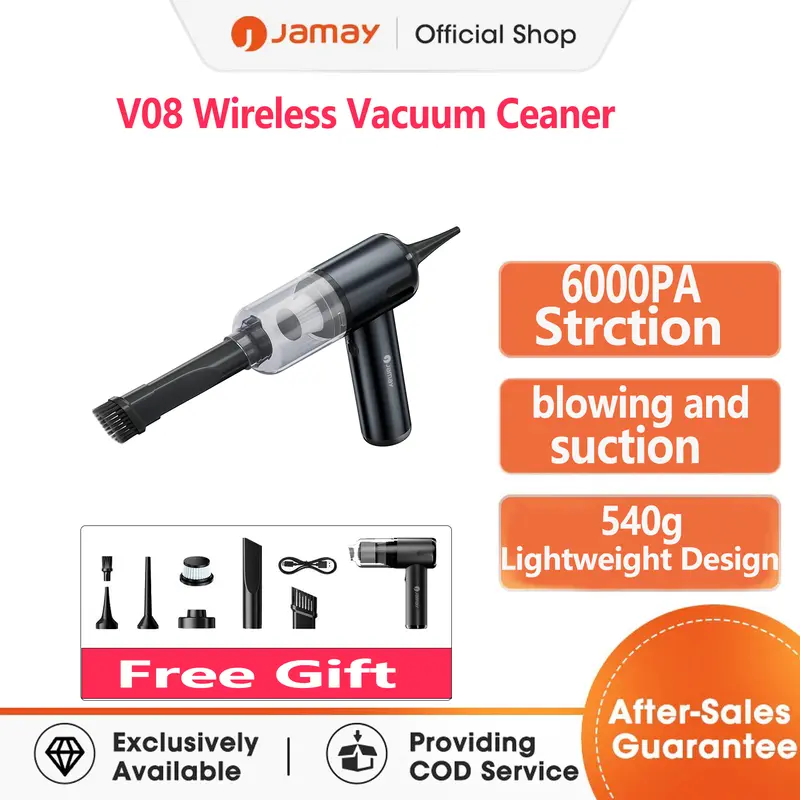
Nozzle attachments change the shape of the pickup point. A utility nozzle is a general-purpose wide head for floors and benches. A car nozzle is a narrower tool shaped for crevices, seat gaps, and footwells. Both are commonly listed together with the hose and filter bag as the standard accessory set.
Wet Pickup Versus Dry Debris. How the Two Modes Differ
Dry pickup relies on a filter to capture airborne particles before they reach the motor. Fine dust such as drywall or sanding residue is the hardest case, because it clogs filtration quickly and reduces airflow as the filter loads up.
Liquid pickup changes the setup. The filter bag comes out, a wet-rated filter goes in where the design calls for one, and the tank collects liquid directly. A float mechanism typically rises with the water level and cuts airflow before the tank overfills, which protects the motor from drawing in liquid.
The two modes also differ in cleanup. Dry debris can be tipped out or bagged. Liquid has to be poured off, and the tank and hose usually need drying before the machine returns to dry duty, since residual moisture can cake dust into the filter.
Edge cases worth knowing. picking up wet debris with a dry filter bag installed can ruin the bag, and picking up fine powders without a bag loads the main filter fast. Neither is a fault of the machine, but both shorten cleaning intervals.
What to Compare Before Choosing a Stinger Wet Dry Vac
Comparison works best as a sequence, because each item narrows the field before the next one is checked.
- Confirm tank capacity and match it to the size of the typical job.
- Confirm peak horsepower and treat it as a motor class indicator, not a suction guarantee.
- Confirm which filter bag type the unit uses and whether replacements are easy to source.
- Confirm hose length and diameter against the reach and debris size expected.
- Confirm which nozzle attachments are included, particularly a utility nozzle and a car nozzle.
Two further checks sit outside the sequence. First, confirm whether the machine is sold with a wet-rated filter as well as a dry filter bag, since liquid pickup depends on it. Second, confirm the electrical rating and plug type match the intended location before purchase, because a unit built for one market may not suit another.
Warranty terms, replacement filter part numbers, and local availability are worth verifying against primary documentation rather than a marketplace listing. Where those details are not confirmed by the manufacturer or an authorised seller, they remain open questions rather than settled facts.
For buyers comparing a Stinger wet dry vac against larger shop vacuums, the deciding factor is usually job size rather than specification. A compact unit wins on storage, portability, and quick cleanups. A larger unit wins on uninterrupted runtime and fewer empties. Matching the machine to the actual mess is more useful than chasing the highest number on the label.
Facilities that need recurring cleaning across counters, offices, and shared areas rather than equipment selection can reach Sinar Saredah Sdn Bhd, a Kuching and Miri cleaning and laundry provider with 38+ years serving Sarawak, at 0176325699.