














That list is the useful starting point because the vacuum category a household actually needs decides which promotions are worth reading at all. A studio flat with hard floors and a robotic vacuum have almost nothing in common with a landed property running carpet, pets, and stairs. The sale period is loud, and most of the noise is about price rather than fit.
Black Friday Vacuum Deals 2026: What the Sales Period Usually Covers
Black Friday Vacuum Deals 2026 sits inside a discount window that has widened well beyond a single day. Retailers now open promotions in the days before the main event and carry them through the following Monday, which means the same model can appear at three different prices across roughly a week.
What the period reliably covers is the mainstream vacuum categories rather than niche or commercial equipment. Cordless stick vacuums, robotic vacuums, upright vacuums, canister vacuums, and handheld vacuums are the recurring names in promotion pages. Carpet cleaners, steam mops, and vacuum-mop combinations appear alongside them, though less consistently.
The pattern that matters for a buyer is that discounts cluster on outgoing and mid-tier models. A model that has just launched rarely carries the deepest cut, because the retailer has no reason to move it. A model one generation behind often does, and it usually shares the same core cleaning function as its replacement.
Why the deepest cuts land on older models
Retailers use the sale period to clear stock that is about to be superseded. That is not a warning about quality. It means the specification is fixed and known, reviews exist, and spare parts and filters are already in circulation. For a household buying a first vacuum or replacing a broken one, that is often a better position than buying an unproven launch model at full price.
Vacuum Types That Appear in Black Friday Promotions
Each vacuum type solves a different problem, and the promotion pages rarely explain the trade-off. Matching the type to the home first makes the discount secondary.
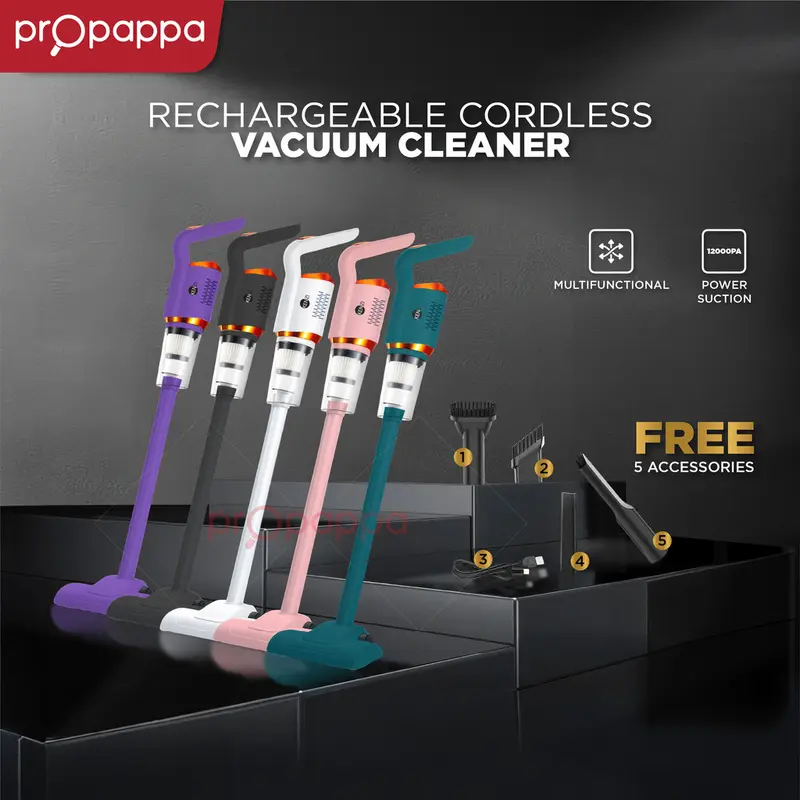
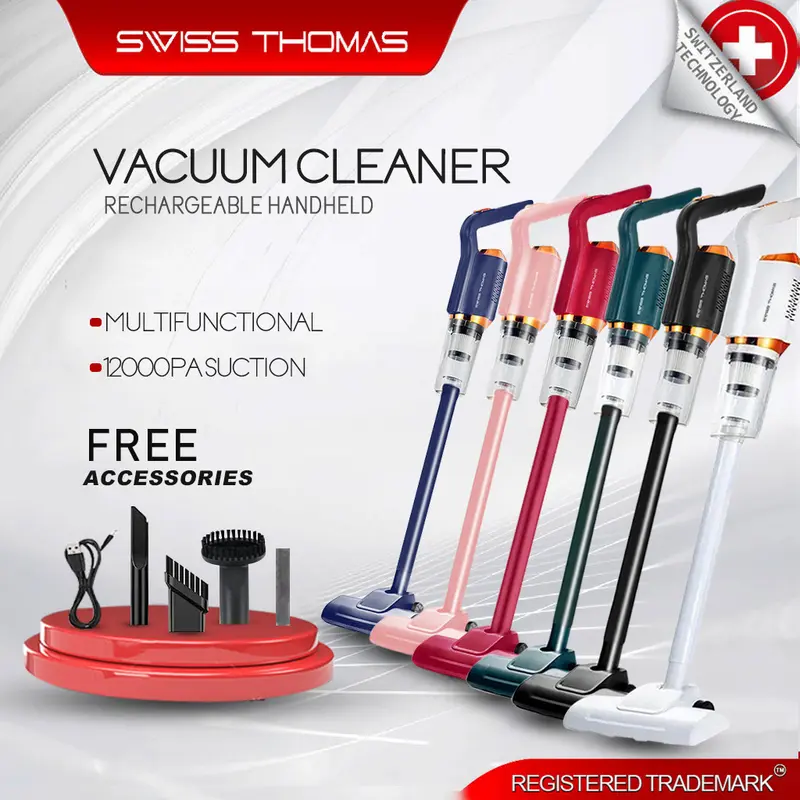
Cordless stick vacuums trade raw capacity for convenience. They suit quick daily passes over hard floors and low-pile rugs, and they suit homes where carrying a heavier machine up stairs is the reason cleaning gets skipped. The constraint is battery runtime and bin size, both of which are smaller than a corded machine.
Robotic vacuums suit regular maintenance cleaning on open, uncluttered floors. They struggle with stairs, thick pile, and rooms where cables and loose items stay on the ground. A robot does not replace a full clean; it reduces how often one is needed.
Upright vacuums remain the strongest option for wall-to-wall carpet in a single-level home. They carry larger bins and usually run from mains power, so runtime is not a factor. The trade-off is weight and storage space.
Canister vacuums suit mixed flooring and reach under furniture more easily than an upright. They are harder to move between floors because the body trails behind.
Handheld vacuums cover car interiors, upholstery, stairs, and small spills. They are a supplement rather than a main vacuum in most homes.
Pet hair, filtration, and battery runtime
Pet hair is the single most common reason a household upgrades, and it changes what to look for. Hair wraps around brush rolls, so a brush roll that can be removed and cleaned without tools matters more than a headline suction figure. Filtration matters for allergy sufferers, and sealed systems with a washable or replaceable filter are easier to maintain over years than disposable-only designs.
Battery runtime is the specification most likely to disappoint. A quoted runtime is usually measured on the lowest power setting, and the highest setting drains a battery far faster. For a cordless stick vacuum, the practical question is whether the machine finishes the largest room in the home on the setting that actually picks up debris.
How to Compare a Black Friday Vacuum Deal Before Buying
A discount percentage is only meaningful against the price the model normally sells for. Retailers sometimes raise a reference price before the sale, which makes a modest cut look dramatic. Checking the model's ordinary selling price across a few retailers before the sale week removes that problem entirely.
The comparison sequence below works for any vacuum type and does not depend on which retailer is running the promotion.
- Confirm which vacuum type the home actually needs, based on flooring, stairs, pets, and storage space.
- Check the model's normal selling price across more than one retailer before the sale period begins.
- Verify the warranty length, what it covers, and whether it is handled locally or requires shipping the unit away.
- Read the return window and whether opened vacuum boxes remain eligible for a refund.
- Confirm stock availability and the delivery timeline, since sale-period orders often ship later than usual.
- Check that filters, brush rolls, and batteries for that model are available as separate purchases.
The last item is the one buyers skip most often. A vacuum is a long-term purchase, and a model whose consumables are hard to find becomes expensive or unusable within a couple of years, regardless of what was paid for it.
Signals that a discount is genuine
A genuine discount usually shows a price that is lower than the model's price in the weeks before the sale, not just lower than a crossed-out figure on the same page. It also tends to appear on a model that has been on the market long enough to have a track record. A very deep cut on a brand-new model with no independent reviews is worth treating with caution.
Retailer Ad Scans and Timing Around
Retailer ad scans are the earliest reliable signal of what will actually be discounted. They typically surface before the sale opens, and they list the specific models and prices rather than a general category promise. Reading them early allows a shortlist to be built before stock moves.
Timing within the window matters less than it used to. Prices on the same model can shift between the opening days and the final Monday, and the lowest price is not always on the first day. Stock, however, is most reliable early, and popular models in the mid-tier range are the ones most likely to sell out.
For buyers in Malaysia, the practical constraint is delivery rather than the sale itself. Orders placed during a peak discount period can take longer to arrive, and a vacuum bought as a replacement for a broken unit is not useful if it arrives three weeks later. Confirming the delivery estimate before paying avoids that.
Black Friday against the following Monday
The two events overlap heavily and often share the same pricing. Where they differ, the Monday event sometimes carries additional stock rather than deeper cuts. A buyer who has already identified a specific model and confirmed its normal price is in a position to buy whenever the price is right, rather than waiting for a date that may not improve on it.
Warranty Returns and After Sales Checks for Vacuum Purchases
Warranty terms vary more between sellers than between vacuum types. The details worth confirming are the covered period, whether the battery and motor are included, and who performs the repair. A warranty that requires shipping the unit overseas is far less useful than one handled locally.
Return terms deserve the same attention. Some sellers exclude opened vacuum boxes from refunds, which removes the option of returning a machine that does not suit the home after a trial. Others apply a restocking fee. Both are worth knowing before payment rather than after.
Consumables are the quiet long-term cost. Bags, filters, and replacement batteries are recurring purchases, and a model with widely available parts is cheaper to own over five years than one with a lower sticker price and no parts supply.
Where professional cleaning fits
Some cleaning tasks sit outside what a household vacuum handles well. Deep carpet and rug cleaning, curtain cleaning, and upholstery work need equipment and process that a domestic machine does not provide. Sinar Saredah Sdn Bhd, a laundry and dry cleaning provider operating in Kuching and Miri with more than 38 years serving Sarawak, lists carpet cleaning from RM 100 to RM 150 for a small carpet and curtain cleaning at RM 40 per kilogram, with final cost depending on weight, fabric type, condition, and whether removal or rehanging support is needed. For households weighing a vacuum purchase against occasional professional cleaning, those published rates give a comparison point.
Common Questions About
Is Black Friday a good time to buy a vacuum? It is a reasonable time for mid-tier and outgoing models, because retailers clear stock ahead of new releases. It is a weaker time for newly launched models, which rarely carry the deepest cuts.
Which vacuum type gets the biggest discounts? Cordless stick vacuums and robotic vacuums appear most often in promotion pages, largely because they are the highest-volume categories and the ones with the fastest model turnover.
Should a robot vacuum replace a normal vacuum? No. A robot handles regular surface maintenance on open floors. Stairs, thick carpet, upholstery, and car interiors still need a stick, upright, canister, or handheld machine.
What matters more, suction or filtration? Neither alone. Suction determines how much debris is lifted, and filtration determines how much of it stays in the air. For households with allergies or pets, a sealed system with a maintainable filter is the more useful specification.
How long should a vacuum last? It depends on the type and how well the filters and brush rolls are maintained. Cordless models are usually limited by battery life, while corded uprights and canisters often last longer because they have fewer consumable parts.
For households in Kuching and Miri that would rather not buy a machine for a task it handles poorly, Sinar Saredah can be reached on 0176325699 to discuss carpet, curtain, and specialist cleaning.