Clearing Pipe Blockage Without Damaging the Drain
Clear Pipe Blockage starts with the gentlest method that matches the fixture, then moves to a plunger, a drain snake, or P-trap access before any chemical drain cleaner is considered.
The sequence below follows that order because each step adds force or intrusion. A sink that drains slowly often responds to hot water alone. A fixture that holds standing water usually needs suction or a mechanical tool. Knowing which stage the blockage has reached prevents unnecessary damage to the pipe and keeps the work reversible.
What Usually Causes a Blocked Pipe
Most household blockages form from material that cools, settles, or snags inside the pipe rather than from a single large object. Kitchen drains collect grease, cooking oil, and food particles that coat the pipe wall and narrow the opening over time. Bathroom drains collect soap scum, hair, and skin cells that bind together into a mat. Toilets and floor drains can collect paper, wipes, and mineral scale.
Older metal pipes corrode and roughen on the inside, which gives debris more surface to catch on. That is why the same habit that keeps a newer pipe flowing can still produce a blockage in an older one. Tree roots and collapsed sections are outside the reach of household tools, and those cases show up as repeated blockages in the same line no matter how often it is cleared.
Tools and Materials to Prepare First
Gather everything before starting so the work is not interrupted mid-task. A bucket and old towels protect the floor under a sink. Rubber gloves protect the hands from grey water and from any cleaner used later. A cup or small container helps bail standing water out of the basin before plunging, since a full basin reduces the suction a plunger can create.
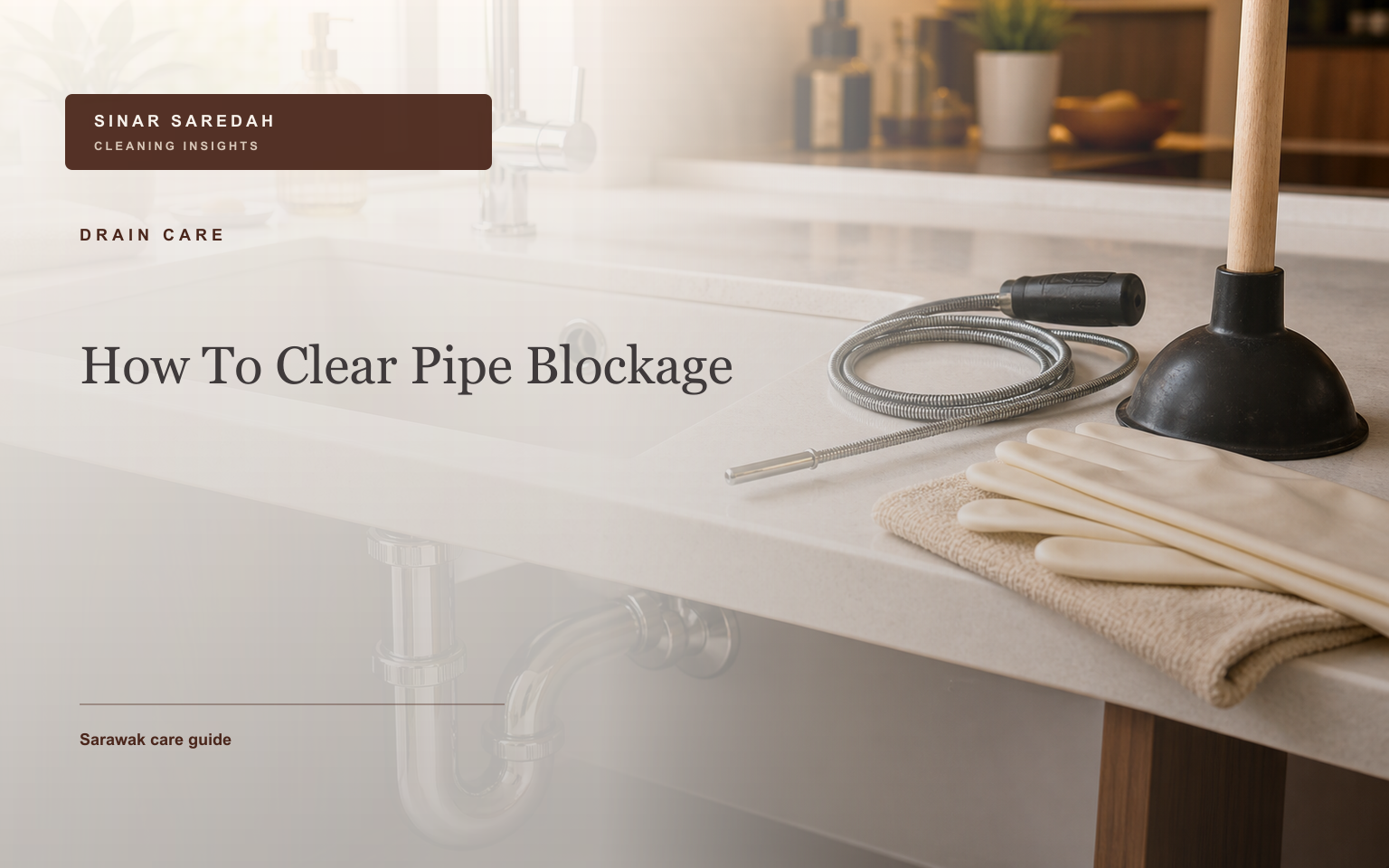
The core tools are a cup plunger for sinks and a flange plunger for toilets, a drain snake or auger for reaching past the trap, and a screwdriver or adjustable wrench for removing a P-trap. Hot water, baking soda, and vinegar are the common household materials used in the gentler methods. Chemical drain cleaner is the last option, not the first, because it is the hardest to undo if the blockage turns out to be something else.
Common clearing methods, what each suits, and the main risk
Method
|
Best suited to
|
Main risk to watch
|
Hot water flush
|
Slow drains with grease or soap build-up
|
Can soften some plastic waste fittings if poured at full boil
|
Baking soda and vinegar
|
Light organic build-up and odour
|
Weak against solid or deep blockages
|
Plunger
|
Sinks, showers, and toilets with standing water
|
Poor seal wastes effort and can splash contaminated water
|
Drain snake
|
Hair and debris past the trap
|
Forcing the cable can scratch or crack older pipe
|
P-trap removal
|
Sink blockages close to the outlet
|
Water spillage and damaged seals if refitted carelessly
|
Chemical drain cleaner
|
Stubborn organic clogs when other methods fail
|
Corrosive to skin and eyes, and hazardous if later work opens the pipe
|
How to Clear Pipe Blockage Step by Step
Work through the sequence in order and stop as soon as the water runs freely. Each stage is more forceful than the last, so skipping ahead risks damaging a pipe that a gentler method would have cleared.
- Remove standing water from the basin with a cup, then place a bucket and towels underneath the fixture.
- Pour hot, not boiling, water down the drain in stages and watch whether the level drops.
- Mix baking soda and vinegar, pour it in, wait, then flush with hot water to loosen light organic build-up.
- Seal the overflow opening with a wet cloth and plunge with firm, steady strokes for about twenty seconds.
- Feed a drain snake into the drain, turn it as it meets resistance, and pull the debris back out.
- Place the bucket under the P-trap, unscrew it, clean the inside, and refit it with the seals seated correctly.
- Use a chemical drain cleaner only if the blockage remains, and follow the label directions exactly.
- Flush the line with hot water once flow returns to confirm the blockage has cleared.
If the water backs up in a second fixture when one is used, the blockage sits in the shared line rather than in the trap. That pattern is a signal to stop and reassess rather than to keep plunging.
When a Blocked Pipe Needs a Professional
Some blockages sit beyond the reach of household tools. A professional plumber has equipment such as a powered auger, a drain camera, and a hydro-jetting unit that can clear and inspect a line without repeated guesswork. The decision point is usually clear from the symptoms rather than from how long the problem has lasted.
Call a professional when more than one fixture backs up at the same time, when sewage odour or sewage appears in a drain, when the same line blocks again within a short period, or when a chemical cleaner has already been poured and the line is still blocked. Chemical residue makes later mechanical work hazardous, so that information matters to whoever attends the site.
Repeated blockages in the same line point to a structural cause such as root intrusion, a sagging pipe, or scale build-up. Clearing the symptom each time does not fix the cause, and a camera inspection is the usual way to confirm what is happening inside the pipe.
Preventing Blockage From Coming Back
Prevention is mostly about what enters the drain and how much water follows it. Small habits reduce how often the same fixture needs attention.
- Wipe grease and oil from pans into a bin instead of rinsing them down the sink.
- Fit a strainer over kitchen and bathroom drains and empty it into the bin.
- Run hot water for a short time after each use to move residue along the pipe.
- Flush the drain with hot water or a baking soda and vinegar mix on a regular schedule.
- Keep wipes, cotton buds, and sanitary items out of the toilet and drains.
For commercial premises, the same logic applies at a larger scale. Shared washrooms, staff pantries, and kitchen areas collect the same kinds of debris across more users, so scheduled cleaning and drain care reduce the chance of a blockage interrupting operations. Sinar Saredah Sdn Bhd provides commercial cleaning services in Kuching and Miri, including work in counters, offices, administration zones, and operational areas, and has served Sarawak for more than 38 years. Facilities that need consistent hygiene alongside drain care can reach the team on 0176325699.