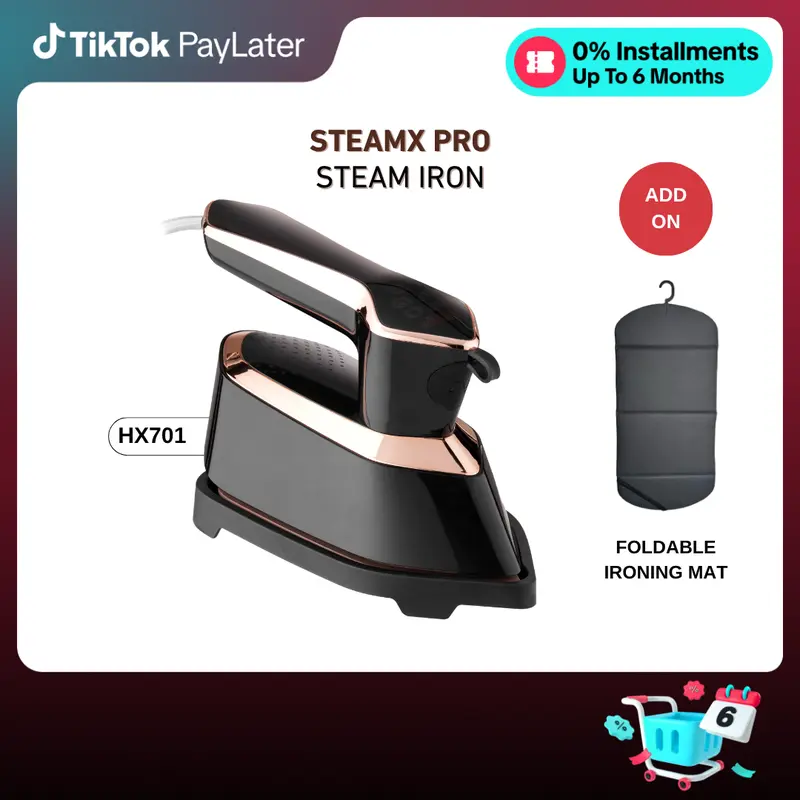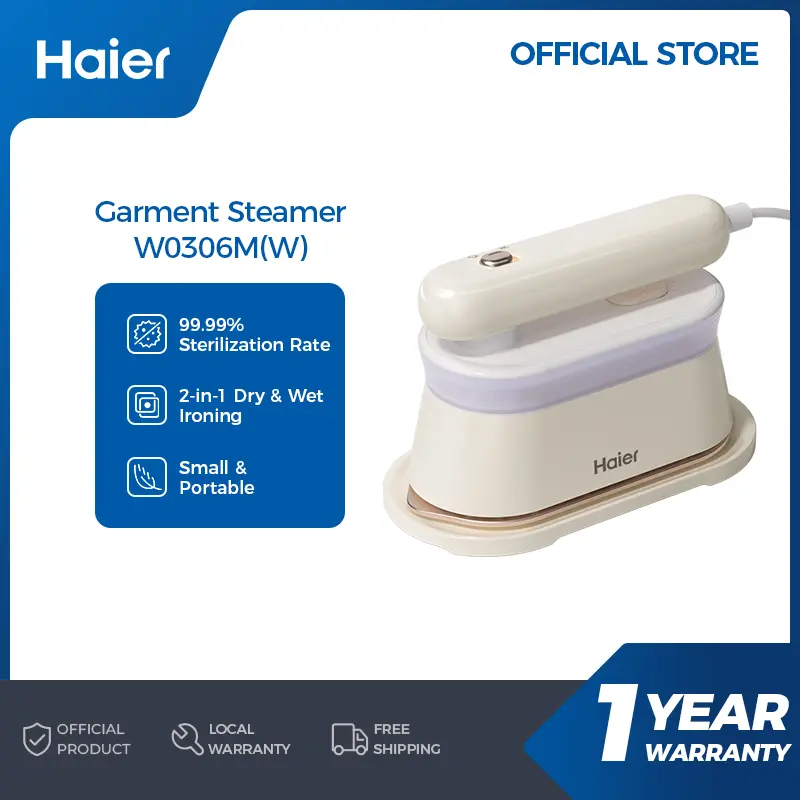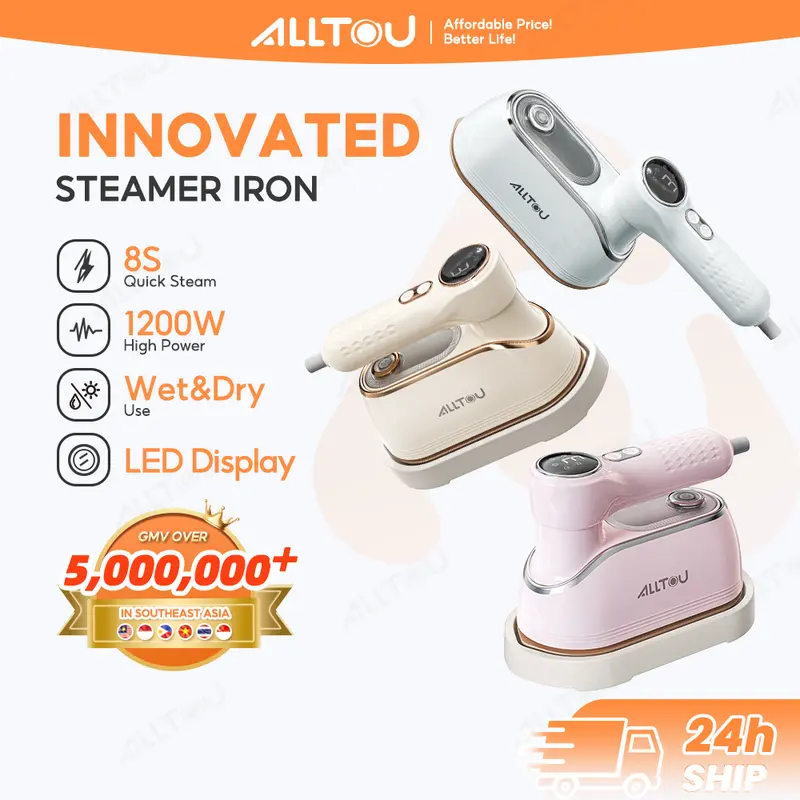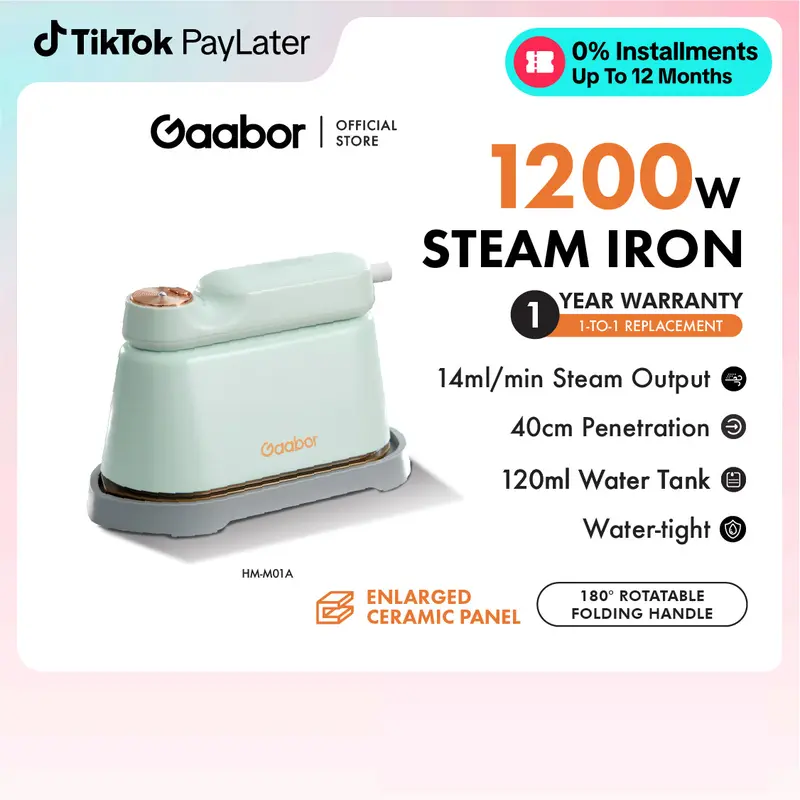














The cordless steamer category covers two different tools that share one design idea. One is a battery-powered handheld garment steamer built to relax wrinkles in shirts, blouses, and hanging fabrics. The other is a handheld steam cleaner aimed at surfaces such as tile, grout, upholstery, and car interiors. Both cut the power cord, and both pay for that freedom somewhere else in the design.
That trade is the whole story of this category. Removing the cord removes a fixed power supply, so the tool must carry its own energy in a battery. Every other decision follows from that: how fast the unit heats, how long it runs, how much water it holds, and how much steam it can push through a nozzle before the tank runs dry.
Cordless Steamer. What Cordless Power Changes
A corded steamer can draw as much power as its plug and heating element allow, because the wall supplies energy continuously. A cordless steamer cannot. It draws from a battery with a fixed amount of stored energy, so the heating element and the pump compete for the same limited supply.
That constraint shows up in three places at once. Heat-up time depends on how quickly the battery can bring the element to steaming temperature. Runtime depends on how much energy remains after that. Steam output depends on how much power is left to convert water into vapour while the pump keeps feeding the chamber.
None of those figures are universal. They vary by model, battery chemistry, and how the manufacturer balances the three. A tool tuned for fast heat-up tends to trade away runtime. A tool tuned for long runtime tends to trade away peak steam output. Buyers comparing a cordless steamer against a corded one are really comparing a fixed energy budget against an unlimited one.
How a Cordless Steamer Handles Heat-Up and Runtime
Heat-up and runtime pull against each other on the same battery. Pushing more current into the heating element shortens the wait but drains stored energy faster, so the two numbers rarely improve together.
Runtime is usually quoted per charge, and that figure assumes a particular steam setting. A lower steam rate stretches the charge; a higher rate shortens it. Continuous trigger use also drains faster than intermittent use, because the pump and element run the whole time the trigger is held.
Battery type matters here. A removable battery pack can be swapped mid-job, which effectively extends runtime without waiting for a recharge. A sealed internal battery cannot, so the work stops when the charge does. That single design choice often decides whether a cordless steamer suits a long cleaning session or only a short touch-up.
Charging time is the other half of the equation. A tool that runs for a short burst but takes hours to recharge is a poor fit for back-to-back tasks. A tool with a swappable pack sidesteps the problem entirely, provided a spare pack is on hand.
Tank Capacity and Refill Breaks in Cordless Steamer Use
Tank capacity sets how long the tool can steam before it needs water, independent of how much battery remains. A small tank means frequent refills; a large tank adds weight, which matters more on a cordless tool because the battery already contributes mass.
Refilling usually interrupts the job. Most steamers need to cool before the tank is opened safely, because the water chamber sits close to the heating element and steam can escape when the cap is removed. That cooldown adds time to every refill, so a small tank costs more than the water it holds.
The practical result is a working rhythm: heat up, steam until the tank empties, wait for the unit to cool, refill, and resume. On a corded steamer the same rhythm exists, but the cord does not add a second limit on top of it. On a cordless steamer, battery and tank both run down, and whichever empties first stops the work.
Garment Care and Surface Cleaning Jobs a Cordless Steamer Suits
The cordless format earns its place where a cord would be awkward or unsafe to drag. Hanging garments are the clearest case: a handheld steamer can be lifted to a shirt on a hanger, run down a sleeve, and moved to the next item without finding an outlet or managing a trailing cable.
Travel and small spaces suit the format for the same reason. A portable steamer that fits in a bag and runs on its own battery can be used in a hotel room, a small apartment, or a shared office without hunting for a socket.
Surface work follows a similar pattern. Upholstery, car interiors, tile, and grout are all areas where a cord gets in the way, snags on furniture, or cannot reach without an extension lead. A battery-powered steamer handles short passes over those surfaces well, especially where the job is spot treatment rather than whole-room cleaning.
Quick touch-ups are the strongest fit. A few creases before a meeting, a spill on a sofa arm, a mark on a car seat: these are short tasks that a cordless steamer finishes inside a single charge and a single tank.
Where a Cordless Steamer Falls Short
Long or continuous work is the weak point. A corded steamer can run as long as its tank holds water and the outlet keeps supplying power. A cordless steamer stops when the battery empties, and no amount of refilling changes that.
Peak steam output is the second limit. Battery energy has to cover heating and pumping at once, so a cordless unit may produce less sustained steam than a corded model drawing directly from the mains. For heavy grease, deep grout lines, or large fabric panels, that difference is noticeable.
Weight is the third. A battery adds mass to a tool that is held in one hand, often above shoulder height. A corded handheld steamer can be lighter because it does not carry its own power supply.
Cost and lifespan are worth weighing too. Batteries degrade with charge cycles, so a cordless steamer has a component that a corded one does not. Replacement packs, where available, add to the long-term cost of ownership.
What to Confirm Before Choosing a Cordless Steamer
Specifications decide whether a cordless steamer fits a particular job, and those figures should come from the manufacturer rather than from a general description. The checks below cover the details that change the answer most.
- Confirm the battery type and whether the pack is removable or sealed into the body.
- Check the quoted runtime per charge and note which steam setting that figure assumes.
- Check the tank capacity and whether the tank can be refilled while the unit is still hot.
- Check the heat-up time from cold start to first steam.
- Confirm which attachments are included, such as a fabric brush, a jet nozzle, or an extension hose.
- Check the charging time and whether a spare battery is sold separately.
Two of those checks matter more than the rest. A removable battery turns a short-runtime tool into a usable one, because a charged spare extends the session without a wait. A tank that can be refilled without a full cooldown removes the biggest hidden delay in cordless use.
Where the numbers are not published, the tool is hard to compare honestly against a corded alternative. A cordless steamer is a reasonable choice when the job is short, the cord would be a genuine obstacle, and the battery can be managed. It is a poor choice when the job is long, the surface is heavy with grease or deep-set dirt, or the work cannot pause for a recharge.
For garments and linens that need more than a quick pass, professional laundry and dry cleaning services handle volume that a handheld tool cannot. Sinar Saredah Sdn Bhd has served Sarawak for more than 38 years from Kuching and Miri, with wash, iron, dry cleaning, and household item cleaning listed on its published price guide. Call 0176325699 to ask about a specific item.