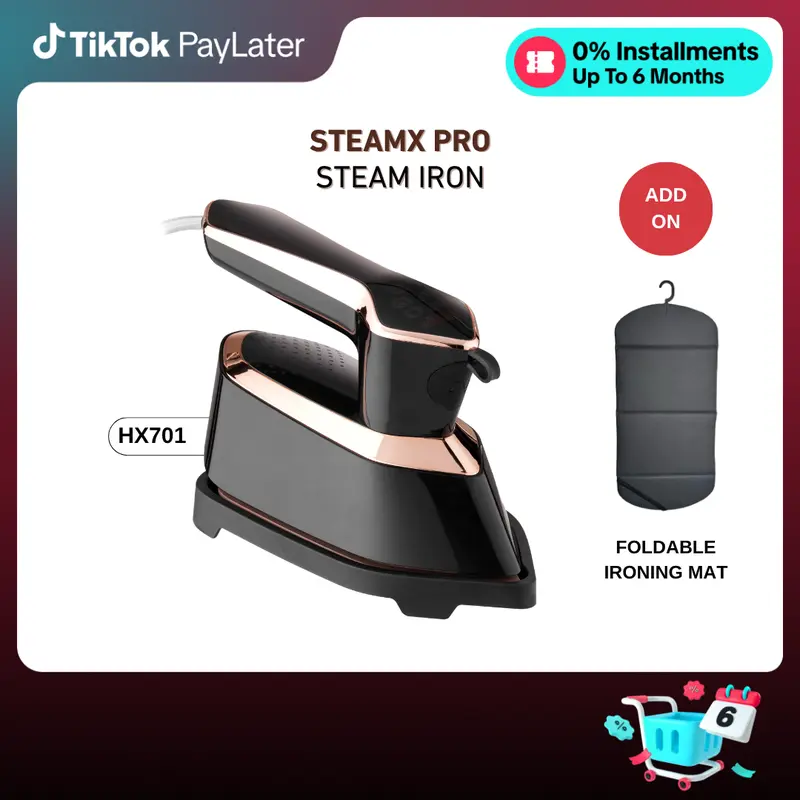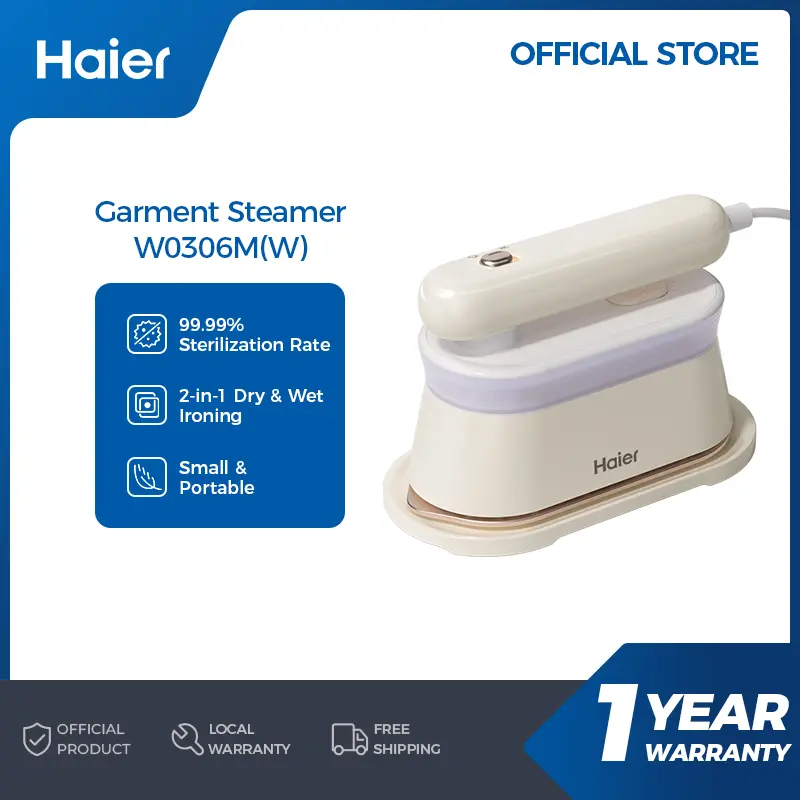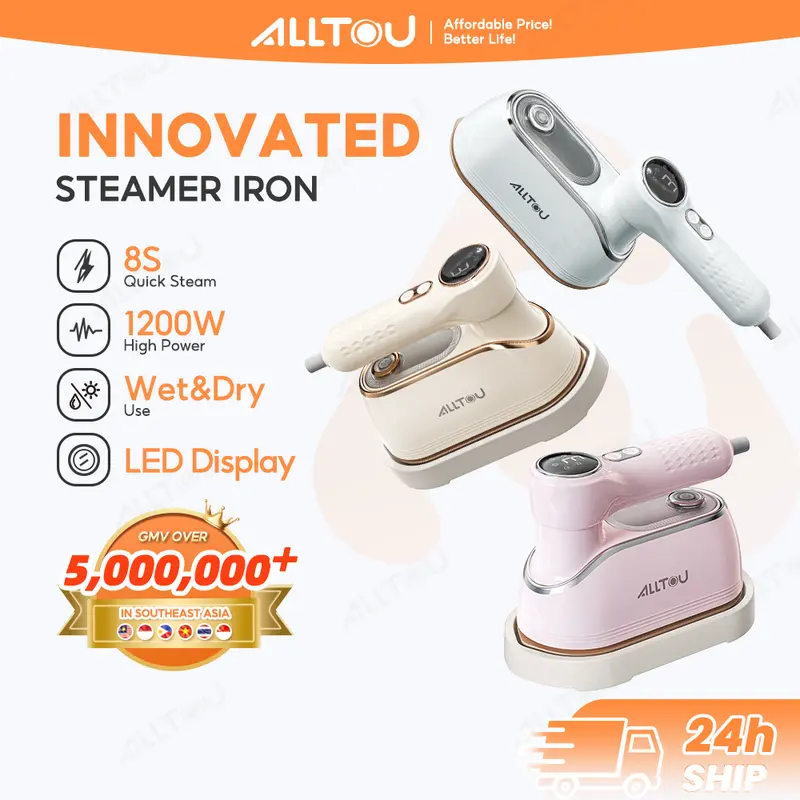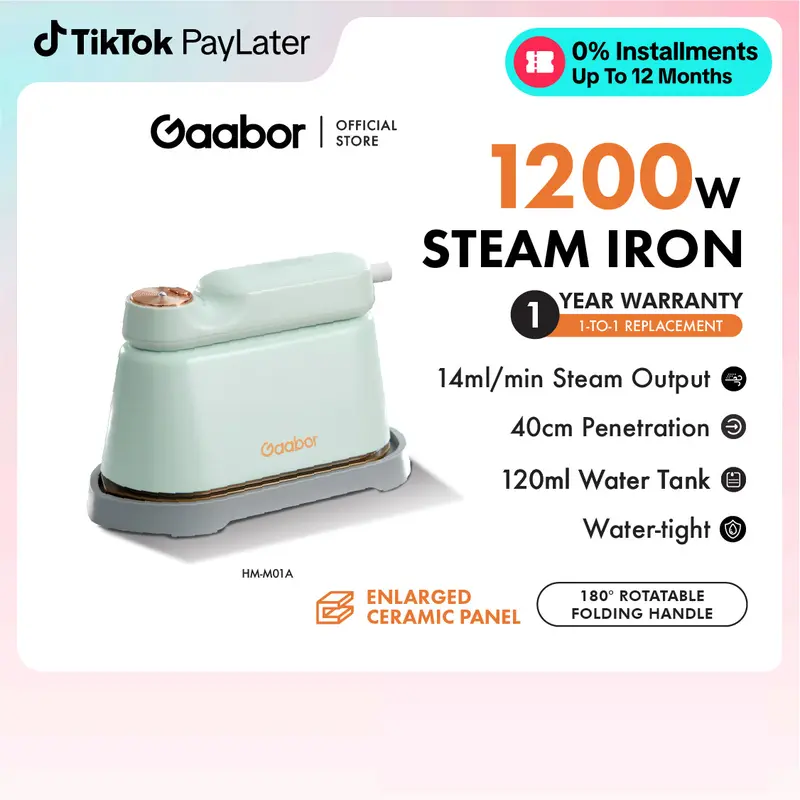










Buying an iron in Malaysia usually comes down to a handful of physical features rather than brand names. The list below covers the checks that separate a tool that flattens a cotton shirt in two passes from one that leaves damp patches and shiny marks.
- Check the soleplate material and how smoothly it moves across cotton, linen, and synthetics.
- Compare steam output and whether the water tank can be refilled without unplugging.
- Decide between corded, cordless, and travel formats based on how much ironing happens at one time.
- Confirm the fabric settings cover the garments actually worn, including baju kurung, uniforms, and office shirts.
- Weigh the iron in hand, since a heavy unit presses better but tires the wrist faster.
- Check whether the water tank is removable and whether the unit accepts tap water.
What makes a good iron for clothes
Four physical properties decide most of the result: heat delivery to the soleplate, steam volume, the glide surface, and how evenly the base holds temperature across a garment. An iron that heats quickly but loses temperature on contact will drag and leave creases behind. An iron with strong steam but a small tank forces repeated refills mid-basket.
Wattage is the usual proxy for heat-up speed, and higher wattage generally means faster recovery between passes. That figure is only useful alongside the soleplate material, because a thin plate releases heat faster than it absorbs it. Without a manufacturer specification sheet, the practical test is simple: press one cotton shirt and watch whether the iron recovers its temperature before the next section.
Soleplate materials and how they glide
The soleplate is the metal or coated face that touches fabric. Common materials are stainless steel, ceramic-coated aluminium, and non-stick coatings. Stainless steel resists scratching and holds heat well but can drag on starched fabric. Ceramic coatings glide more easily and distribute heat evenly, though the coating can chip if the iron is dropped or scraped against a zip.
Non-stick coatings reduce sticking on synthetic blends and starch, which matters for school uniforms and office shirts that are pressed repeatedly. The trade-off is durability. coatings wear faster than bare metal and cannot be repaired once scratched. A scratched soleplate snags fabric and leaves shiny patches on dark trousers.
Glide also depends on the shape of the plate. A pointed tip reaches between buttons and along plackets, while a narrow heel helps when pressing around collars. A wide, heavy plate covers more fabric per pass but is harder to manoeuvre on sleeves and children's clothing.
Steam output, water tanks, and refilling
Steam relaxes fibres so wrinkles release with less pressure. Continuous steam output matters more than a burst function for large loads, because bursts are meant for stubborn creases rather than whole garments. Vertical steam helps with hanging items such as jackets and curtains, though it works best on light wrinkles rather than set-in folds.
Tank size determines how long an iron runs before refilling. A small tank suits one or two garments; a larger tank suits a full basket of uniforms or bedsheets. A removable tank that fills under a tap is faster than carrying the whole iron to a sink, and a clear tank makes the water level visible without guesswork.
Water quality is a real constraint in Malaysian homes. Minerals in tap water build scale inside the steam chamber, which eventually blocks the vents and causes spitting onto fabric. Many irons specify distilled or demineralised water instead. Anti-drip and anti-calc features reduce the mess but do not remove the need to empty the tank after use.
Corded, cordless, and travel formats
Corded irons draw continuous power, so heat and steam stay consistent across a long session. The cord limits reach and tangles on a small board, and a retractable cord helps with storage. For a full basket of laundry, a corded iron is usually the more practical choice.
Cordless irons sit on a heated base and recharge between passes. They remove cord drag entirely, which suits quilting, sewing, and small touch-ups. The limitation is heat loss. the soleplate cools while off the base, so long pressing runs need the iron returned to the stand more often. Cordless models also cost more than comparable corded units.
Travel irons are small, light, and dual-voltage. They handle a few garments in a hotel room but struggle with heavy cotton or a full load. A travel iron is a supplement, not a replacement for a household unit.
Fabric settings, weight, and everyday handling
Temperature dials are grouped by fibre: synthetics such as polyester and nylon sit at the low end, silk and wool in the middle, and cotton and linen at the top. A good iron for clothes covers the full range with clear markings, because guessing the setting risks melting a synthetic blouse or scorching a cotton shirt.
Weight is a genuine trade-off. A heavier iron presses creases out with less downward force from the arm, which helps on linen and thick cotton. The same weight becomes tiring across a large load, and it is harder to control on delicate fabric. A mid-weight iron with strong steam usually balances both.
Handling details matter over years of use. A comfortable grip, a stable heel that lets the iron stand upright without tipping, and an auto shut-off that cuts power when the iron is left flat all reduce risk. A long cord reaches across a board without an extension lead. These are small features that decide whether an iron is pleasant or irritating to use weekly.
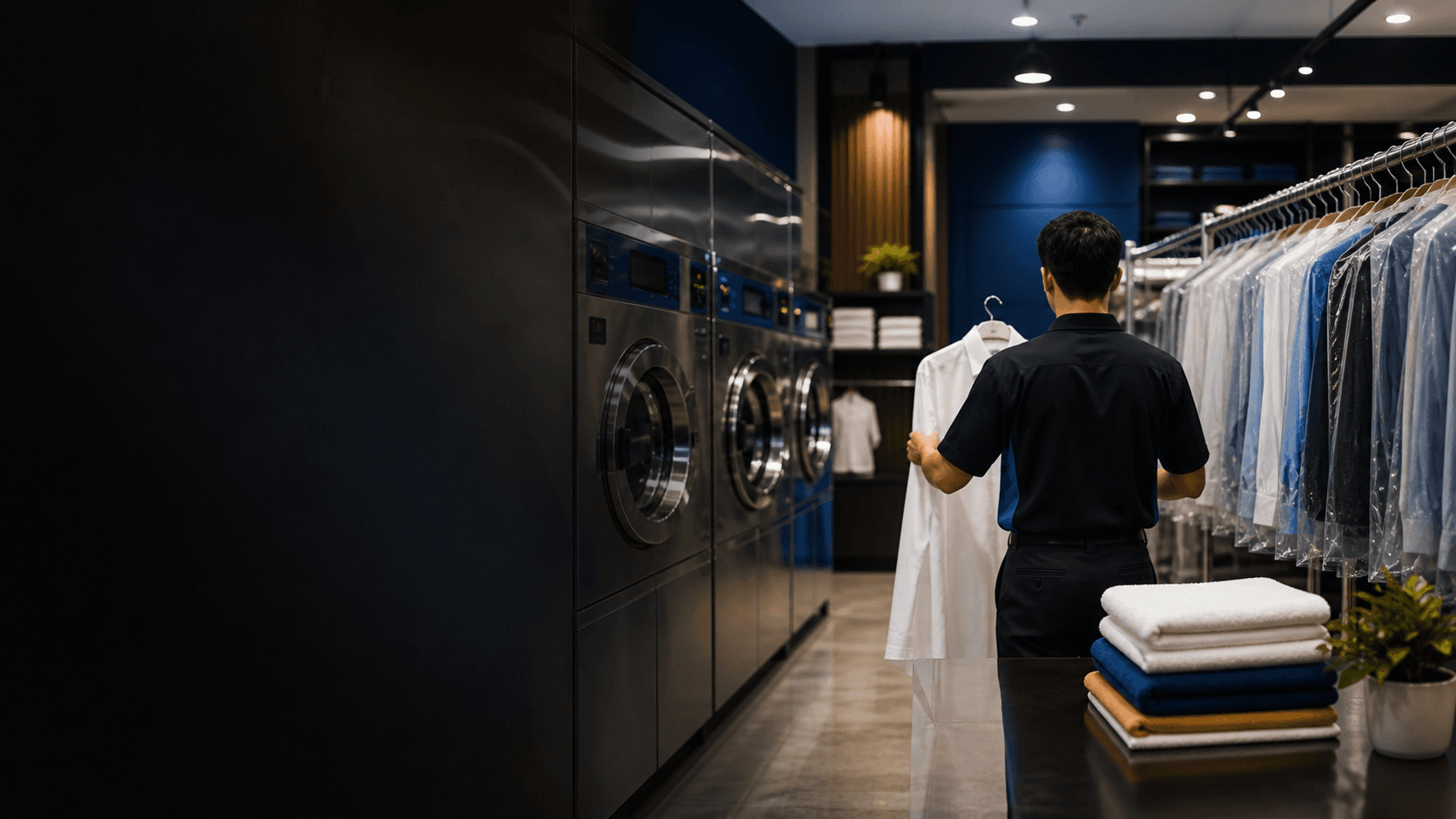
For households that would rather not press at all, Sinar Saredah Sdn Bhd has provided laundry and dry cleaning in Kuching and Miri for over 38 years. Pressing-only service is priced per piece, with shirts at RM 3 to RM 3.50, trousers at RM 4, and baju kurung at RM 15, excluding 8% SST. Wash, iron, and fold is also available per piece, with shirts at RM 10 and baju kurung at RM 20. Call 0176325699 for details.