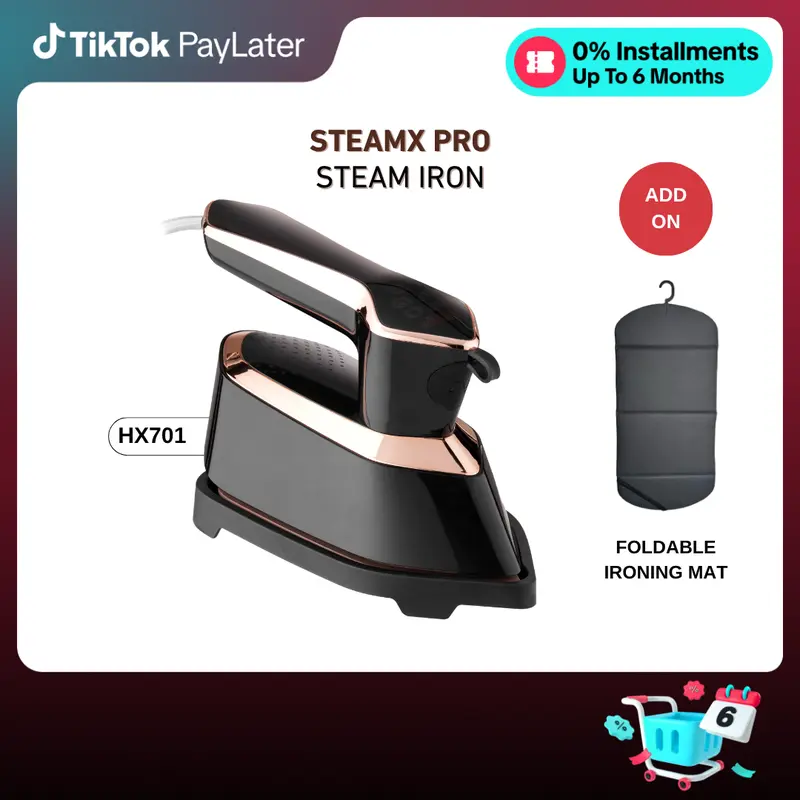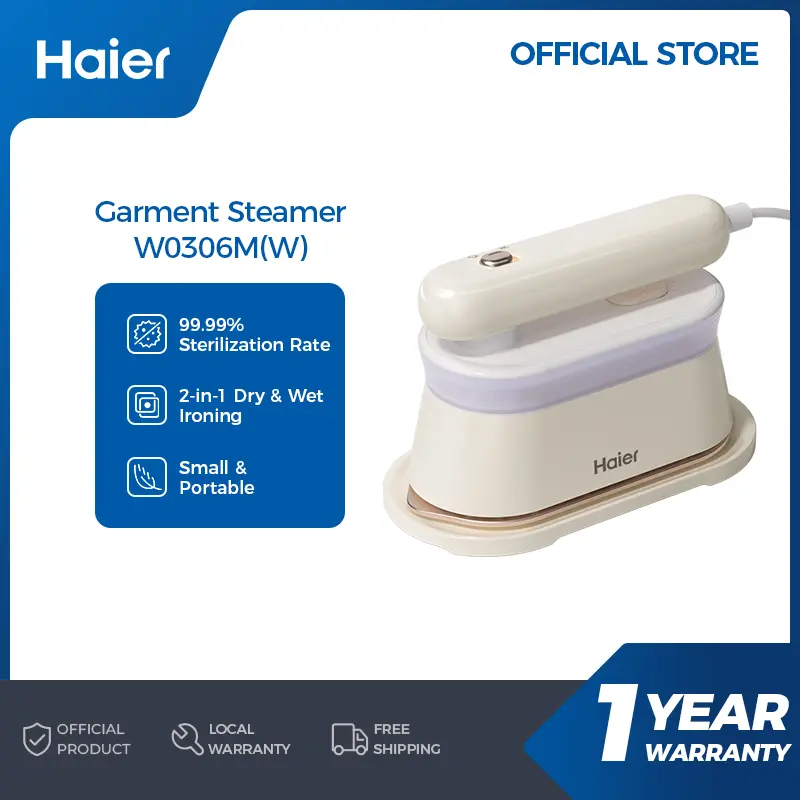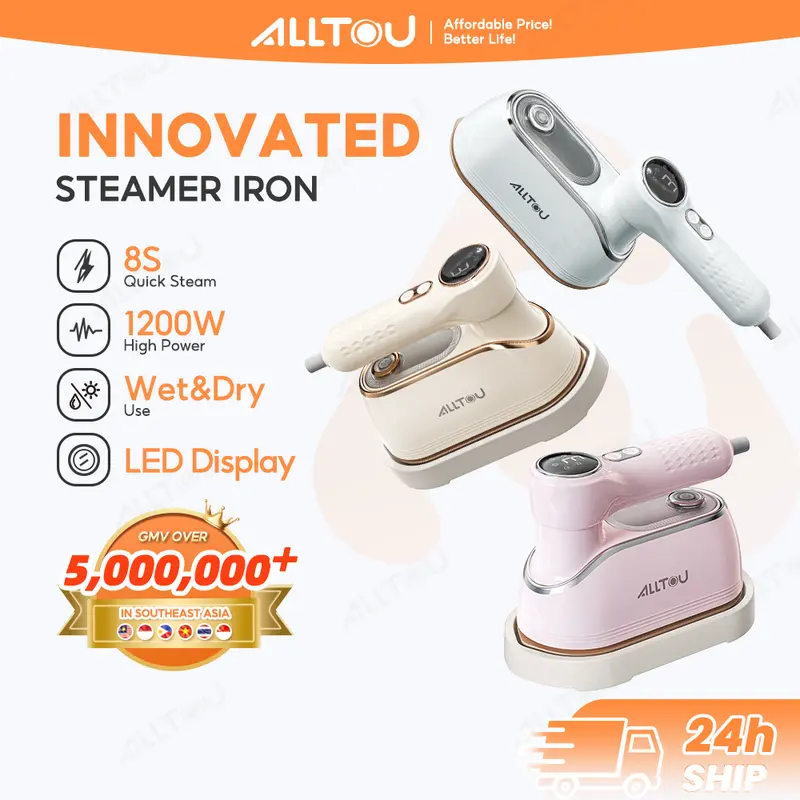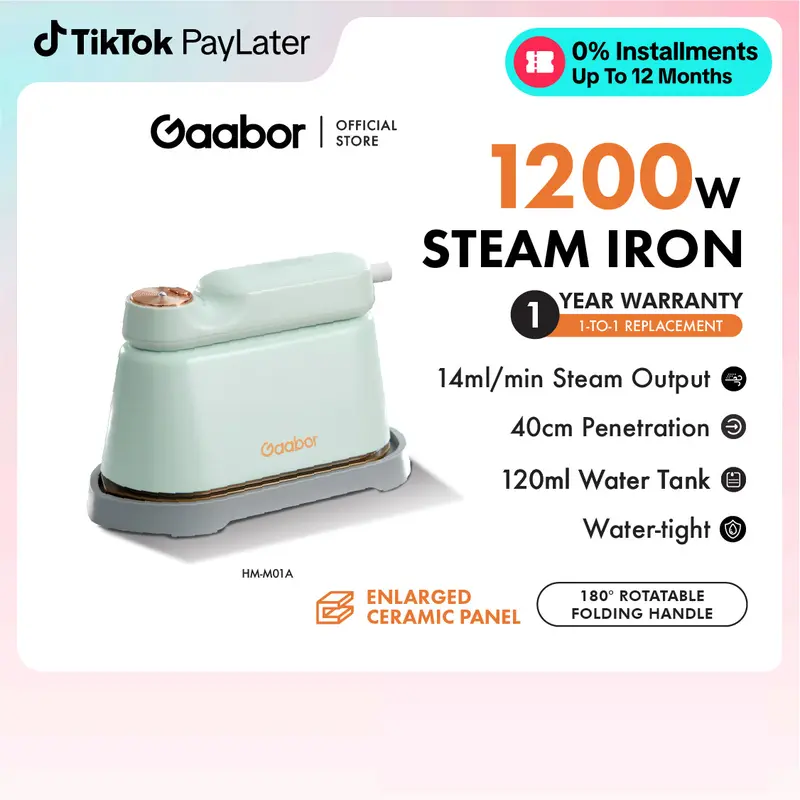














The exact-match query rowenta fabric steamer describes a category of appliance rather than a single product. Rowenta, a brand under Groupe SEB, publishes garment steamers as part of its linen care line, and the pages that rank for this query are mostly brand product listings, user manuals, spare-part catalogues, and retail pages. None of them explain plainly what the appliance does, when steaming beats ironing, or what to weigh before buying. That gap is what this page fills.
What a Rowenta Fabric Steamer Does for Fabric Care
A garment steamer works by passing heated water vapour through fabric. The heat and moisture relax the fibres, so creases fall out with less direct pressure than an iron applies. Rowenta's own product description states that its garment steamers remove creases and smooth out clothing, and that a patented Roll & Press vertical support system provides a flat surface for the garment to be pressed against.
That vertical support detail matters because it changes how the appliance is used. Instead of laying a shirt flat on a board, the garment hangs and the steamer head is pressed against a backing surface. The result is a quicker pass over the fabric and less risk of the shiny patches that a hot iron plate can leave on dark or delicate material.
Steaming also reaches places an iron struggles with. Shoulder seams, gathered waistbands, pleats, and the inside of a jacket lining are all awkward on a board but straightforward when the garment hangs free. Curtains, cushion covers, and other household textiles can be treated in place rather than taken down and pressed.
Where steaming fits and where it does not
Steam relaxes creases; it does not press a sharp edge. A formal shirt collar, a knife pleat, or a crease down a trouser leg needs the flat plate and pressure of an iron. Steaming is the better tool for refreshing a garment between wears, lifting travel creases, and handling fabrics that scorch easily.
Steam also does not clean. It can freshen a garment and reduce odour, but it does not remove oil-based stains, and it does not replace washing. A stained shirt still needs laundering first.
Rowenta Fabric Steamer in a Laundry and Dry-Cleaning Routine
Most households do not choose between steaming and professional cleaning. They use both, for different jobs. Understanding which task belongs to which method prevents damage and wasted effort.
- Check the care label before any heat or steam touches the garment, since fibre content decides whether steaming is safe.
- Wash or dry clean first if the item carries a stain, because steam sets some marks rather than lifting them.
- Hang the garment on a suitable hanger and let it drop fully before steaming, so gravity does part of the work.
- Steam from the inside where the fabric is delicate, and from the outside where the weave is sturdy.
- Let the garment hang and dry completely before wearing or storing it, so trapped moisture does not turn into mildew.
- Send structured, heavily soiled, or high-value pieces to a professional cleaner rather than steaming them repeatedly.
The division of labour is fairly clear. Everyday cotton, linen, and blended garments respond well to a home steamer. Suits, gowns, beaded or embellished pieces, leather, and anything with a stubborn stain belong with a specialist who can inspect the fabric and choose a method.
In Kuching and Miri, Sinar Saredah Sdn Bhd has provided laundry and dry cleaning services for more than 38 years, with dry cleaning priced per piece and household items such as comforters, curtains, and carpets handled by weight or size. A steamer at home and a professional clean for the difficult pieces is a workable combination rather than a competing choice.
When a steamer saves time and when it does not
A steamer earns its place in a household with a lot of hanging garments, limited ironing space, or fabrics that scorch. It saves the most time on items that only need a refresh, such as a jacket worn once or a dress that has been in a suitcase.
It saves the least time on flat, structured pieces that need a pressed edge, and on large volumes of bedding or uniforms where a laundry service handles the work faster than a handheld appliance. Readers weighing a purchase should count how many garments actually need steaming in a normal week before deciding.
What to Compare Before Choosing a Rowenta Fabric Steamer
Because Rowenta publishes several garment steamer models across different ranges, the practical comparison is between models rather than between brands. The points below are the ones that change daily use.
- Whether the model is upright with a built-in support board or handheld, since that decides how much space it needs and how long a session takes.
- How the water tank is filled and emptied, because a tank that is awkward to refill discourages regular use.
- Whether the manufacturer publishes a heat-up time and a continuous steaming duration for the specific model.
- What accessories ship in the box, such as a fabric brush, crease attachment, or steam bonnet, since these change which garments the appliance handles well.
- Whether spare parts and replacement accessories are listed for that model, which affects how long the appliance stays usable.
- Whether the model appears in the manufacturer's own user manual and support pages, which is the clearest sign of an active product line.
- What the local warranty and service arrangement is, since an appliance bought without a service route is harder to repair.
Rowenta's support pages list a product reference lookup, warranty conditions, and a repair centre locator, and its accessory pages list individual spare parts such as steam brushes, tank caps, and telescopic poles for at least one valet model. That level of parts support is worth checking before committing to any specific model, because it separates a long-term appliance from a disposable one.
Specifications that must come from the manufacturer
Steam output, tank capacity, heat-up time, continuous steaming duration, and power draw vary by model and are not interchangeable between them. Those figures should be read from the product page or user manual for the exact model under consideration, not from a general article or a marketplace listing that may describe a different variant.
The same applies to price and availability in Malaysia. Rowenta does not publish Malaysian retail pricing on the pages reviewed here, and marketplace listings show prices in other currencies. A buyer in Sarawak should confirm the local price, the warranty terms, and the service route with the seller before purchase.
Fabric Types and Garment Care Considerations
Fibre content decides how a fabric responds to steam. The notes below describe general behaviour of common materials rather than instructions for any specific Rowenta model, and the garment's own care label always takes priority.
Cotton and linen tolerate steam well and release creases readily, which makes them the easiest fabrics to refresh. Linen in particular benefits from steam because pressing it flat while dry tends to crease it again.
Wool and wool blends respond to steam because the fibres relax with moisture and heat, but they need care. Sustained direct steam on wool can distort the shape, so short passes and a hanging position are safer than holding the head against one spot.
Silk, rayon, and other delicate fibres are the ones where the care label matters most. Some are labelled dry clean only, and steaming a garment that carries that instruction risks water spotting or shrinkage. Where the label permits it, steaming from the inside with the garment hanging is gentler than pressing.
Synthetics such as polyester and nylon can be sensitive to heat. Steam is generally safer than a hot iron plate on these fabrics, but the temperature setting and the distance between the head and the fabric still matter.
Embellished, beaded, sequinned, and heavily structured garments are the clearest case for professional handling. Steam can loosen adhesives, dull beading, or distort padding in a tailored jacket, and the cost of repairing that damage usually exceeds the cost of cleaning the item properly.
Household fabrics beyond clothing
Steam is not limited to garments. Curtains, cushion covers, table linen, and light upholstery can all be refreshed, and hanging curtains can often be treated in place. Heavier items such as comforters, thick carpets, and large rugs are a different problem, because the volume of fabric is beyond what a handheld or domestic steamer can handle evenly.
Those larger items are where a cleaning service does work a steamer cannot. Sinar Saredah lists curtain cleaning at RM 40 per kilogram for dry cleaning and RM 20 per kilogram for wash, dry and fold, with the final cost depending on curtain weight, fabric type, condition, and whether removal or rehanging support is needed. Carpet cleaning is priced by size, from RM 100 to RM 150 for a small carpet and RM 300 to RM 350 for a large one. Comforters are priced from RM 18 to RM 25 depending on size.
Where to Get Fabric Care Support in Kuching and Miri
A home steamer handles the everyday refresh. Professional cleaning handles the pieces where a mistake is expensive. Sinar Saredah Sdn Bhd operates laundry and dry cleaning services in Kuching and Miri, with branches open every day including public holidays from 7am.
Dry cleaning is priced per piece. A plain dress is RM 20, a long evening dress is RM 40, a two-piece suit is RM 25, a blazer is RM 20, a saree in two pieces is RM 50, and a baju kurung in two pieces is RM 25. Wedding gowns range from RM 70 to RM 150. Pressing only is available from RM 2.50 for a T-shirt and RM 3 for a short-sleeve shirt. All prices exclude 8% SST.
Household items follow a separate list. A king, queen, or single bedsheet is RM 5 to RM 6 for wash, iron and fold, a duvet cover is RM 7, and a pillow case is RM 4. Curtains are charged by weight. Soft toys, plushies, and fabric dolls are also accepted for cleaning, which matters for households where those items are handled daily.
The general manager is Amy Wong. Customers can reach the team on 0176325699 to ask which method suits a specific garment or household item.
Choosing between steaming at home and sending items out
The deciding factor is usually the value of the item against the cost of getting it wrong. A cotton shirt that creases is a low-risk candidate for a home steamer. A tailored jacket, a beaded gown, a wool coat, or a large carpet is not, because the failure mode is damage rather than a crease that can be steamed again.
Volume matters too. A household with a few garments a week gets more from a steamer than a household sending uniforms, bedding, and curtains out in bulk, where a per-kilogram or per-piece service is faster and more consistent than working through the pile one item at a time.
Both approaches can sit side by side. A steamer covers the daily refresh, and a laundry and dry cleaning service covers the structured, delicate, and bulky items that need inspection, the right solvent, and a finish that a domestic appliance cannot produce.