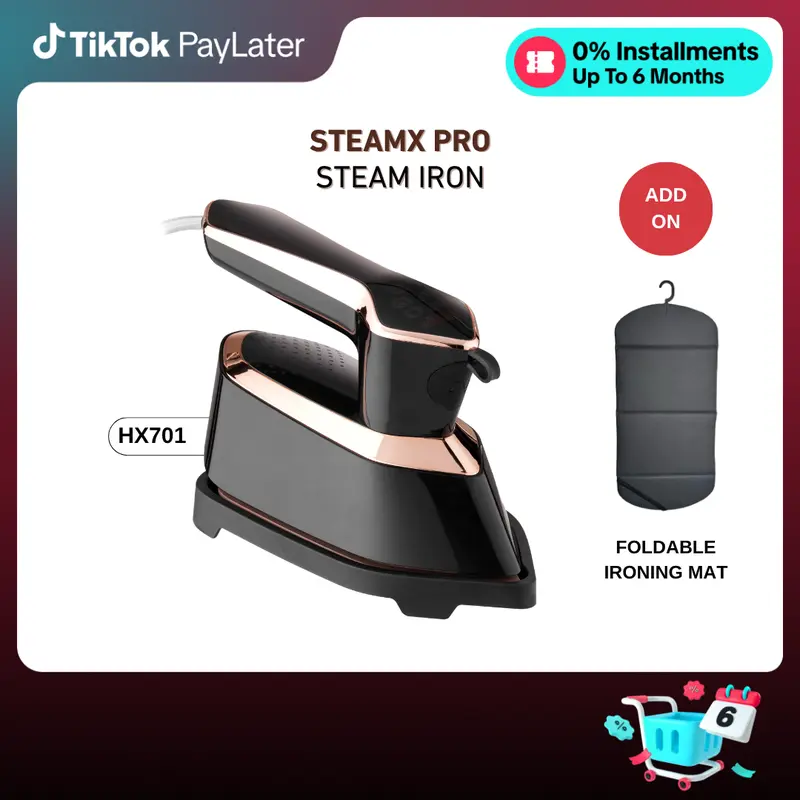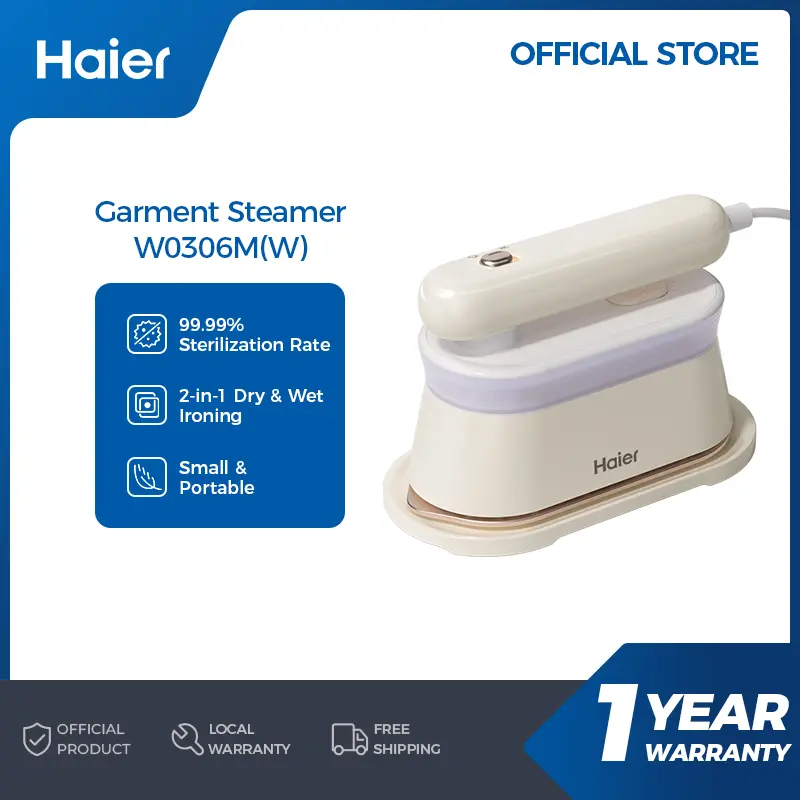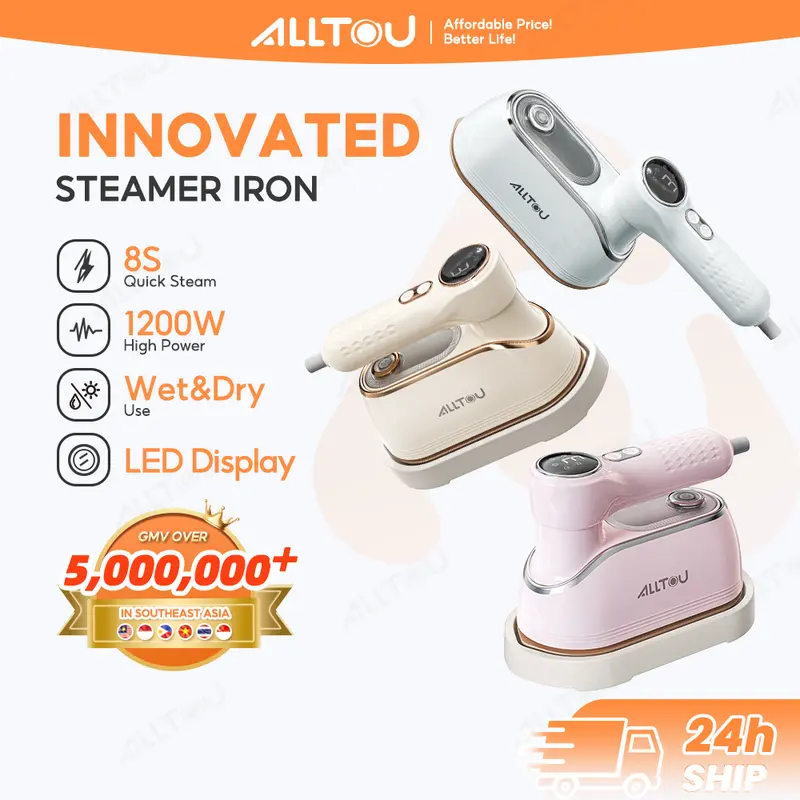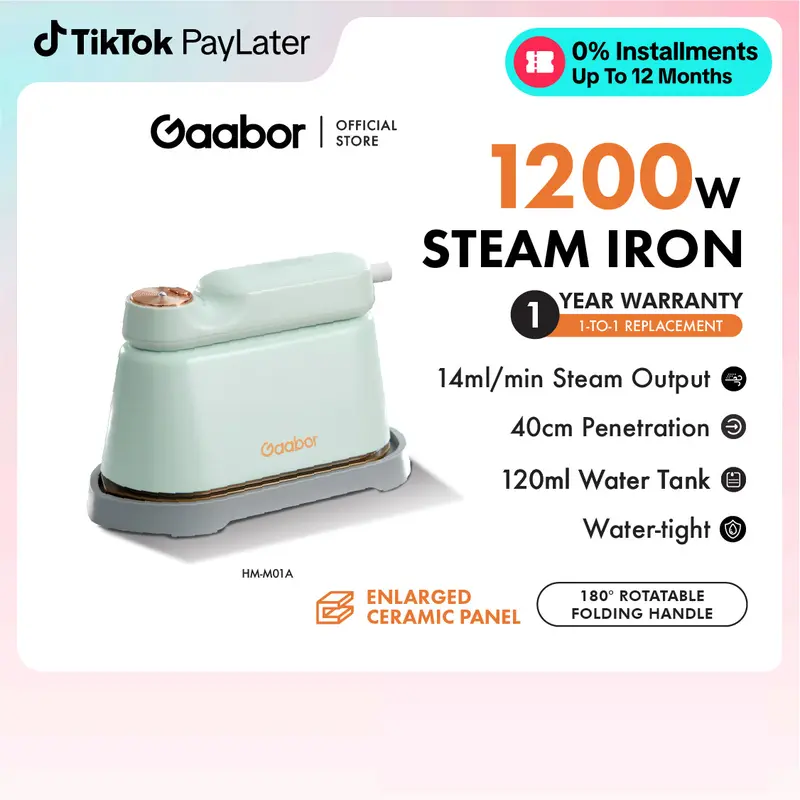











The category exists because hotel irons are unreliable, shared, or missing entirely, and because pressing a shirt on a bathroom counter rarely produces a clean result. A handheld steamer trades the flat pressure of an iron for hot vapour that softens fabric fibres so creases fall out. That trade changes what the tool can and cannot do, and it changes which numbers matter when comparing models.
Best Travel Garment Steamer. What the Compact Options Actually Do
Compact steamers fall into three broad shapes, and the shape usually predicts the trade-offs better than the brand name does.
- Pocket and mini steamers — the smallest bodies, built around short bursts of steam rather than continuous output.
- Standard handheld steamers — the most common travel format, sized to sit in a packing cube or side pocket.
- 2-in-1 steamer and iron units — a heated plate plus steam, which adds pressing ability at the cost of bulk.
- Foldable-handle handhelds — a collapsing grip that shortens packed length without shrinking the tank.
- Dual-voltage handhelds — built to run on more than one mains voltage, which matters for cross-border trips.
- Travel-size upright steamers — a small standing unit with a hanging garment space, closer to a hotel setup than a handheld.
The practical dividing line is not size but duty cycle. A steamer that produces steam for a short window suits one shirt or one dress. A steamer with a larger reservoir and a longer continuous run suits a full outfit, a blazer, or several days of re-wearing the same pieces.
What a steamer does that an iron does not
Steam works on hanging fabric, so it reaches garments that cannot be laid flat on a board: a structured blazer, a pleated skirt, a dress with beading, a scarf, a baju kurung with delicate detailing. It also refreshes a garment that is not dirty but has picked up creases from a suitcase. An iron applies heat and pressure to a flat surface, which is why it produces a sharper crease line and a crisper collar. A steamer softens and relaxes; it does not press a hard edge into cloth.
What a steamer does not replace
Starch, sharp trouser creases, and heavily set wrinkles from long compression are iron territory. A steamer also struggles with very heavy fabrics such as thick denim or a lined wool coat, where the steam cannot penetrate deeply enough to release the fibre. For those cases, a laundry or dry cleaning service handles the garment properly rather than a handheld appliance working against the clock in a hotel room.
Why a Travel Garment Steamer Suits Malaysian Packing Lists
Malaysian travellers pack for two very different climates in the same trip. A domestic flight to Kuching or Kota Kinabalu means humid heat and light fabrics that crease easily in a bag. A long-haul flight to a temperate destination means layers, jackets, and formal wear that arrive compressed after hours in a suitcase. A travel garment steamer addresses both, because the same tool works on a cotton shirt and on a blazer.
There is also a practical reason the category fits Malaysian households specifically. Formal and traditional wear — baju kurung, baju melayu, jubah, saree — often carries fabric that resists flat ironing or cannot be pressed without risk. Steam is the gentler route for those pieces, and it is the reason many travellers keep a handheld steamer at home as well as in the bag.
For anyone who would rather not manage the appliance at all, Sinar Saredah Sdn Bhd has served Sarawak for more than 38 years with laundry and dry cleaning from its Kuching and Miri operations, including pressing-only service for shirts, trousers, blouses, and traditional wear. That is a different solution to the same problem: creases removed before the garment reaches the suitcase.
Packing scenarios where a steamer earns its place
A short business trip with one blazer and two shirts is the clearest case. So is a wedding or formal event abroad, where the outfit travels folded and must look correct on arrival. A multi-city trip with limited laundry access is another. The weakest case is a beach holiday built entirely around knitwear and shorts, where creases rarely matter and the appliance is dead weight.
Packing scenarios where it does not
Carry-on-only travel on a budget airline with a tight weight allowance is a genuine constraint, because every gram competes with clothing. Trips where the accommodation provides a reliable iron and board remove most of the need. Trips built around one outfit that can be hung in a bathroom to release creases with shower steam also reduce the case for carrying an appliance.
Features Worth Comparing Before Buying
Specifications decide whether a steamer is useful on a real trip. The numbers below are the ones that change the experience, and each carries a trade-off rather than a simple better-or-worse answer.
- Weight — lighter units pack more easily but usually hold less water and produce shorter steam runs.
- Water tank capacity — a larger reservoir means fewer refills and longer continuous steaming, at the cost of size and weight.
- Heat-up time — a short wait is convenient for one garment; a longer wait is tolerable when the unit then steams for longer.
- Voltage compatibility — a dual-voltage unit covers more destinations, while a single-voltage unit may need a converter that adds bulk.
- Steam output and continuous run — stronger, longer steam handles heavier fabric; gentler output is safer on delicate material.
- Auto shut-off — a safety feature that matters in a hotel room where the appliance may be set down mid-use.
- Fabric compatibility guidance — manufacturer instructions on which materials are safe to steam, and which are not.
Weight and tank capacity pull against each other directly. A steamer light enough to forget in a bag will usually need a refill partway through an outfit. A steamer with a reservoir large enough for a full outfit will be noticeable in a carry-on. The right balance depends on how many garments need attention per trip, not on which number is larger.
Voltage and plug compatibility
Malaysia runs on a 240-volt supply with Type G plugs, the same plug standard used in the United Kingdom. A steamer bought for Malaysian household use will therefore suit destinations with the same plug and voltage, and will need a plug adapter or a voltage converter elsewhere. A dual-voltage appliance is designed to handle more than one mains voltage, which removes the converter from the packing list but not necessarily the plug adapter. Manufacturer documentation is the only reliable source for what a specific unit supports, and it should be checked before the trip rather than at the destination.
Heat up time and tank capacity in practice
Heat-up time determines how long the appliance sits idle before the first garment. Tank capacity determines how many garments follow. A short heat-up with a small tank suits a traveller who steams one item and stops. A longer heat-up with a larger tank suits a traveller working through several pieces in one session. Neither is universally better, and the choice follows the packing list.
How to Use a Without Damaging Fabric
Fabric damage from steaming usually comes from technique rather than the appliance. The sequence below keeps the garment safe and the result consistent.
- Check the garment care label for any instruction that rules out heat or moisture.
- Fill the reservoir to the marked level and let the unit reach full steam before touching fabric.
- Hang the garment on a hanger with space to move, ideally against a door or curtain rather than a wall.
- Hold the steamer head a short distance from the fabric and move downward in slow, even passes.
- Let the garment hang for a moment after steaming so the fibres cool and set in the relaxed position.
- Empty the reservoir once the garment is done, rather than leaving water sitting in the unit.
The distance between the head and the fabric is the single most important control. Too close and moisture can mark the cloth; too far and the steam disperses before it does any work. Delicate fabrics such as silk, chiffon, and embellished material need a wider gap and a lighter pass. Heavy cotton and linen tolerate closer, slower passes.
Fabric types that need extra care
Delicate and heat-sensitive fabrics are the main risk category. Anything with a coating, a print that reacts to heat, or a finish that the care label warns against should be tested in an inconspicuous area first, or left to a professional cleaner. Traditional wear with embroidery, beading, or metallic thread falls into the same cautious group, because steam can loosen adhesives and distort raised detail.
Common mistakes that cause marks or damage
Pressing the head directly against fabric, steaming a garment that is still damp from a spill, overfilling the reservoir, and using the appliance on a horizontal surface all raise the risk of water spotting. So does steaming a garment that the care label says to dry clean only. When in doubt, the label wins.
Care Water and Voltage Notes
Maintenance is short but it decides how long the appliance lasts. Mineral build-up from tap water is the most common cause of reduced steam output over time, and it is the reason many manufacturers recommend distilled or filtered water. Where the local water is hard, that recommendation matters more, not less.
After each use, the reservoir should be emptied and the unit left to cool before storage. A steamer stored with water inside can develop residue or odour between trips. The head should be wiped clean once it has cooled, and any manufacturer-recommended descaling routine should be followed at the interval the instructions specify.
Voltage deserves a separate note because it is the one mistake that can damage the appliance immediately. A single-voltage unit plugged into the wrong supply can fail on first use. A dual-voltage unit is built for more than one supply, but the plug shape still has to match the socket, which is why a travel adapter remains part of the kit. Manufacturer documentation is the authority on both points.
Where to Buy and What to Confirm in Malaysia
Travel garment steamers are sold through Malaysian electrical retailers, department stores, and online marketplaces, alongside the general small-appliance category. Availability shifts, so the practical approach is to confirm a short list of details at the point of purchase rather than relying on a listing that may be out of date.
Confirm the voltage rating and whether the unit is dual voltage. Confirm the plug type and whether an adapter is included. Confirm the warranty period and whether it is honoured locally or requires shipping the unit abroad. Confirm the tank capacity and heat-up time from the manufacturer's own documentation rather than a marketplace summary. Confirm the return policy, since a steamer that underperforms is easier to exchange early.
For garments that a handheld steamer cannot handle — heavily set creases, structured tailoring, delicate traditional wear, or anything the care label restricts — professional cleaning is the more reliable route. Sinar Saredah Sdn Bhd operates laundry and dry cleaning services in Kuching and Miri, with pressing-only options for shirts, trousers, blouses, and traditional pieces, and the business has served Sarawak for more than 38 years. Travellers who would rather arrive with garments already finished can use that service before departure instead of packing an appliance.
Call 0176325699 for laundry and dry cleaning enquiries in Kuching and Miri.