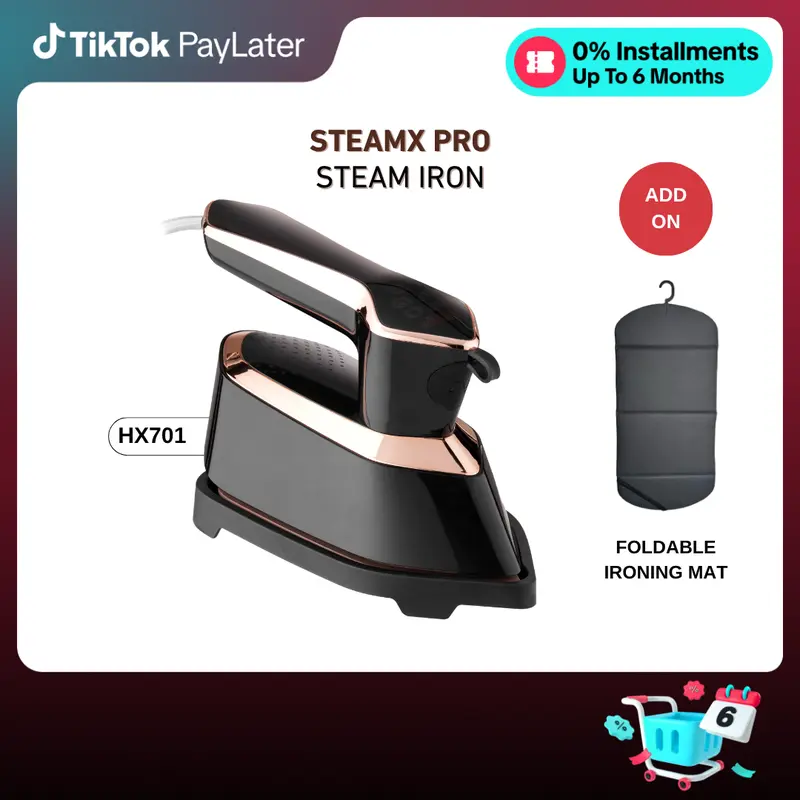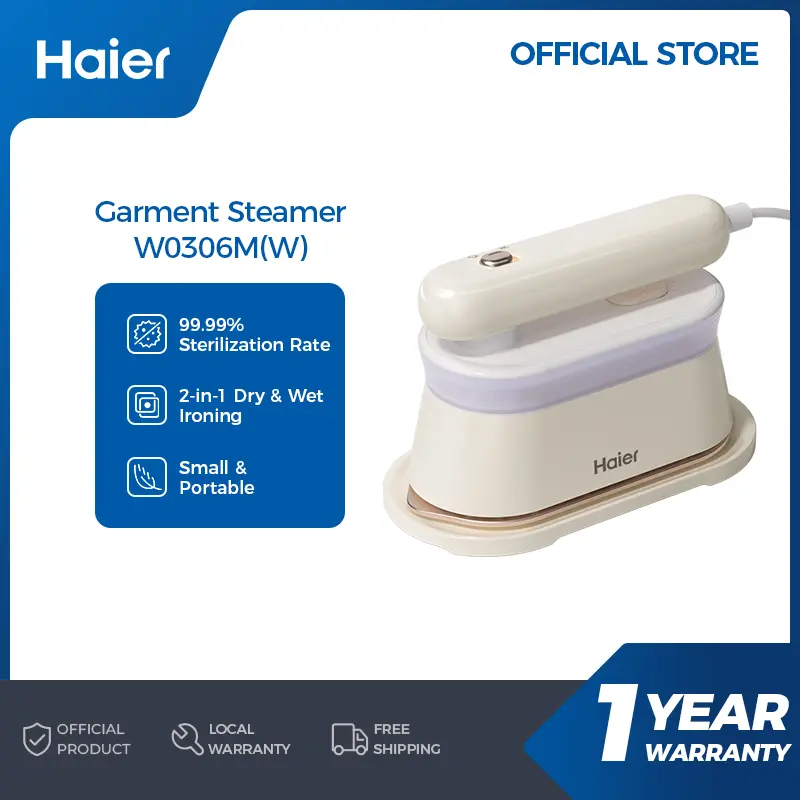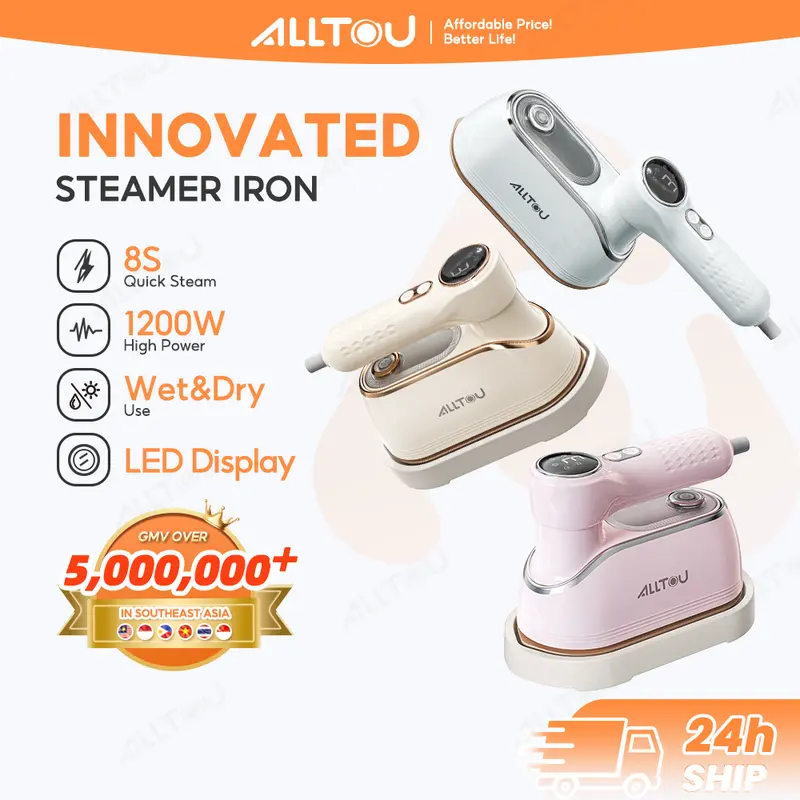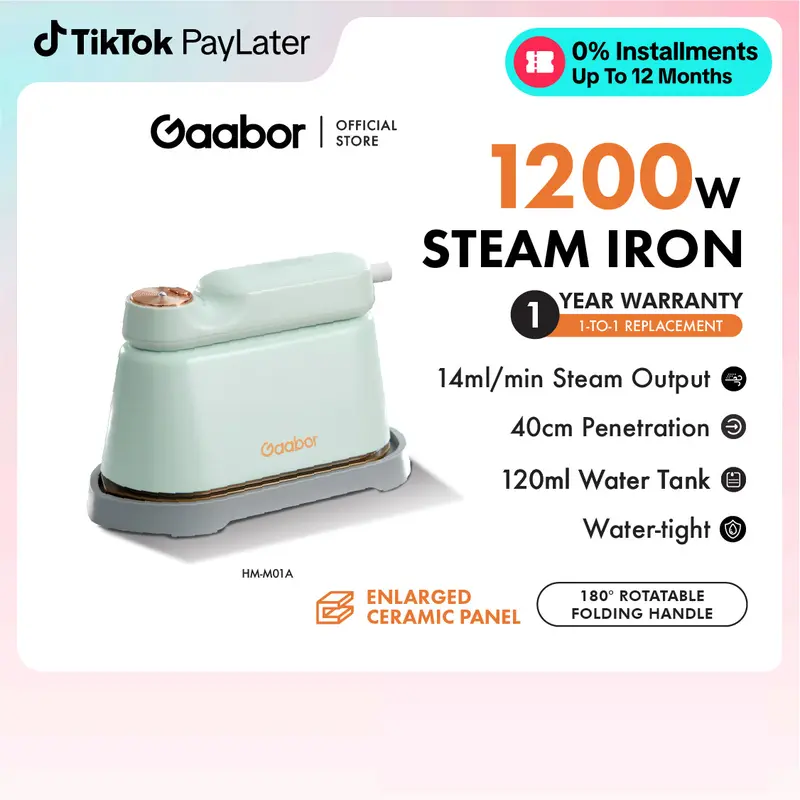













The device trades tank size and continuous run time for a light body that fits a cupboard shelf or a carry-on bag. That trade-off shapes almost every decision below, from how a garment is prepared to how the unit is stored between uses.
What A Portable Handheld Steamer Actually Does
Heat turns water into vapour, and the vapour is directed onto fabric through a nozzle. The heat and moisture relax the fibres, so creases fall out with a few passes rather than with pressure and a hot plate. Because there is no soleplate pressing down on the cloth, the fabric is treated gently and the risk of a scorch mark or a shine patch is lower than with a dry iron.
The same steam jet also loosens dust and light grease on soft surfaces, which is why some units are sold with brush and squeegee attachments. That second use is a bonus, not a substitute for a proper deep clean of a mattress or a sofa.
Preparing A Garment Before Steaming
- Check the care label and confirm the fabric tolerates heat and moisture.
- Hang the garment on a hanger so the weight of the cloth helps pull creases downward.
- Fill the tank with clean water and let the unit reach full heat before the first pass.
- Work from the top of the garment downward, keeping the nozzle a short distance from the fabric.
- Let the garment hang for a minute so residual moisture can evaporate before wearing.
Delicate fibres, embellished pieces, and anything with a dry-clean-only instruction are the edge cases. Steam can dull certain finishes or distort trims, so those items are better handled by a professional service than by a handheld unit.
Portable Handheld Steamer Compared With A Full-Size Steamer
The main difference is session length. A full-size steamer carries a large tank and runs for a long stretch, which suits a retail floor, a uniform store, or a household working through a week of laundry in one sitting. A portable handheld steamer holds far less water, so it is built for a few garments at a time and needs refilling more often.
Weight and storage follow from that. A full-size unit usually stands on its own pole and occupies floor space. A handheld unit is held in one hand and can be kept in a drawer, which matters in a flat or a small apartment where floor space is already committed to other things.
| Factor | Portable handheld steamer | Full-size steamer |
|---|---|---|
| Typical session length | A few garments per tank | Longer continuous runs |
| Storage footprint | Drawer or shelf | Floor-standing |
| Handling | Held in one hand | Freestanding with hose |
| Best fit | Travel, small homes, quick touch-ups | High volume, retail, uniform care |
Neither format removes the need for washing. Steam refreshes and smooths; it does not lift embedded soil or remove odour at the fibre level the way a full wash cycle does.
How To Judge A Portable Handheld Steamer Before Buying
Manufacturer documentation is the only reliable source for wattage, tank capacity, heat-up time, weight, and voltage range. Retail listings and review round-ups frequently repeat figures that no longer match the current model, so the specification sheet for the exact model number is the document that counts.
Four things decide whether a unit suits a particular household:
- Heat-up time — a short wait suits rushed mornings; a longer one is tolerable for occasional use.
- Tank capacity — a larger tank means fewer refills but a heavier unit in the hand.
- Voltage compatibility — a dual-voltage unit can travel; a single-voltage unit is tied to one supply.
- Fabric suitability — the care label, not the marketing copy, decides what can be steamed.
Buying locally also matters for service. A unit bought from a Malaysian retailer is easier to return or repair than one imported without local support, and a plug that matches the local supply avoids the need for a converter.
Testing While The Return Window Is Open
Run the unit on a few representative garments in the first week. Check for spitting water, an uneven steam flow, a leaking tank, or a cord that heats up more than expected. A unit that behaves differently from its manual should be returned rather than used further.
Where A Portable Handheld Steamer Fits In A Malaysian Home
Humidity keeps fabric slightly damp for much of the year, and that changes how steaming behaves. Creases release quickly, but garments also need a little hanging time afterwards so the residual moisture can dry rather than sit in the cloth.
Small living spaces are the clearest fit. A unit that lives in a drawer and comes out for a shirt before work asks nothing of the floor plan. Travel is the second fit, particularly for anyone moving between a home in one state and a hotel in another, where an iron may not be provided or may be shared.
Traditional wear is a common use case. Baju kurung, baju Melayu, and similar pieces are often stored folded, and a light pass with steam relaxes the fold lines without the pressure of an iron. Heavily beaded or embroidered pieces are the exception and are better left to specialist care.
For households already sending bulk laundry out, a handheld unit complements rather than replaces that arrangement. It handles the shirt worn once and the jacket that picked up a crease in transit, while the wash-and-press load still goes to a service. Sinar Saredah Sdn Bhd has served Sarawak for more than 38 years from Kuching and Miri, offering laundry, dry cleaning, and commercial cleaning, which covers the bulk work a handheld unit is not built for.
Care Water And Storage Habits That Extend Use
Water quality is the single biggest factor in how long a unit lasts. Mineral-rich tap water leaves scale inside the heating chamber, and scale reduces steam output over time. Many manufacturers specify distilled or filtered water for this reason, and the manual for the exact model is the authority on what is acceptable.
Descaling is the routine that keeps performance steady. The interval depends on how hard the local water is and how often the unit is used, so the manufacturer's guidance should be followed rather than a fixed schedule. A unit that starts spitting or steaming weakly is often scaled rather than faulty.
Empty the tank after each session. Water left standing can stagnate and leave an odour that then transfers to fabric. Let the unit cool fully before storing it, and keep it upright so any remaining moisture does not seep into the housing.
Store the unit somewhere dry and out of direct sun. In a humid climate, a closed cupboard with poor airflow is a worse home for an appliance than an open shelf.
What A Cannot Do
It cannot replace a wash. Steam relaxes fibres and loosens light surface soil, but it does not remove sweat residue, body oils, or embedded dirt from the weave. A shirt that has been worn through a full working day still needs laundering.
It cannot press a sharp crease. Trousers that need a defined front crease, or a shirt that needs a crisp collar edge, require an iron or a professional press. Steam smooths; it does not set a line.
It cannot handle every fabric. Some finishes, trims, and embellishments react badly to heat and moisture, and the care label is the deciding document. Where the label calls for dry cleaning, that instruction should be followed.
It also cannot match a full-size unit for volume. A household with a large weekly load, or a business with uniforms to maintain, will spend more time refilling a handheld tank than the convenience is worth. In that situation the practical split is a handheld unit for touch-ups and a laundry or dry cleaning service for the bulk load, which is the arrangement Sinar Saredah already supports for households and commercial sites across Kuching and Miri.