Clean Silver Jewlery Without Stripping Plating or Antique Finish
Clean Silver Jewlery at home starts with mild soap and warm water for light tarnish, while baking soda, salt, and aluminum foil suit heavier build-up on sterling silver.
Tarnish is not dirt sitting on the surface. It is a chemical change. Silver reacts with sulfur compounds in air, and that reaction forms a dark layer on the metal itself. Because the layer is chemical rather than physical, the right cleaning method depends on how thick it has grown and what else is attached to the piece.
Two things shape every decision below: whether the piece is solid sterling silver or silver-plated, and whether it carries an intentional oxidized finish, a pearl, or a set stone. Solid sterling silver tolerates more cleaning options. Plated, oxidized, and stone-set pieces narrow the field considerably.
How to Clean Silver Jewlery. What Tarnish Actually Is
Sterling silver is an alloy, not pure silver. It contains copper, and copper is the part that reacts first with sulfur in the air. That reaction produces the brown-to-black film commonly called tarnish.
This matters because tarnish removal works in two different ways. Abrasive methods physically rub the layer away. Chemical methods convert the tarnish back into silver. Abrasive methods are faster but remove a thin layer of metal each time. Chemical methods are gentler on the surface but work best on certain shapes and finishes.
Light tarnish looks like a faint yellow or brown haze. Heavier tarnish turns dark grey or black and settles into recessed areas, which is why detailed pieces often look dirty in the crevices first.
Clean Silver Jewlery With Mild Soap and Warm Water
This is the safest starting point for almost any silver piece, including plated jewelry and pieces with set stones. It removes surface oils, skin residue, and light film without stripping metal or finish.
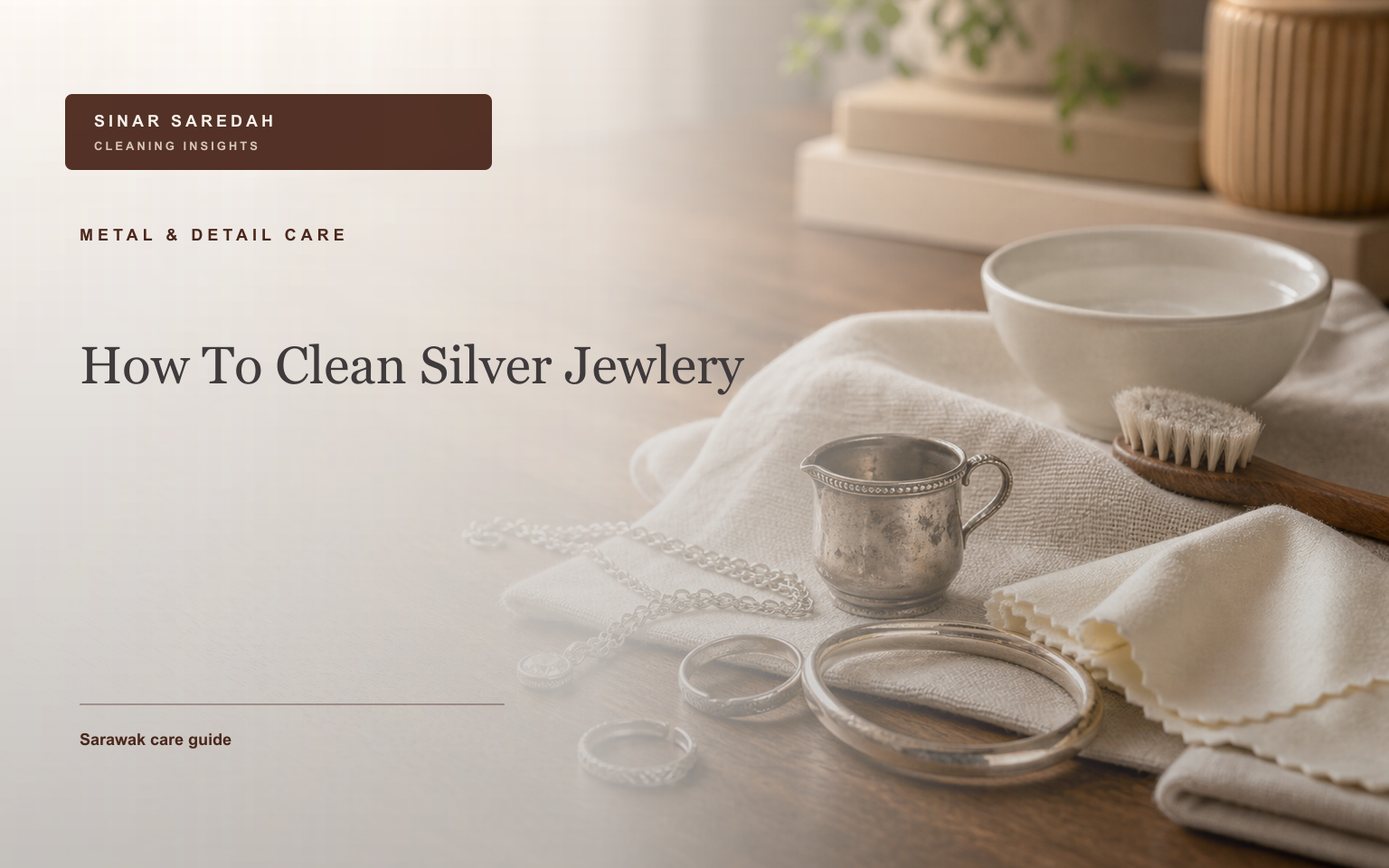
- Fill a small bowl with warm water and add a few drops of mild, non-abrasive liquid soap.
- Soak the piece briefly to loosen surface residue.
- Work the soapy water into crevices with a soft-bristle brush, keeping pressure light.
- Rinse under clean warm water until no soap remains.
- Pat dry with a soft, lint-free cloth and let the piece air dry fully before storing.
The soft-bristle brush matters more than the soap. A worn toothbrush reaches into chain links, clasp mechanisms, and engraved patterns where a cloth cannot. Hard bristles or stiff brushes can scratch polished surfaces and wear down plated layers.
Drying is not optional. Trapped moisture left in a clasp or between links encourages new tarnish and, on plated pieces, can lift the plating over time.
Baking Soda, Salt, and Aluminum Foil: The Electrolytic Soak
This method is chemical rather than abrasive. Warm water, baking soda, salt, and aluminum foil create a mild electrolytic reaction that pulls sulfur away from the silver surface and transfers it to the foil. The silver loses tarnish without losing metal.
- Line a non-metal bowl with aluminum foil, shiny side facing up.
- Add baking soda and salt to the bowl.
- Pour in warm water and stir until the powders dissolve.
- Place the silver so it touches the foil, then leave it to soak.
- Lift the piece out, rinse thoroughly, and dry it completely with a soft cloth.
The foil must make contact with the silver for the reaction to run. A piece resting entirely on top of another piece, or suspended above the foil, will not respond the same way.
This soak suits solid sterling silver chains, rings, and plain bands with heavy tarnish. It is a poor fit for pieces with glued components, pearls, soft gemstones, or an intentional oxidized finish, because the reaction does not distinguish between tarnish that should go and darkening that was applied on purpose.
Polishing Cloths and Silver Paste for Heavier Tarnish
When tarnish has built up in layers, or when the piece has flat surfaces that a cloth can reach, mechanical polishing does what a soak cannot. A polishing cloth lifts light tarnish and restores shine. Silver paste cuts through heavier, older build-up.
Both work by abrasion, so technique matters. Rub along the grain of the metal rather than in circles, use light pressure, and stop once the surface brightens. Repeated heavy polishing on the same spot thins the metal and, on plated pieces, can wear through the silver layer entirely.
Silver paste should stay away from recessed detail. It settles into grooves, dries there, and leaves white residue that is difficult to remove without disturbing the surrounding finish.
Method
|
Best for
|
What to avoid
|
Mild soap and warm water
|
Light film, everyday maintenance, plated pieces, stone-set pieces
|
Leaving moisture in clasps or between links
|
Baking soda, salt, and foil soak
|
Solid sterling silver with heavier tarnish on plain surfaces
|
Pearls, soft stones, glued components, intentional oxidized finishes
|
Silver polish or polishing cloth
|
Flat surfaces and layered tarnish that a soak does not lift
|
Recessed detail, repeated heavy rubbing, plated surfaces
|
What Not to Use on Plated, Oxidized, or Stone-Set Pieces
Silver-plated jewelry carries only a thin layer of silver over a base metal. Anything abrasive removes that layer, and once it is gone the piece cannot be restored by cleaning. Plated pieces should stay with mild soap and water, a soft cloth, and gentle drying.
Oxidized silver is deliberately darkened in the recesses to create contrast. Cleaning methods that remove tarnish do not distinguish between unwanted tarnish and intentional oxidation, so a soak or a paste can strip the contrast and leave the piece looking flat.
Pearls and soft or porous gemstones are more fragile than the silver around them. Soaks, pastes, and brushes can dull a pearl's surface or work loose a setting. For pieces that combine silver with pearls or soft stones, cleaning should focus on the metal only, with the stone avoided entirely.
When a piece is heavily tarnished, plated, antique, or set with stones that cannot be identified with confidence, a professional jeweler is the safer route. Cleaning at home risks damage that costs more to repair than the cleaning itself.
Storing Silver So It Stays Bright Between Cleanings
Tarnish returns because silver keeps reacting with sulfur in the air. Storage slows that reaction by limiting air contact.
Keep pieces dry before they go away. Store them individually in soft pouches or tarnish-resistant bags rather than loose in a box, where pieces rub against each other and scratch. Keep silver away from rubber bands, latex, and cardboard, which can accelerate tarnishing. A cool, dry drawer away from humidity works better than an open shelf.
Wearing silver regularly is not a problem. The friction of normal wear actually slows tarnish build-up on the exposed surfaces. The pieces that tarnish fastest are usually the ones left untouched in storage for months.
For households in Malaysia, where humidity stays high through most of the year, sealed storage matters more than it would in a drier climate. Airtight bags and silica packets reduce the moisture that helps tarnish develop.
Silver that has been cleaned, dried, and stored properly needs only occasional attention. A quick wipe with a polishing cloth after wearing is usually enough to keep a piece bright between deeper cleanings.