Sinar Saredah Est. 1987
Back to insights
Cleaning Guide

How to Get Dirt Stains Out of Clothes in Malaysia

Learn how to remove dirt stains from clothes with simple pretreating, washing and fabric-care steps for Malaysian households.

How to Get Dirt Stains Out of Clothes

Laundry stain removal, mud stains, school uniforms, outdoor clothes, sportswear, Malaysian weather and fabric care

Meta title: How to Get Dirt Stains Out of Clothes in Malaysia

Meta description: Learn how to get dirt stains out of clothes using safe home methods, pretreatment steps, fabric-specific tips, charts, tables and Malaysian laundry care guidance.

URL: /how-to-get-dirt-stains-out-of-clothes

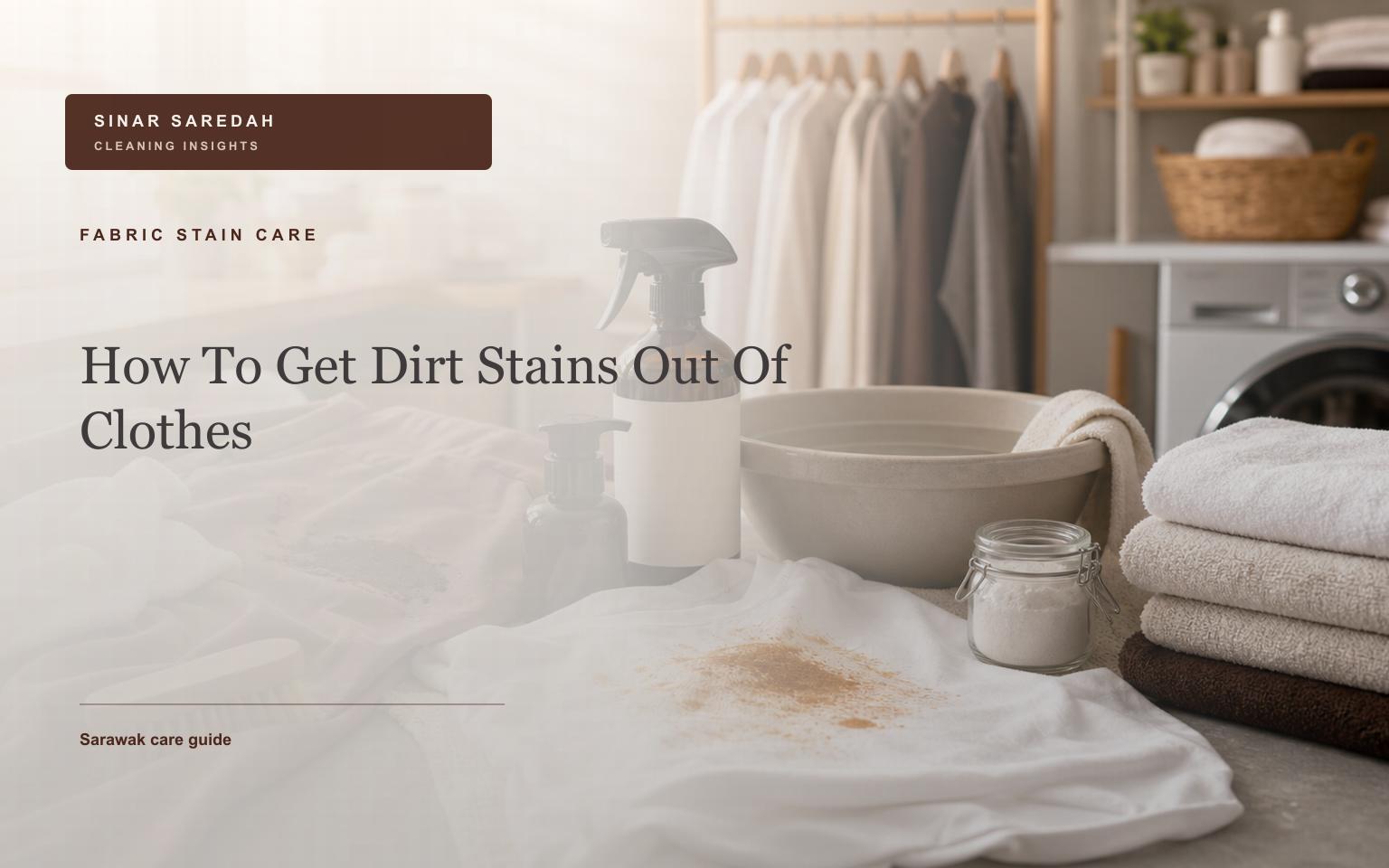
Dirt stains are one of the most common laundry problems in Malaysia. A school uniform gets marked during recess. A pair of jeans collects mud after heavy rain. Sportswear becomes stained after football training. A baju kurung hem brushes against wet roadside soil. Children’s clothes come home with a mixture of sand, clay, grass and sweat. At first, dirt stains look simple, but they can become stubborn when the wrong method is used.

The biggest mistake is rubbing wet mud immediately. Wet soil can spread deeper into fibres, especially on cotton, denim and school uniforms. The better method is to let wet mud dry, brush or scrape off the loose soil, rinse from the back of the fabric, pretreat with liquid detergent or an enzyme-based cleaner, wash according to the care label, and check the stain before drying. Heat from a dryer or iron can set remaining stains and make them harder to remove.

This guide explains how to get dirt stains out of clothes with a simple, reliable process. It also covers different types of dirt stains, fabric-specific methods, mistakes to avoid, Malaysian laundry challenges, eco-friendly laundry trends, and when professional help may be better for delicate or heavily soiled items. Sinar Saredah is positioned as the guide: you are the hero who wants clean clothes without damaging your fabrics.

Why Dirt Stains Are Harder Than They Look

Dirt stains are not just “brown marks.” They can contain soil, clay, sand, mineral particles, organic matter, sweat, grass pigments, road dust, food residue and bacteria. In Malaysia, rain often turns ordinary dust into sticky mud. Once that mud dries inside fabric fibres, it becomes a mixed stain: part soil, part organic residue and sometimes part oily grime.

The stain also behaves differently depending on the fabric. Cotton absorbs moisture and can hold fine dirt inside its fibres. Polyester may release soil more easily but can hold oily residue from sweat or roadside grime. Denim hides dirt visually but can trap clay in its weave. White school uniforms show every mark clearly. Delicate fabrics such as silk, lace and embroidery require extra care because brushing or scrubbing can damage the surface.

Core idea: Dirt stain removal works best when you remove loose soil first, then treat the stain that remains. If you rub mud while it is wet, you may push the stain deeper and make the job harder.

The Dirt-Stain Removal Loop

The easiest way to remove dirt stains is to follow a repeatable process. Think of it as a five-step loop. Each step has a purpose, and skipping one can make the stain harder to remove.

1Let wet mud dry completely before touching it
2Brush, shake or scrape off loose soil particles
3Rinse from the back of the fabric to push dirt out
4Pretreat with liquid detergent or enzyme stain remover
5Wash, inspect, repeat if needed, then air dry

This loop is especially useful for school uniforms, sportswear, jeans, work trousers, children’s clothes and outdoor clothing. It prevents panic cleaning and gives you a clear plan.

Different Types of Dirt Stains

Not all dirt stains are the same. Some are mostly dry soil. Some are wet mud. Some include grass, sweat, food, clay or road grime. The table below explains how to recognise each type and what to do first.

Dirt Stain Type Common Malaysian Source What Makes It Stubborn First Action
Dry soil or dust Road dust, playground dust, construction dust, dry sports fields Fine particles settle into fabric weave Shake outdoors and brush before washing
Wet mud Rainy pavements, football fields, school compounds, garden soil Spreads easily when rubbed while wet Let dry first, then brush off
Clay soil Red earth, construction sites, rural roads, outdoor work Fine mineral particles cling strongly to cotton and denim Pre-soak with detergent after dry brushing
Dirt plus grass Sports fields, outdoor games, school activities Grass pigment binds to fibres Pretreat with enzyme detergent after soil removal
Dirt plus sweat Sportswear, uniforms, outdoor work clothes Body oils and salts hold dirt in fabric Use enzyme detergent and soak before washing
Road grime Motorbike splashes, parking lots, wet roadside puddles May include oil, soot and fine dust Use dish soap or heavy-duty detergent on oily areas

Pie Chart: What Dirt Stains Are Usually Made Of

This practical chart shows the typical components of a dirt stain. The exact ratio changes depending on where the stain comes from, but the lesson is clear: dirt stains are usually mixed stains, so the best treatment combines mechanical removal, rinsing and detergent chemistry.

  • Soil, clay and mineral particles: 35%
  • Organic matter, sweat and skin oils: 21%
  • Grass pigment and plant residue: 14%
  • Road dust, soot and grime: 15%
  • Other particles and detergent-resistant residue: 15%

Step-by-Step: How to Get Dirt Stains Out of Clothes

Step 1: Let wet mud dry first

If the stain is wet mud, do not rub it immediately. Rubbing can spread the stain and force fine soil particles deeper into the fibre. Place the garment somewhere ventilated and let the mud dry completely. This may feel counterintuitive, but dry mud is easier to remove because it becomes crumbly and can be brushed off.

Step 2: Brush off loose dirt

Once dry, take the garment outside and shake it gently. Use a soft brush, old toothbrush or the edge of a spoon to remove dried soil. For durable fabrics such as denim and cotton trousers, you can brush a little more firmly. For delicate garments, brush gently to avoid surface damage. The goal is to remove as much loose dirt as possible before water touches the fabric again.

Step 3: Rinse from the back of the stain

Hold the stained fabric under running water with the back of the stain facing the tap. This pushes dirt out of the fabric instead of driving it further in. Use cool or room-temperature water for the first rinse. Cold water is generally safer for many stains because hot water can set certain organic stains and may shrink or fade some fabrics.

Step 4: Pretreat with liquid laundry detergent

Apply a small amount of liquid laundry detergent directly to the stained area. Work it in gently with your fingers or a soft brush. Let it sit for 10 to 20 minutes. Liquid detergent helps loosen soil, oils and organic residue. For sportswear, children’s clothing and muddy uniforms, an enzyme-based detergent can help break down protein, starch and plant-based residues.

Step 5: Soak if needed

If the stain is heavy, soak the garment in cool water mixed with detergent for 30 minutes to one hour. For red clay soil or old mud stains, a longer soak may help. Do not soak delicate fabrics for too long unless the care label allows it. Always keep whites separate from coloured clothes to avoid dye transfer.

Step 6: Wash according to the care label

Wash the garment using the recommended cycle. Use a normal or heavy-duty cycle for durable fabrics, and a gentle cycle for delicate items. Avoid overloading the machine because clothes need movement for detergent and water to work properly.

Step 7: Check before drying

After washing, inspect the stained area before putting the garment in a dryer or ironing it. Heat can set remaining stains. If the stain is still visible, repeat the pretreatment and wash again. Air dry the item until you are sure the stain is gone.

Bar Graph: Which Actions Remove the Most Dirt?

The following bar chart ranks the most important steps in dirt stain removal. Notice that pretreatment and dry brushing are more important than simply washing the garment immediately.

Pretreat with detergent
92/100
Brush off dry soil first
88/100
Rinse from the back
82/100
Soak heavy stains
78/100
Use enzyme detergent
74/100
Check before drying
70/100

Fabric-Specific Dirt Stain Guide

Different fabrics need different handling. A stain removal method that works on jeans may damage silk or embroidery. Use this table as a quick reference.

Fabric Type Recommended Method Avoid Extra Tip
Cotton school uniforms Dry brush, rinse from back, pretreat with liquid detergent, wash normally Drying before checking stain For white uniforms, repeat pretreatment before using whitening products
Denim jeans Brush firmly, soak if clay is embedded, wash inside out Harsh bleach that fades denim Air dry to preserve colour
Polyester sportswear Use enzyme detergent and cool water; rinse well High heat drying Body oils can trap dirt, so pretreat sweaty areas too
Delicate fabrics Brush lightly and spot test detergent first Hard scrubbing and long soaking Consider professional cleaning for expensive garments
White clothes Pretreat carefully and wash separately Mixing with coloured items Repeat stain treatment before using oxygen-based boosters

Common Mistakes That Make Dirt Stains Worse

What helps

  • Letting mud dry before brushing.
  • Removing loose dirt before washing.
  • Rinsing from the back of the fabric.
  • Using liquid detergent directly on the stain.
  • Checking the stain before drying or ironing.
  • Repeating the treatment if needed.

What makes it worse

  • Rubbing wet mud immediately.
  • Using hot water before identifying the stain.
  • Throwing heavily soiled clothes directly into the machine.
  • Overloading the washing machine.
  • Using too much detergent and leaving residue.
  • Drying or ironing while the stain is still visible.

SVG Line Graph: Dirt Stain Removal Success by Treatment Time

The faster you remove loose soil and pretreat the stain, the better your results. The graph below illustrates how success drops when dirt stains are ignored for too long or exposed to heat before treatment.

Same day 24 hours 3 days After heat High Low Dry brush + pretreat early Wash without pretreating

Malaysian Context: Why Dirt Stains Are Common Here

Malaysia’s weather plays a big role in dirt stains. Heavy rain turns dust into mud. Urban roads splash dirty water onto trousers, shoes and school uniforms. Red soil and clay are common in construction areas and rural roads. Sports fields become muddy quickly after rain. Humidity also slows drying, which can make dirty clothes smell if left too long in a laundry basket.

For families with children, dirt stains are part of daily life. School uniforms, socks, sports clothes and casual wear may need regular pretreatment. For adults, dirt stains often appear on hems, cuffs, jeans, workwear and shoes. If you frequently deal with outdoor mess, create a “stain station” at home with a brush, liquid detergent, basin and laundry gloves.

Upcoming Laundry Trends for Dirt and Mud Stains

Laundry care is changing. Modern detergents are increasingly designed to work in cold water, helping reduce energy use while protecting fabric colour and shape. Enzyme-based detergents are becoming more common because they help break down proteins, starches, fats and plant-based residues. Concentrated detergents, detergent sheets and fibre-based detergent formats are also becoming popular because they reduce packaging and are easier to store.

A new area of research involves self-cleaning fabric coatings that help stop stains from sticking strongly to textiles. These technologies are still developing and are not a replacement for good laundry habits, but they show where fabric care may be heading. For now, the best approach is still practical: remove loose dirt, pretreat correctly, wash according to the care label and avoid heat until the stain is gone.

When Should You Use Professional Cleaning?

Most dirt stains can be treated at home, but some situations deserve professional help. If the garment is expensive, delicate, embroidered, structured, sentimental or labelled “dry clean only,” avoid aggressive scrubbing. Wedding gowns, formal wear, premium jackets and delicate fabrics may lose shape or colour if treated harshly. For special garments, Sinar Saredah’s professional cleaning process is safer than trial-and-error cleaning at home.

Dirt does not only stain clothes. It also gets tracked into carpets, curtains, rugs and upholstery. If your home often collects outdoor soil, consider professional carpet cleaning to remove embedded dirt from fibres. If your curtains trap dust and roadside particles, proper curtain cleaning helps refresh the room and reduce allergens. For households or offices that need a broader cleaning plan, Sinar Saredah also offers home and office cleaning.

Important: Do not aggressively scrub delicate clothing, silk, lace, wool, embroidered uniforms or formal wear. If the dirt stain is on a valuable garment, professional cleaning is usually safer than risking permanent fabric damage.

The Sinar Saredah Dirt-Stain Plan

Following the StoryBrand framework, the customer is the hero. You want clean clothes, less stress and garments that last longer. Dirt stains are the villain: they make clothes look old, create embarrassment and can become permanent when treated incorrectly. Sinar Saredah acts as the guide with experience, professional cleaning standards and practical support.

1Identify the stain and fabric type
2Remove loose soil before washing
3Pretreat safely with the right product
4Wash and inspect before drying
5Call professionals for delicate or stubborn cases

Dirt Stain Removal Checklist

[ ] Let wet mud dry before brushing.

[ ] Shake or brush off loose dirt outdoors.

[ ] Rinse the stain from the back of the fabric.

[ ] Apply liquid detergent directly to the stain.

[ ] Let detergent sit for 10–20 minutes.

[ ] Soak heavy stains before washing.

[ ] Wash according to the care label.

[ ] Check the stain before drying or ironing.

[ ] Repeat treatment if needed.

[ ] Use professional cleaning for delicate, valuable or stubborn garments.

Final Thoughts

Getting dirt stains out of clothes is about patience and the right order of action. The most important step is to remove loose dirt before you wash. Let mud dry, brush it off, rinse from the back, pretreat with detergent, wash properly and check before drying. This simple process prevents many dirt stains from becoming permanent.

For everyday clothes, school uniforms, jeans and sportswear, you can usually handle dirt stains at home. For delicate garments, formal wear or stains that have already been dried or ironed, professional cleaning is the safer option. Sinar Saredah can help protect the items that matter most, and if outdoor dirt keeps entering your home, you can also refresh your carpets, curtains and rooms with professional cleaning support.

For help with stubborn garments or home cleaning needs, contact Sinar Saredah and ask for the best cleaning solution for your item.

External Sources

  1. Southern Living: Treating Stains With Hot or Cold Water
  2. Real Simple: Cold Water vs Hot Water for Stains
  3. Live Science: Self-Cleaning Fabric Coating Research
  4. Detergent Enzymes Overview