Get Rid Of Stains On White Clothes: A Practical Method For Kuching And Miri
Get rid of stains on white clothes by blotting the mark, pre-treating the fabric, and washing before the stain sets, a method Sinar Saredah Sdn Bhd applies in Kuching and Miri.
White garments fail for two reasons: the stain sets, or the fabric yellows from old residue. Both are manageable when the order of operations is right. The sequence below runs from the first minute after a spill through to the point where home treatment stops being the sensible option.
How To Get Rid Of Stains On White Clothes In Malaysia
The method is the same everywhere, but the timing is tighter in Malaysia. A spill that sits for an hour in air-conditioned comfort behaves differently from one left in a parked car or a humid utility area. Treat the stain while it is still fresh and the odds improve sharply.
Work through these steps in order. Skipping ahead, such as soaking before blotting or drying before checking, is what turns a removable mark into a permanent one.
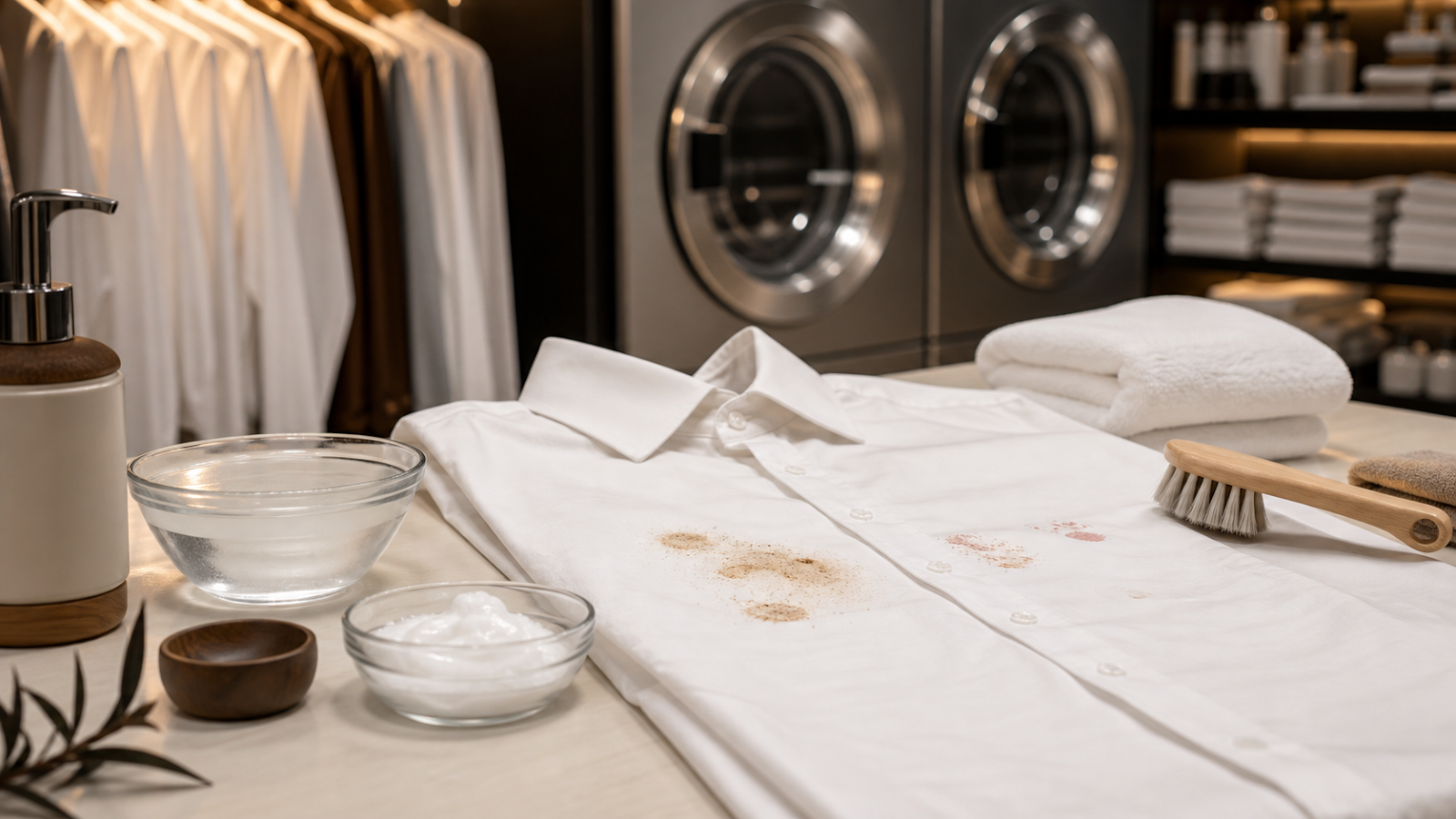
- Blot, never rub. Press a clean cloth or paper towel onto the stain to lift liquid out. Rubbing pushes the stain deeper into the weave and spreads it sideways.
- Pre-treat the mark. Apply a small amount of liquid detergent or a dedicated stain remover directly onto the stain and let it sit briefly before washing.
- Soak if the stain has dried. Dried or set-in marks benefit from a soak in water with detergent before the main wash.
- Wash according to the care label. Follow the garment label for wash temperature and cycle. The label is the authority, not a general rule.
- Check before drying. Inspect the garment while it is still wet. If any trace of the stain remains, repeat the pre-treat and wash.
- Dry only once the stain is gone. Drying a garment that still carries a mark can make a second attempt much harder, so confirm the fabric is clean first.
The check-before-drying step is the one most people skip, and it is the one that decides the outcome. A stain that looks faint on wet fabric can reappear as a brown or grey patch after drying.
Why Malaysian Humidity Changes Stain Behaviour
Malaysia's climate is warm and humid for most of the year, and that affects laundry in practical ways rather than theoretical ones. Damp fabric left in a basket or machine encourages mould and mildew, which show up on white cloth as grey or black speckling and carry a musty smell that survives a normal wash.
Humidity also slows drying. A white shirt that would air-dry quickly in a drier climate can stay damp for hours indoors, which is exactly the window where mildew takes hold. Two habits reduce the risk. move washed items out of the machine promptly, and dry them in a space with moving air rather than a closed room.
Body oils and deodorant residue are another humid-climate issue. They build up gradually in underarm areas and collars, and they show as yellowing over time rather than as a single obvious stain. Regular washing with adequate detergent, rather than under-dosing, helps keep that residue from accumulating.
Common Stain Types On White Clothes And How They Respond
Different stains need different first moves. The list below maps common household and workplace stains to the action that should happen first. It is a starting point, not a substitute for the garment's care label.
- Coffee, tea, soft drinks: blot immediately, then pre-treat and wash.
- Cooking oil, curry, gravy: blot off excess, apply detergent to the mark, then wash.
- Sweat and deodorant. pre-treat the underarm area, then wash, and repeat if yellowing persists.
- Ink. blot without spreading, pre-treat, and check before drying.
- Blood. rinse in cool water first, then pre-treat and wash.
- Mould or mildew spotting. wash promptly and dry fully in moving air.
Two rules sit behind the list. First, cool water is the safer default for protein-based stains such as blood, because heat can set them. Second, the longer any stain sits, the more the treatment shifts from a quick pre-treat to a soak and repeat cycle.
Stains that behave differently on white fabric
White cloth has no dye to hide a mark, so a partially removed stain is more visible than it would be on a coloured garment. That cuts both ways. it is easier to see whether the treatment worked, and it is harder to disguise a failure. It also means bleach-based products are tempting. Bleach can weaken fibres and damage some fabrics, and it should only be used where the care label permits it.
A Numbered Stain Removal Sequence For White Garments
The sequence above covers the general case. A few adjustments matter for specific situations.
For a fresh spill at home, the blot-and-pre-treat route is usually enough. For a stain discovered hours later, add the soak step and expect to repeat the wash. For a garment that has already been through a dryer with the stain still present, the mark is likely set, and repeated gentle treatment is the only home option left.
Delicate items such as lace, sheer fabrics, embellished pieces, and structured garments are a different category. Agitation and strong treatment can distort them, so the care label and a professional assessment matter more than speed.
When Home Treatment Stops Working
There is a clear point where continuing at home risks more than it fixes. If a stain has survived two proper attempts, if the fabric is delicate or structured, or if the garment is valuable, further treatment at home can thin the fabric, dull the finish, or spread the mark.
Yellowing that returns after every wash is another signal. That pattern usually points to residue built up in the fabric rather than a single stain, and it needs a different approach from spot treatment. The same applies to mildew that has left grey or black speckling behind after washing.
At that stage, the sensible move is to stop treating and hand the item to a professional service that can assess the fabric and the stain together. Continuing to apply products to an already-stressed garment is how a recoverable stain becomes permanent damage.
Professional Laundry And Dry Cleaning Support In Kuching And Miri
Sinar Saredah Sdn Bhd provides laundry and dry cleaning in Kuching and Miri, with more than 38 years serving Sarawak. The service covers everyday wash and fold, wash and iron, pressing only, handwash, and dry cleaning for garments that should not go through a normal home cycle.
For white garments specifically, dry cleaning is the relevant option when the care label calls for it or when the item is structured, delicate, or valuable. Published dry cleaning rates include RM 15 for a long-sleeve shirt, RM 12 for a short-sleeve shirt, RM 20 for a plain dress, and RM 10 for a T-shirt, excluding 8% SST. Wash and iron is priced at RM 20 per kg, and wash and dry at RM 15 per kg, also excluding 8% SST.
Turnaround and final pricing depend on the item, the fabric, and the condition, so the counter assessment matters more than any general figure. The business is open every day, including public holidays, with drop-off from 7am.
For items that need assessment before treatment, call 0176325699.