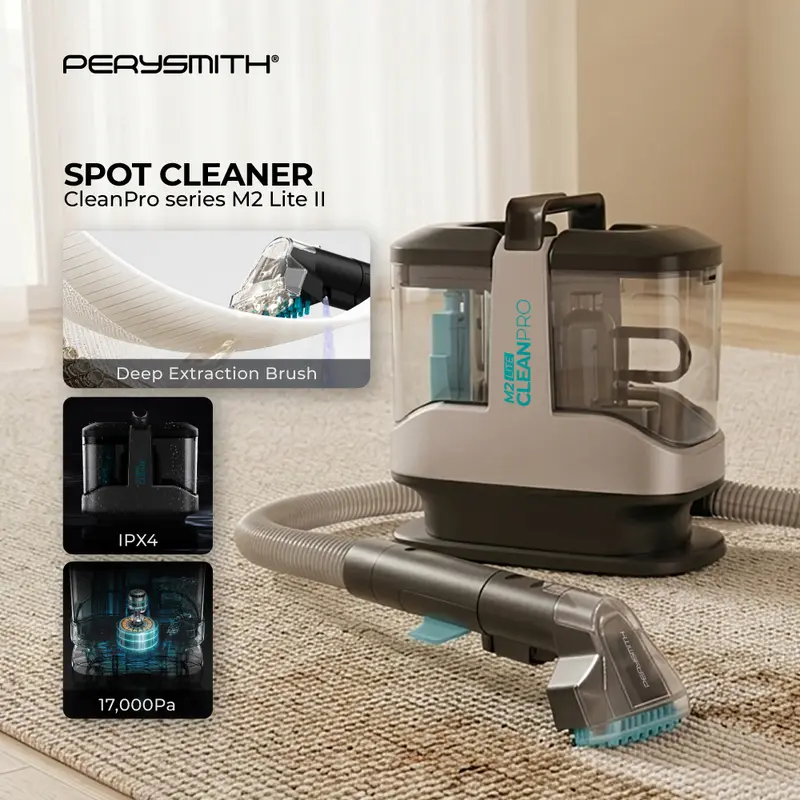
Removing Spills and Marks from Carpet at Home
Getting stains out of carpet starts with blotting the spill, not scrubbing it, and lifting residue before it dries into the fibre.
Most carpet damage comes from the reaction to a spill rather than the spill itself. Rubbing a wet mark pushes liquid deeper into the backing and spreads it sideways, so a small accident becomes a wide patch. The Carpet and Rug Institute, in its published guidance "Carpet Stains 4-1-1: Best Practices for Removing Stains," describes blotting versus scrubbing as one of the most repeated mistakes in carpet stain removal, and the same guidance warns that alkaline residue left behind attracts new dirt and causes the carpet to resoil faster.
Two things change the method more than anything else: how long the stain has been sitting, and what the carpet fibre can tolerate. Fresh liquid sits on the surface and lifts with pressure and a clean cloth. A set-in stain has already bonded to the fibre and needs a different approach. Wool and other natural fibres react differently from synthetic ones, which is why a colourfastness test on a hidden corner comes before any solution touches the visible carpet.
Why Carpet Stains Set and What Changes the Method
A stain sets when the substance dries, oxidises, or binds to the fibre. Coffee, tea, and red wine carry tannins and dyes that migrate into the fibre as the liquid evaporates. Pet accidents add a second problem: uric acid crystals remain in the backing even after the surface looks clean, and they reactivate with humidity.
Time is the main variable. A fresh spill treated within minutes usually lifts with water and blotting alone. A stain left overnight, or one that has been through a hot drying cycle, needs a longer dwell and often a repeat pass. Heat is the enemy here, because warm air drives the stain deeper and can permanently set a dye-based mark.
Residue is the second variable. Any solution left in the carpet continues working after the stain is gone. Soapy residue turns sticky and collects dust, which is why a patch can look clean for a week and then darken again. Rinsing with clean water and blotting dry matters as much as the cleaning step itself.
Tools and Solutions Used for Get Stains Out Of Carpet Work
The kit is small. A stack of clean white cloths or paper towels, a spray bottle of cool water, a mild detergent solution, and a vacuum are enough for most household spills. White cloths matter because a coloured cloth can transfer dye onto a damp carpet.
Household options that appear repeatedly in published carpet stain removal guidance include plain water, a mild detergent, white vinegar, baking soda, and oxygen-based cleaners. Each has a limit. Vinegar is acidic and suits some marks but not all fibres. Baking soda works as a mild abrasive and odour absorber rather than a solvent. Oxygen-based cleaners need time to react and should not be mixed with other products.
Retail stain removers vary widely in formulation, and no supplied evidence verifies performance claims for any named brand. The safer approach is to match the product to the stain type and the fibre, then test it on an inconspicuous area first. A colourfastness test takes a minute: apply a small amount of the solution to a hidden corner, wait, then blot with a white cloth. If colour transfers to the cloth, stop.
Residue and resoiling are the reason rinsing is not optional. After any solution is applied, blot with clean water and repeat until the cloth comes away clean. Then dry the area thoroughly, because damp backing is where odour and mould begin.
A Numbered Sequence for Fresh Spills
Speed matters more than strength. The sequence below works for most liquid spills on most carpet types, and it avoids the two mistakes that cause lasting damage: scrubbing and over-wetting.
- Blot the spill with a clean white cloth, pressing down rather than rubbing, and work from the outside of the mark inward so it does not spread.
- Lift any solid material with a spoon or the edge of a card before it is pressed into the fibre.
- Test the solution on a hidden area of carpet and check the cloth for colour transfer.
- Apply a small amount of cool water or mild detergent solution to the mark and let it sit briefly.
- Blot again with a clean section of cloth, repeating with fresh water until no residue comes away.
- Dry the area with a clean towel and airflow, then vacuum once the carpet is fully dry to lift the fibre.
If the mark lightens but does not disappear, repeat the sequence rather than increasing the strength of the solution. Stronger chemicals on a fibre that is already damp risk damage to the backing and the colour.
Treating Set Stains, Pet Accidents, and Red Wine
Different stains need different first actions. The table below covers the common types and the mistake to avoid with each.
Stain type
| First action
| What to avoid
|
|---|
Coffee or tea
| Blot while wet, then treat with a mild solution and rinse
| Hot water, which sets the tannin
|
Red wine
| Blot immediately, then apply a solution suited to dye-based marks
| Rubbing, which spreads the dye sideways
|
Pet accidents
| Remove solids, blot liquid, then treat the odour source in the backing
| Ammonia-based products, which can attract repeat marking
|
General dirt and traffic marks
| Vacuum first, then spot treat and rinse
| Wet cleaning before dry soil is removed
|
Set stains need patience rather than force. Applying a solution, allowing it to work, and blotting repeatedly over several passes usually achieves more than one aggressive attempt. Pet accidents are the exception to surface-only treatment, because the residue sits in the backing and the underlay. If the odour returns after the surface dries, the source has not been reached.
Red wine is a dye stain, and dye stains behave differently from protein or tannin marks. Once the dye has bonded, household methods may only lighten the mark. That is the point at which a professional assessment is worth considering rather than continuing to apply products to the same patch.
When to Hand Carpet to a Professional Cleaning Service
Some jobs are better handled by a carpet cleaning service. Large areas, wall-to-wall carpet that cannot be lifted, stains that have survived several household attempts, and odour that returns after drying all point to equipment and extraction methods beyond a spray bottle and cloth.
Sinar Saredah Sdn Bhd is a laundry and dry cleaning provider based in Kuching and Miri, Sarawak, with more than 38 years serving Sarawak. Its published carpet cleaning pricing lists small carpet cleaning at RM 100.00 to RM 150.00, medium at RM 200.00 to RM 250.00, and large at RM 300.00 to RM 350.00, excluding 8% SST. Curtain cleaning is listed at RM 40 per kilogram, with final cost depending on curtain weight, fabric type, condition, and whether removal or rehanging support is needed.
For commercial premises, the same provider offers per-day cleaning at RM 100.00 to RM 500.00, positioned for short-term work, one-off cleaning, small site support, handover preparation, or urgent cleaning needs. Facilities with counters, waiting areas, administration zones, offices, meeting rooms, and shared corridors need cleaning that is consistent and responsive rather than occasional, because those spaces are used by different groups of people every day.
Professional cleaning is not a substitute for acting quickly. A spill blotted within minutes is far easier to remove than one left to dry, whether the final step is a household method or an extraction service. The practical rule is simple. handle fresh spills immediately, treat set stains patiently, and bring in equipment when the stain has reached the backing or the odour keeps returning.
Call us at 0176325699.