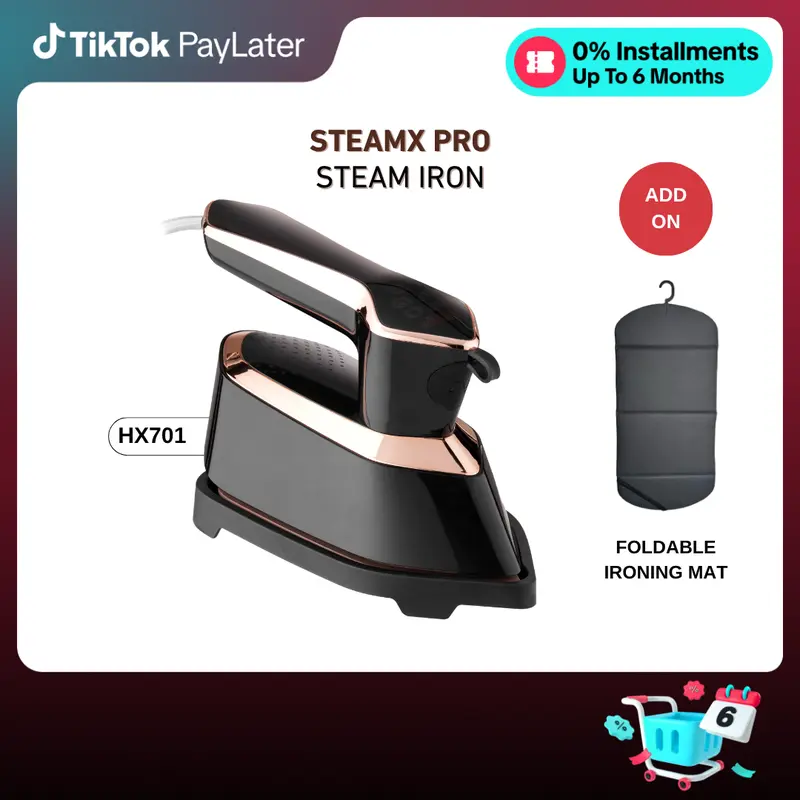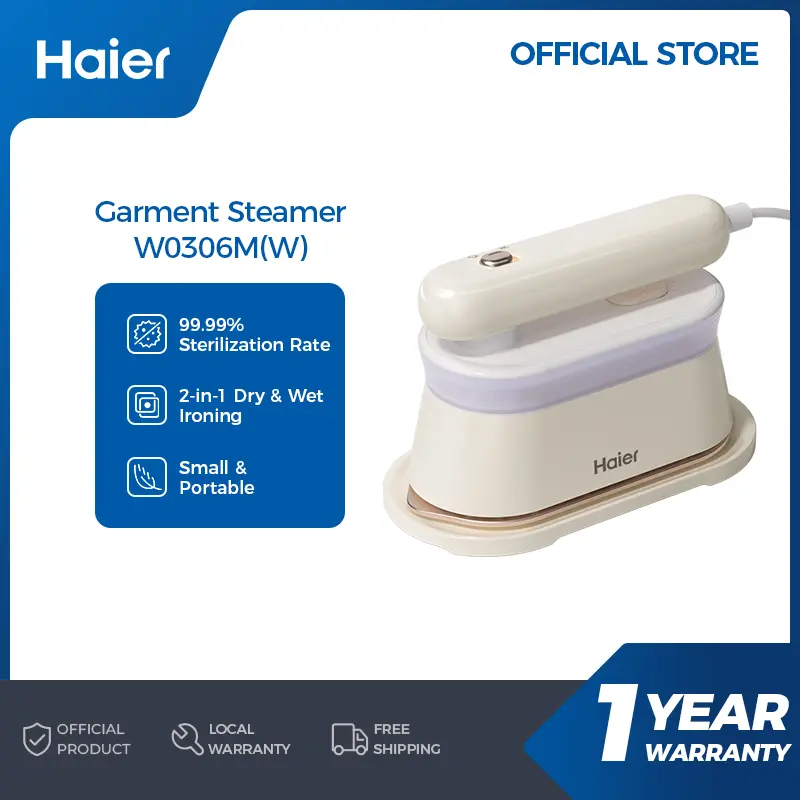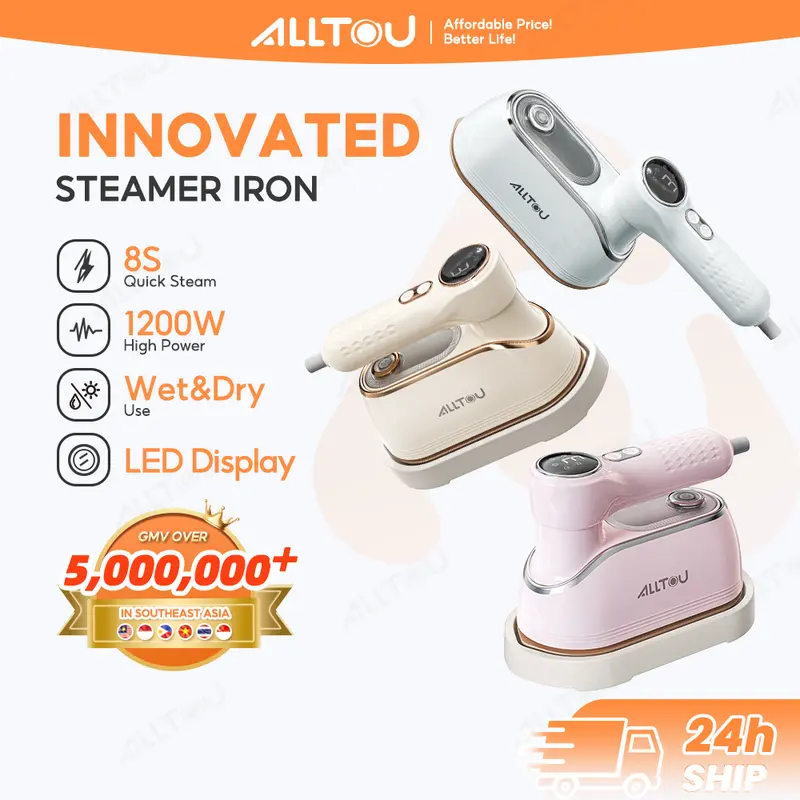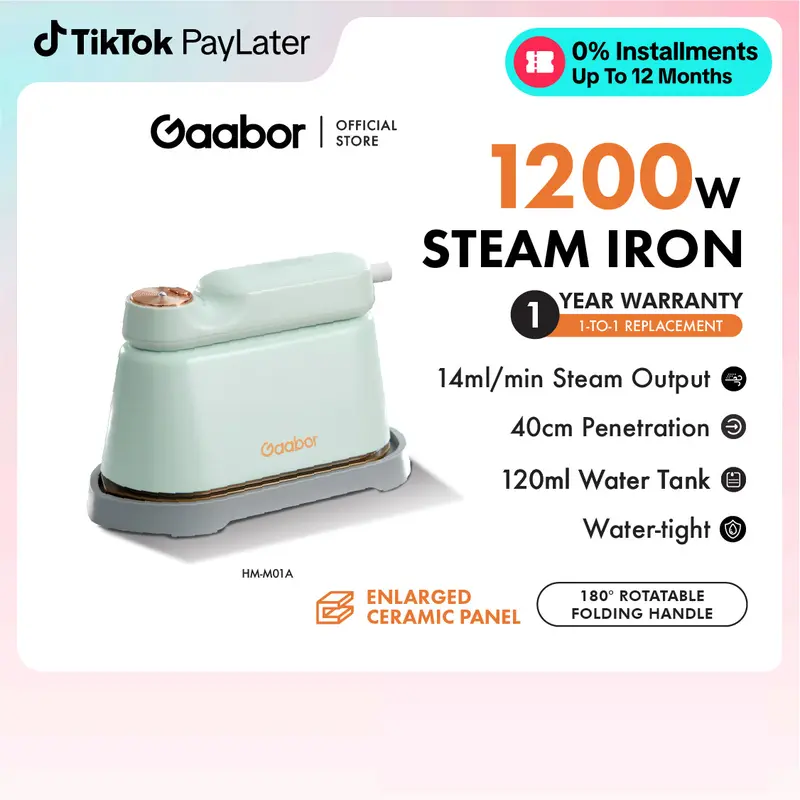











Rowenta does not sell one single "professional" iron. The range splits into handheld steam irons and separate-boiler steam generator stations, and the model names that appear most often in buyer discussions are Focus, Access, Pro Master, Steam Force Pro, Freemove, Travel, and the Perfect Steam Pro station. Each one is built around a different balance of steam volume, water capacity, weight, and cord handling.
Malaysian buyers comparing a Rowenta Professional Iron are usually weighing three things at once: how much ironing happens in a week, what fabrics dominate the pile, and whether the budget stretches to a station rather than a handheld unit. The sections below work through those trade-offs in order.
Rowenta Professional Iron. what the name actually covers
Rowenta's own product pages describe the Perfect Steam Pro as a steam generator iron offering "professional-grade garment care at home." That wording is the closest the brand comes to a formal professional tier, and it applies to a station rather than a handheld iron.
Retail listings group the range into recognisable families. The list below reflects how those families are named and positioned in retailer and review coverage, not verified specifications.
- Focus — a mainstream steam iron family, listed in several variants including Focus Excel and Focus Xcel.
- Access — a steam iron family associated with a retractable cord reel in retailer listings.
- Pro Master — a stainless steel soleplate steam iron positioned as the high-steam handheld option.
- Steam Force Pro — a steam iron with a preset smart screen and stainless steel soleplate.
- Freemove — a cordless steam iron with a rechargeable base.
- Travel — a compact dual-voltage iron with a smaller soleplate.
- Perfect Steam Pro — a steam generator station with a separate boiler and larger tank.
Two of those families behave very differently from the rest. Freemove removes the cord entirely, which changes how the iron is used rather than how much steam it produces. Perfect Steam Pro moves the water reservoir off the iron and into a base unit, which changes the weight in the hand.
Steam iron or steam generator station
The single biggest decision is whether the iron carries its own water or sits on a hose connected to a separate boiler. That choice affects weight, refill frequency, and how long a single session can run.
A conventional steam iron holds water in a tank built into the handle or body. Every refill means stopping, unplugging or moving to a sink, and waiting for the soleplate to return to temperature. For a few shirts this is irrelevant. For a stack of baju kurung, school uniforms, and bedsheets in one sitting, refills interrupt the rhythm.
A steam generator station separates the boiler from the iron. The base holds the water, the iron stays light, and steam is delivered through a hose. Rowenta's own documentation for the Perfect Steam Pro covers boiler, water tank, and steam output as distinct parts of the appliance, which reflects that separation.
The trade-off is footprint and cost. A station occupies counter or board-side space permanently and generally sits above handheld irons in price. A handheld iron can be packed away after use and costs less, but asks for more refills and more physical effort per garment.
For a household ironing two or three items at a time, a handheld steam iron is the practical fit. For a small tailoring operation, a uniform-heavy household, or anyone ironing in long uninterrupted blocks, the station's lighter iron and larger reservoir reduce fatigue across a session.
Where cordless fits
Freemove sits outside both categories. Removing the cord helps with awkward shapes such as sleeves, collars, and garments laid flat on a table, but a cordless iron returns to a base to reheat. It suits short, precise passes rather than continuous pressing.
Rowenta Professional Iron features that change daily ironing
Feature lists look similar across models. What separates them in daily use is how each feature behaves when the ironing pile is large or the fabric is unforgiving.
Continuous steam output determines how steadily steam flows while the iron moves. Higher output means fewer passes over the same crease. Steam boost is a short burst for stubborn folds, and it is a separate figure from continuous output.
Soleplate design affects glide and heat distribution. Stainless steel soleplates appear across the Pro Master, Steam Force Pro, Freemove, and Travel families in retailer listings. Microsteam hole counts are quoted in those listings as a measure of how evenly steam spreads across the plate.
Water tank capacity sets how long a session runs before a refill. This matters more than wattage for anyone ironing in long blocks, because a refill costs time and heat recovery.
Anti-drip stops water spotting the fabric when the soleplate is below steam temperature. It matters most when working through mixed fabric loads at lower heat settings.
Anti-calc systems collect or break down mineral deposits. In Malaysia, where tap water is often hard, scale build-up is a real constraint on how long an iron performs well. A calc-cleaning system that is easy to access and simple to operate is worth more here than a marginally higher steam figure.
Auto shut-off cuts power when the iron is left standing or tipped. It is a safety feature rather than a performance one, but it is standard on most of the range.
Wattage governs heat-up speed and how well the iron holds temperature under load. Higher wattage generally means faster recovery between garments.
Cord length and cord handling decide how far the iron reaches from the socket. A retractable cord, as listed on the Access family, changes storage rather than reach.
Pre-purchase checks worth running
- Confirm the wattage figure on the specific model code, not the family name.
- Check whether the soleplate is stainless steel or another material.
- Compare water tank capacity against the length of a typical ironing session.
- Look at continuous steam output separately from steam boost.
- Measure the distance from the socket to the ironing board before judging cord length.
- Confirm auto shut-off is present if the iron will be used around children.
- Check how the calc-cleaning system is operated and how often it needs running.
Fabric settings and soleplate care
Fabric settings map temperature to fibre type. The practical risk is not the setting itself but moving between fabrics without letting the soleplate cool. Going from linen straight to a synthetic at the same temperature can mark or melt the garment.
Working order matters. Start with fabrics that need the lowest heat and work upward, or start high and allow cooling time between changes. Steam should be switched off at low temperature settings on irons without anti-drip, because water that does not flash to steam will spot the fabric.
Soleplate care is mostly about two things: keeping the plate clean and keeping scale out of the steam chamber. Residue from starch or fusible interfacing transfers to the plate and then to the next garment. A cool plate wiped after use prevents most of it.
Water choice affects scale. Rowenta's own documentation for the Perfect Steam Pro addresses water and scale as maintenance topics, which reflects that the boiler and steam chamber are the parts most affected by mineral content. Where tap water is hard, following the manufacturer's stated water guidance for the specific model is the safest approach.
Prices and where to buy in Malaysia
Malaysian retail pricing for Rowenta irons is not published in the evidence available here, and no authorised dealer list or warranty terms have been confirmed. Price bands quoted on US review sites do not transfer to Malaysian shelves because of voltage, model mix, and import costs.
What can be said with confidence is that the two families sit in different price tiers. A steam generator station costs more than a handheld steam iron from the same brand, and cordless models sit between the two in most markets. Within the handheld range, travel models are the least expensive and the high-steam models the most.
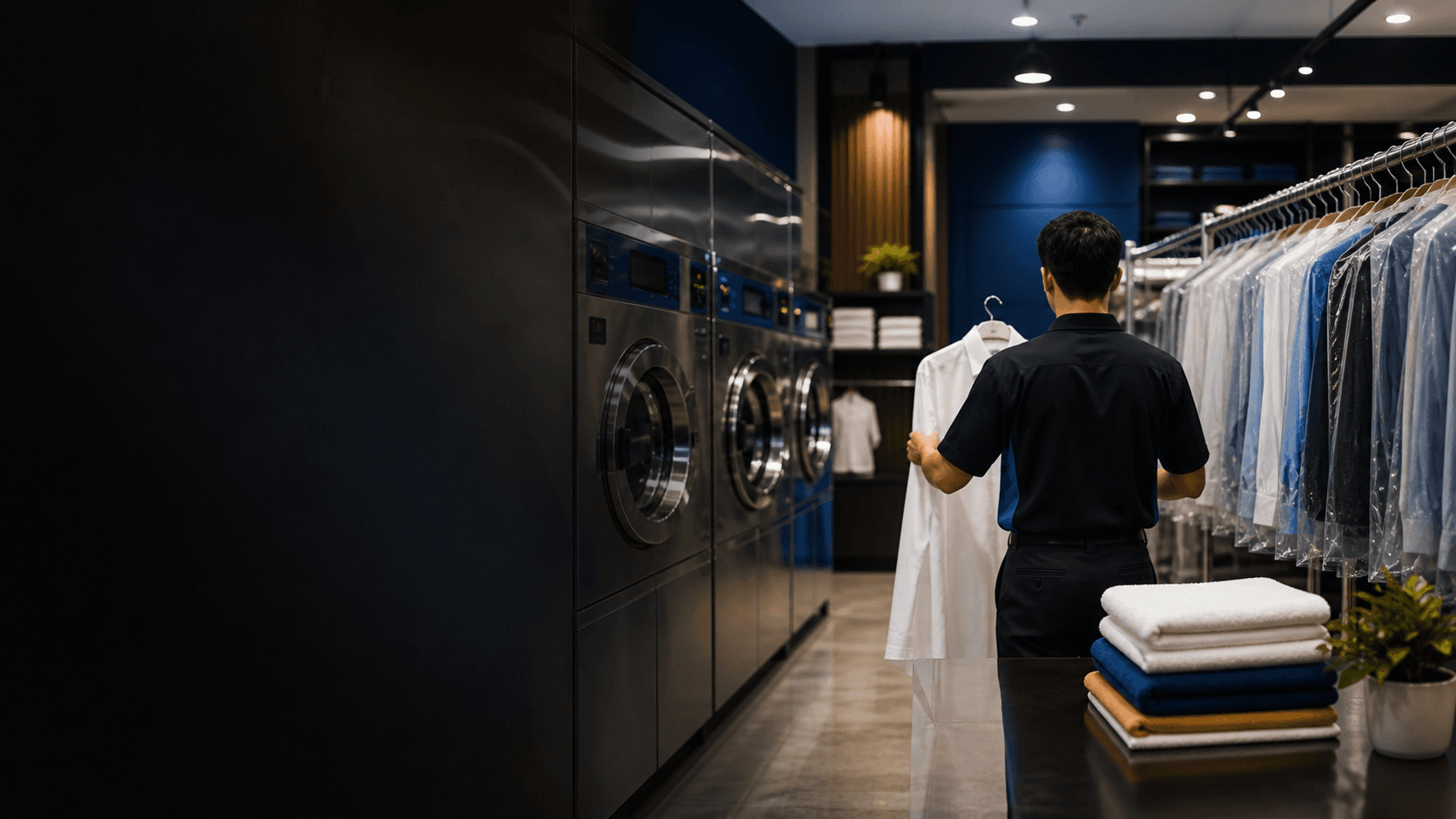
For buyers in Kuching and Miri, one practical alternative to buying an iron at all is sending the ironing out. Sinar Saredah Sdn Bhd has operated laundry and dry cleaning services in Kuching and Miri for more than 38 years, and publishes per-piece pressing rates. Pressing only starts at RM 2.50 for a T-shirt and RM 3 for a short-sleeve shirt, with trousers at RM 4 and a long dress at RM 20. Wash, iron and fold runs from RM 8 for a T-shirt to RM 20 for a baju kurung or baju Melayu set. Curtain cleaning is priced at RM 40 per kilogram, and a small wedding gown at RM 80.
Those rates matter for the comparison. A household ironing a small weekly pile may find that paying per piece costs less over a year than buying and maintaining a station, particularly once scale damage and replacement are counted. A household ironing daily will usually still come out ahead owning an iron.
What to verify before buying
Voltage and plug type should be confirmed for any unit sourced from outside Malaysia. Warranty coverage depends on whether the unit came through an authorised channel, and a grey-market import may not be serviceable locally. Model codes differ between regions, so a code quoted on a US review site may not correspond to a unit sold in Malaysia.
questions buyers ask
Is a Rowenta Professional Iron worth the price? It depends on volume. For occasional ironing, a mid-range handheld iron covers the job. For daily ironing or a small tailoring business, the lighter iron and larger reservoir of a station reduce time and effort per session, which is where the extra cost is recovered.
Which model suits a Malaysian household? A household ironing a few garments at a time is served by a handheld steam iron. A household ironing uniforms, bedsheets, and traditional wear in long sessions is better served by a steam generator station, mainly because the iron stays light and the tank lasts longer.
Does hard water damage the iron? Mineral content in water contributes to scale inside the steam chamber and boiler. A calc-cleaning system and the manufacturer's stated water guidance for the specific model are the main defences.
Can a steam iron replace dry cleaning? No. Steam removes creases and refreshes fabric, but it does not clean structured garments, remove oil-based stains, or handle delicate fabrics that need solvent cleaning. Suits, coats, gowns, and heavily soiled items still belong with a dry cleaner.
What about ironing volume for a small business? A tailoring or uniform business ironing continuously through the day will hit the limits of a handheld tank quickly. A station with a separate boiler is the more workable choice, and at higher volumes the economics shift toward outsourcing pressing entirely.
For households and small businesses in Kuching and Miri that would rather not buy equipment at all, Sinar Saredah Sdn Bhd handles pressing, wash-and-iron, and dry cleaning on a per-piece basis. Call 0176325699 to ask about current rates and turnaround.