










Both categories share one job. heat, moisture, and pressure flatten fibre so creases release and stay released. What separates them is scale. A home unit presses one garment at a time on a board. An industrial ironer feeds flat linen through a heated roller or chest and returns it dry and smooth in a single pass.
Buyers researching ironing systems usually arrive with a setting already in mind, then discover the equipment question is really a throughput question. The sequence below reflects how that decision usually resolves.
- Identify the setting. household, small commercial laundry, hotel housekeeping, or institutional linen room.
- Estimate daily volume in kilograms or pieces, not in loads per week.
- Match the machine class to that volume, since a home steam generator and a flatwork ironer are not interchangeable at any price.
- Check the steam source and whether it produces dry steam or wet steam, because residual moisture changes drying time and finish.
- Plan for scale control, since mineral deposits from water are the most common cause of declining performance.
- Confirm who services the unit locally and what consumables, such as anti-scale cartridges, are replaceable.
Ironing Systems. Steam Generators and Flatwork Ironers
The two families solve different problems. A steam generator builds pressure in a separate boiler and delivers steam to a hand iron, so the operator controls the iron directly over a shaped board. A flatwork ironer does the opposite: the fabric moves and the heated surface stays still, which removes the operator from the pressing motion entirely.
That difference explains why the categories rarely compete. A steam generator suits shaped garments, collars, pleats, and anything that needs the iron lifted and repositioned. A flatwork ironer suits what is flat and repetitive: sheets, duvet covers, tablecloths, napkins, and pillowcases.
Competitor pages in this category tend to split cleanly along the same line. Home-focused retailers describe all-in-one boards with integrated boilers, while industrial suppliers describe roller and cylinder machines for commercial laundries. Few pages cover both, which leaves a gap for readers trying to work out which side of the line their operation sits on.
What Ironing Systems Do to Fabric and Finish
Pressing works on three inputs at once. Heat relaxes the polymer structure inside the fibre. Moisture carries that heat deeper and softens the fibre so it can be reshaped. Pressure then holds the fibre flat while it cools, and the cooling is what sets the crease.
This is why dry steam matters more than total steam volume. Steam that carries suspended water droplets wets the fabric rather than heating it evenly, so the surface cools before the fibre has fully relaxed. Dry steam transfers heat without soaking the cloth, which shortens the time the iron sits on one spot.
Scale is the quiet constraint. Dissolved minerals in tap water precipitate inside boilers and on heating elements as the water boils away. The deposit insulates the element, so the unit takes longer to reach temperature and delivers weaker steam. Anti-scale cartridges and filtered or distilled water slow that process, but they do not reverse it once deposit has formed.
Fabric type sets the ceiling on what any machine can safely do. Natural fibres tolerate sustained heat and moisture. Synthetics soften quickly and can glaze or shine under a hot soleplate, so they need lower temperature and less dwell time. Delicate trims, beading, and structured shoulders generally should not go through a roller at all.
Home All-In-One Ironing Systems
A home all-in-one unit combines three parts on one frame: an active board with blower and vacuum, an integrated steam generator, and a professional-grade iron. The blower lifts fabric slightly so the iron glides without dragging. The vacuum pulls the garment down and holds it while it cools, which is what produces a sharp edge without repeated passes.
These units suit households with a genuine volume problem: school uniforms, work shirts, and formal wear on a weekly cycle. They also suit anyone who sews, because pressing seams and hems accurately is a different task from removing wrinkles from a finished shirt.
The trade-offs are space and maintenance. An all-in-one occupies a fixed footprint and generally does not fold away into a cupboard. The boiler needs periodic descaling or cartridge replacement, and the board cover wears and needs replacing. Reservoir capacity determines how many garments can be pressed before a refill, and larger reservoirs add weight to a unit that may need to be moved.
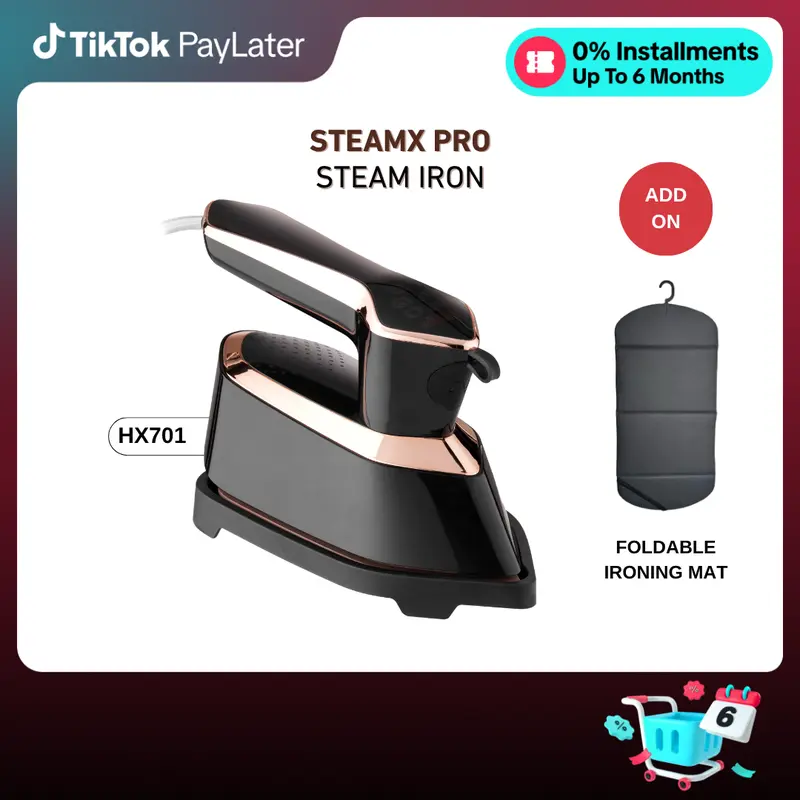
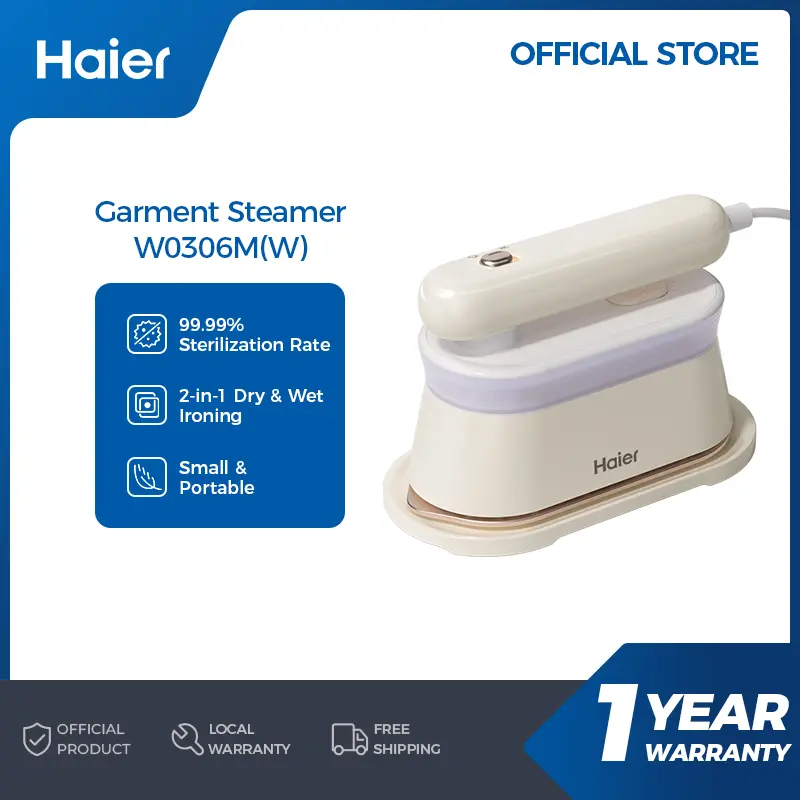
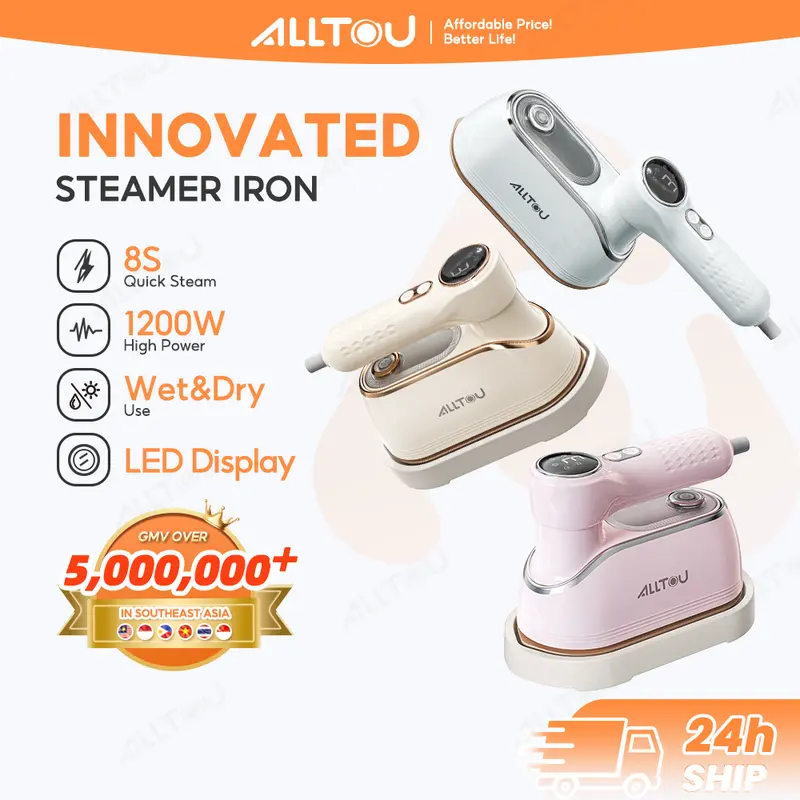
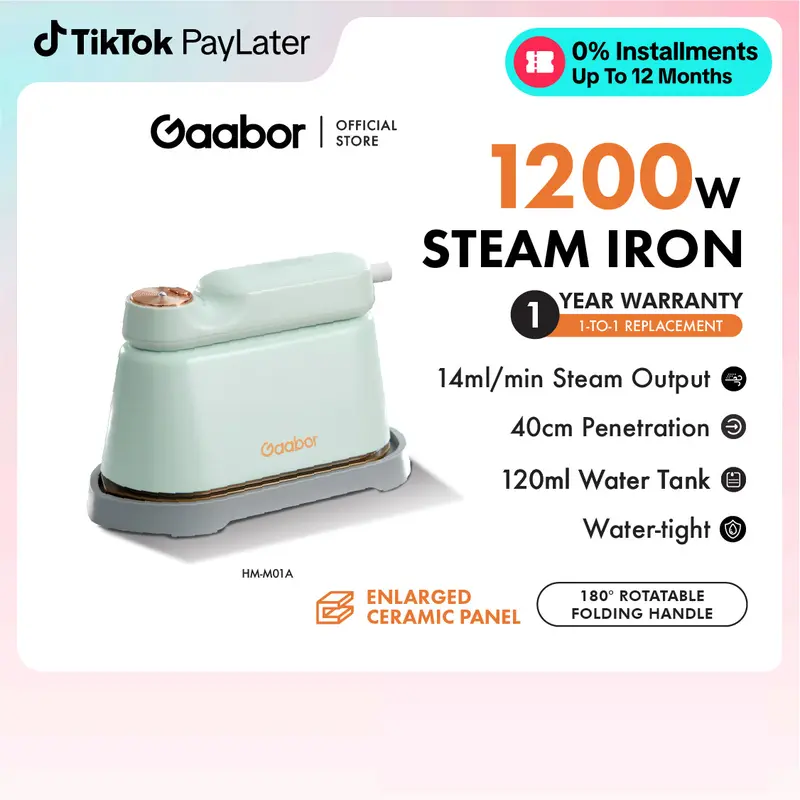
Portable steam generators sit between categories. They carry their own boiler but pair with a separate board, which suits smaller homes or renters who cannot dedicate floor space. They give up the active board's vacuum and blower, so results depend more on operator technique.
Industrial and Flatwork Ironing Systems
Industrial ironers are built around throughput. Fabric is fed onto a heated roller or between a heated chest and a padded roller, then carried through under tension and released dry and flat at the other end. The operator's job shifts from pressing to feeding and catching, which is why output is measured in metres or kilograms per hour rather than garments per session.
Roller ironers and chest ironers differ in how they apply heat and pressure. Roller machines pass linen around a rotating heated cylinder, which suits long flat pieces and continuous feeding. Chest machines press fabric against a heated stationary surface, which can suit thicker or more varied items. Multi-roller configurations increase throughput by running linen through successive heated stages.
These machines appear in hotels, hospitals, care homes, commercial laundries, and institutional linen rooms, where the daily volume of flat linen makes hand pressing impractical. They are typically paired with a separate folding stage, and in larger operations with automated feeding and stacking.
The constraints are different from home equipment. Industrial ironers need adequate floor space, a stable steam or gas supply, ventilation for heat and moisture, and a power supply sized for the heating load. They also need a maintenance arrangement, because a stopped ironer halts the whole finishing line behind it. Energy consumption is a running cost that scales directly with heated surface area and operating hours, so a machine run below its design volume carries a cost penalty per kilogram processed.
Running Costs and Care for Ironing Systems
Ongoing cost comes from four places: electricity or gas for heating, water and any treatment for the boiler, consumables such as anti-scale cartridges and board covers, and servicing labour. For home units, the largest single variable is usually how hard the local water is, because hard water shortens cartridge life and accelerates deposit.
Care routines are similar across both categories. Empty or drain the reservoir after use so standing water does not concentrate minerals. Use the manufacturer's descaling method rather than improvised solutions. Clean the soleplate only with products intended for it, since abrasive cleaning scratches the surface and causes drag. On industrial machines, keep rollers and padding in good condition, because worn padding produces uneven pressure and visible marks on linen.
Service access is the constraint that catches buyers out. A machine with no local service network becomes expensive the first time it needs a part, regardless of its purchase price. Confirming who carries out repairs, how long parts take to arrive, and whether the unit can be serviced on site is worth doing before committing.
Matching an Ironing System to the Setting
Households pressing a few garments a week are usually better served by a good steam iron than by a boiler unit, because the maintenance overhead of a generator only pays back at volume. Households pressing daily, or handling formal wear and sewing projects, reach the point where an all-in-one earns its footprint.
Small commercial operations sit in the awkward middle. A guesthouse with a dozen rooms may find a portable generator plus a commercial board sufficient, while a hotel with a hundred rooms needs a flatwork ironer for linen and a separate pressing station for guest garments. The two tasks should not be forced onto one machine.
Institutional and industrial settings need the flatwork route, sized to peak daily volume rather than average, because linen returns in batches rather than at a steady rate. Peak capacity, not average throughput, determines whether the finishing line keeps up.
For readers in Kuching and Miri who would rather not buy equipment at all, Sinar Saredah Sdn Bhd has provided laundry and dry cleaning services across Sarawak for more than 38 years, with wash-and-iron and pressing-only options priced per kilogram or per piece. That route removes the capital cost, the floor space, and the descaling routine, and it suits households and businesses whose volume does not justify a machine. Call 0176325699 to discuss requirements.