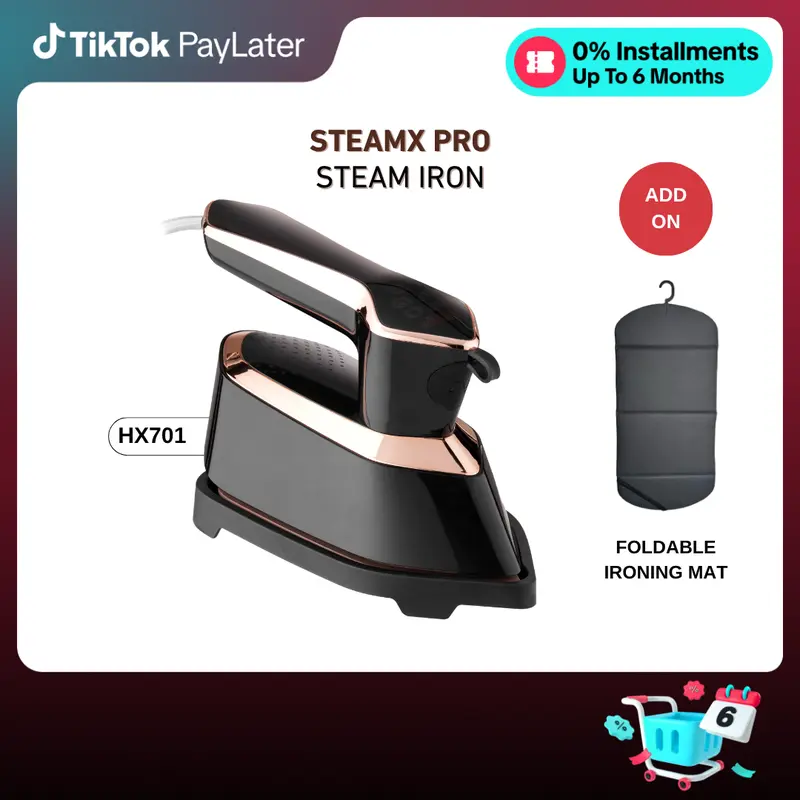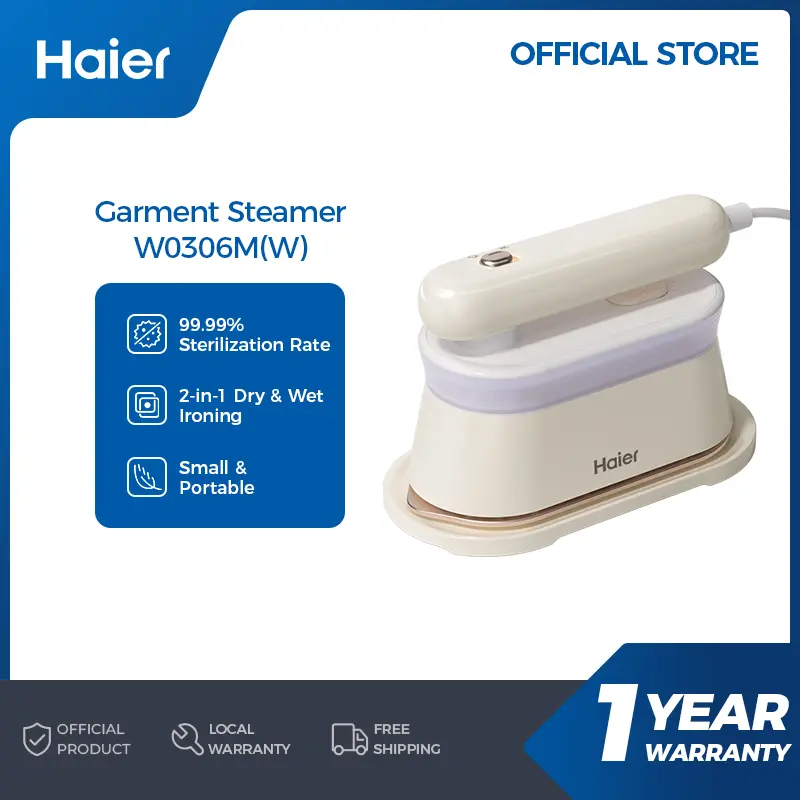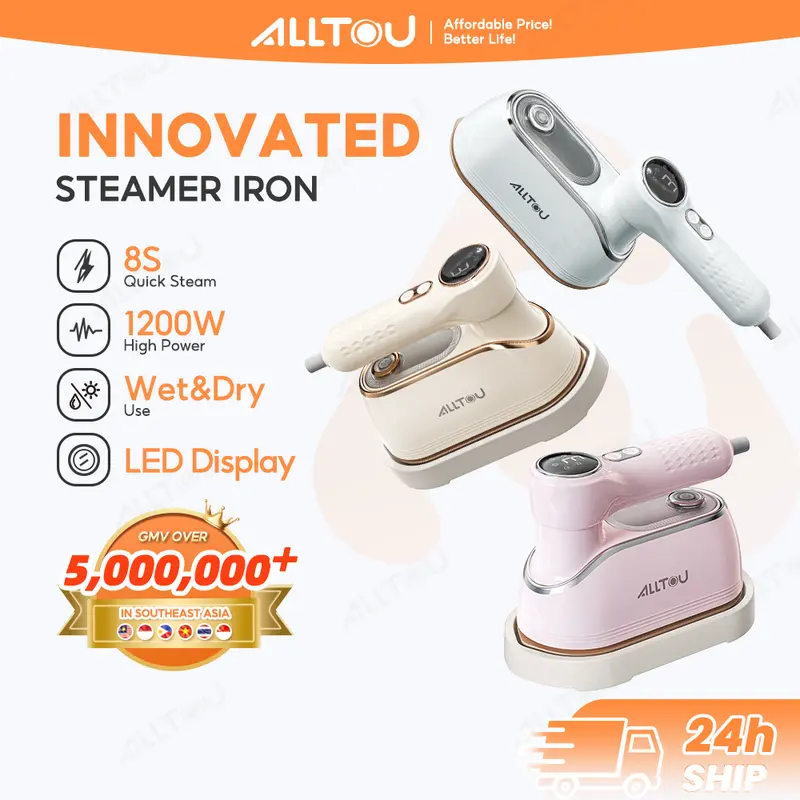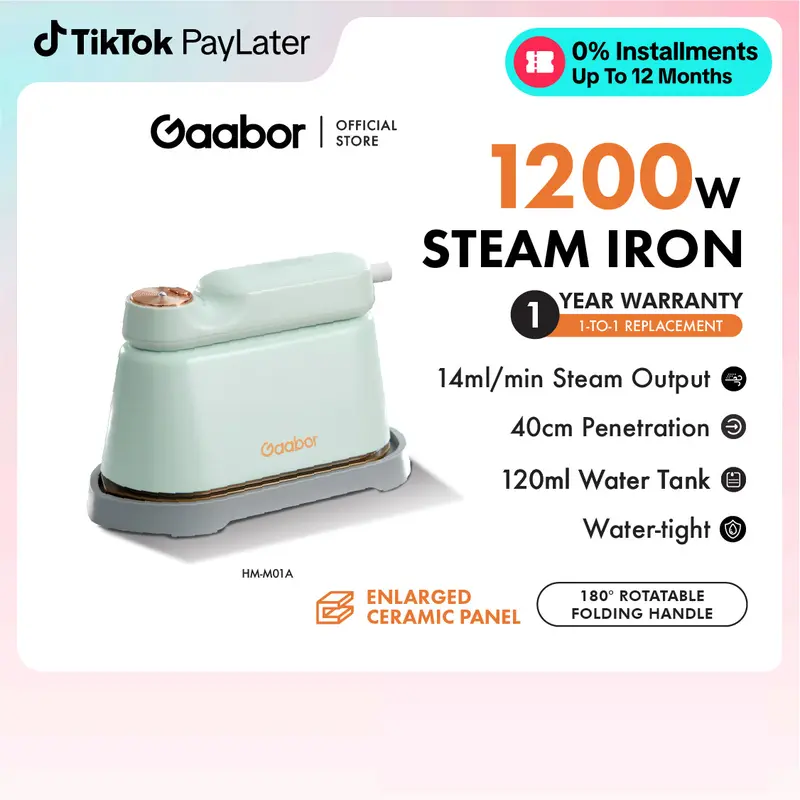












The exact-match query compact clothes steamer describes a category of garment care tool rather than one fixed product. Sizes, wattages, and tank volumes differ widely between models, so the useful question is not whether the category works but whether a particular unit matches the garments and the space it will serve.
Compact Clothes Steamer. What It Does
A compact clothes steamer turns water into steam and directs that steam through a nozzle onto hanging fabric. Heat and moisture relax the fibres in woven cloth, which lets creases fall out under their own weight. The garment usually hangs from a door frame, a curtain rail, or a hook while the steamer passes over it.
That mechanism explains the category's main advantage. Steam works on a garment that is already hanging, so no flat surface is required. It also explains the main limitation. Steam relaxes creases; it does not press a sharp edge into a shirt front or a trouser crease the way a heated plate does.
Most compact units fall into two broad shapes. A handheld steamer is a single body with an integrated tank and nozzle. A travel steamer is a lighter version of the same idea, often built to fold or to run on more than one voltage. Both are sold as garment steamers, and both are distinct from a full-size upright steamer that stands on the floor with a pole and a large reservoir.
Compact Clothes Steamer in Malaysian Homes
Malaysian wardrobes lean heavily on fabrics that steam handles well. Cotton shirts, baju kurung, baju Melayu, jubah, and uniform pieces are common daily wear, and all of them crease in storage and in transit. A compact clothes steamer refreshes those pieces quickly without pulling out a board and an iron.
Space is the practical driver. Flats and smaller homes in Kuching, Miri, and the wider peninsula often have limited storage, and a handheld unit takes up a fraction of the shelf space an ironing board demands. The same size advantage matters for anyone who travels for work, attends functions, or keeps a change of clothes at the office.
Humidity is the other local factor. Damp air and closed wardrobes leave fabric smelling stale, and steam refreshes a garment between washes. That makes a compact clothes steamer useful for the pieces worn once and hung back up, such as a blazer, a scarf, or a songket that should not be laundered after every outing.
Where steaming is not the answer, professional cleaning is. Sinar Saredah Sdn Bhd has served Sarawak for more than 38 years from Kuching and Miri, and its published price list covers pressing only, wash-and-iron, and dry cleaning for garments including baju kurung, baju Melayu, jubah, saree, and songket. A steamer handles surface creases; structured cleaning handles soil, stains, and fabric that needs specialist care.
Compact Clothes Steamer Compared With a Full Iron
The two tools solve different problems. An iron applies heat and pressure through a metal plate, which sets a crisp finish and flattens a hard crease. A compact clothes steamer applies heat and moisture in vapour form, which lifts creases out of hanging fabric and leaves a softer finish.
Speed and setup separate them further. An iron needs a board, a safe surface, and a cool-down period before it is packed away. A handheld steamer needs a hook and a few minutes. For one shirt before a meeting, the steamer wins on time. For a stack of cotton uniforms that must look pressed, the iron wins on finish.
Some units combine both functions as a two-in-one steamer and iron, with a heated plate and a steam mode. That hybrid suits households that want one device rather than two, though it usually costs more and weighs more than a plain handheld steamer.
There is also a middle path. Pressing-only service exists precisely for garments that need a pressed finish without a full wash, and it is priced per piece rather than per kilogram. That option suits readers who want the result of an iron without owning one.
Compact Clothes Steamer Care and Water Use
Water quality drives the working life of any steamer. Minerals in tap water collect inside the heating element and the nozzle over time, which reduces steam output and can leave marks on fabric. Distilled or filtered water reduces that build-up, and many manufacturers specify it in their instructions.
Emptying the tank after each use is the second habit that matters. Water left standing in a small reservoir can stagnate, and the first burst of steam on the next use then carries that smell onto the garment. A short flush before switching off also clears the nozzle.
Storage follows the same logic. A compact clothes steamer should be fully cooled and dry before it goes back in a cupboard, and the cord should be loosely wound rather than tightly wrapped around the body. These are small routines, but they decide whether the unit still performs well after a year.
Compact Clothes Steamer Limits and Fabric Cautions
Steam is not suitable for every material. Waxed or oiled finishes, some leathers, and certain embellished or glued garments can be damaged by heat and moisture. Care labels and manufacturer instructions are the reliable guide, and where a label forbids heat or water, the garment should not be steamed.
Delicate fabrics need distance and a light pass rather than a sustained blast. Holding a nozzle against one spot concentrates heat and moisture in a single area, which risks marking the cloth. Keeping the steamer moving and letting the fabric cool before wearing it produces a better result.
Compact units also carry inherent constraints. A small tank means a short steaming session before a refill, and a lightweight body often means less sustained steam pressure than a full-size upright. A compact clothes steamer is a convenience tool for a few garments at a time, not a replacement for a laundry setup handling a household's full weekly load.
Compact Clothes Steamer Buying Checks
Before choosing a unit, work through the practical checks in order. Each one narrows the field faster than comparing marketing claims.
- List the garments that will actually be steamed, and check their care labels for heat and water guidance.
- Measure the storage space available, including shelf height and whether the unit must fold or fit in a case.
- Decide how many garments a typical session covers, since that sets the minimum water capacity worth accepting.
- Check the stated heat-up time, because a long wait defeats the purpose of a quick refresh.
- Confirm the voltage and plug type match the outlets where the unit will be used, especially for travel.
- Check whether the tank is removable or fixed, since a removable tank is easier to fill and empty.
- Review the cord length and whether the unit can stand upright between passes.
- Read the manufacturer's water specification and cleaning instructions before buying.
Two of those checks carry more weight than the rest. Water capacity and heat-up time decide how the unit behaves in daily use, and voltage decides whether it works at all in the intended location. A model that fails either test will sit unused regardless of how well it steams.
For garments that need more than a refresh, professional laundry and dry cleaning services in Kuching and Miri cover pressing, wash-and-iron, and dry cleaning by the piece. Sinar Saredah Sdn Bhd can be reached at 0176325699 for questions about garment care that a handheld steamer cannot resolve.