Sinar Saredah Supports Sarawak Energy Facilities with Structured Cleaning and Rapid Deep-Cleaning Response
For Sarawak Energy, cleanliness supports more than appearance. It supports public confidence, staff wellbeing, safe shared spaces, and the smooth operation of customer-facing and administrative facilities.
Energy utility facilities often include counters, waiting areas, administration zones, offices, meeting rooms, operational spaces, washrooms, staff pantries, and shared corridors. These areas are used by different groups of people every day. Staff need a clean place to work. Visitors need a comfortable service environment. Facility managers need cleaning work that is consistent, responsive, and dependable.
Sinar Saredah supports Sarawak Energy facilities with structured cleaning services for counters, offices, administration zones, and operational areas. The work focuses on daily hygiene, safe shared spaces, and rapid deep-cleaning or fumigation support when health precautions require thorough disinfection before normal operations resume.
The Challenge: High-Touch, Public-Facing Spaces
Public-facing facilities require a different level of attention because many people interact with the same surfaces.
Counters, chairs, door handles, queue areas, writing surfaces, payment areas, washrooms, pantry spaces, and waiting areas can become hygiene pressure points. Even when a space looks clean, high-touch surfaces may require regular sanitisation.
Another challenge is speed. When a facility needs deep cleaning due to health precautions, the turnaround must be fast. The site may need to reopen quickly, but it cannot reopen until cleaning and disinfection have been completed properly.
Sinar Saredah’s role was to provide both routine cleaning and rapid-response deep cleaning when required.
What Sinar Saredah Did
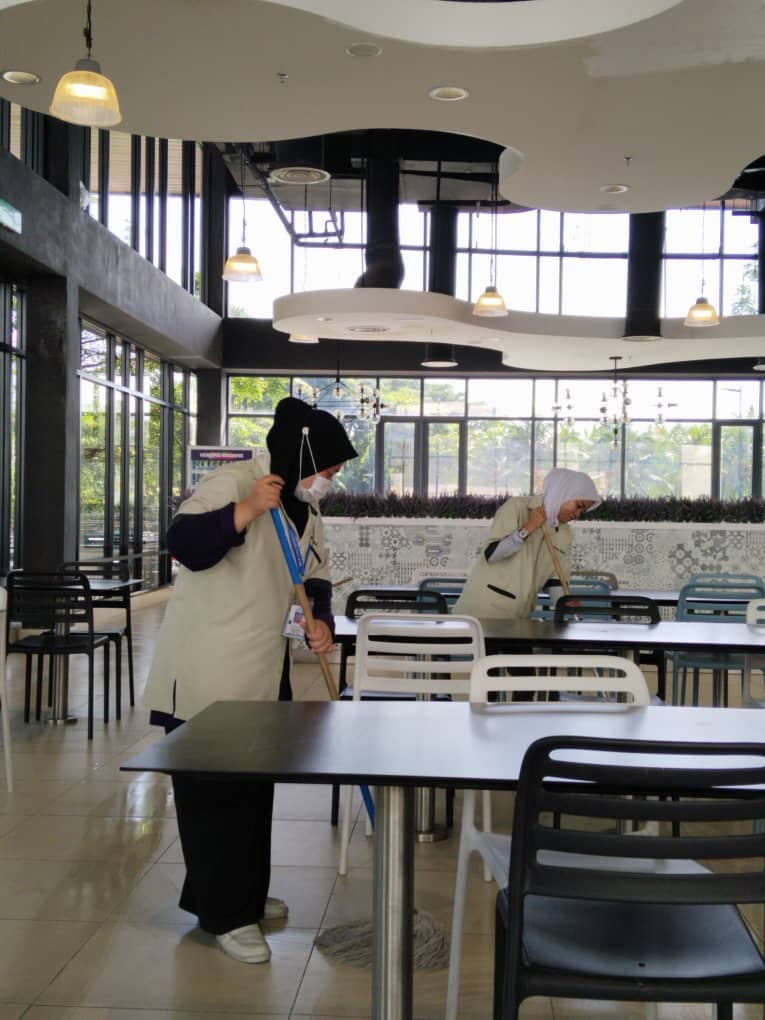
The team created a structured cleaning approach based on the function of each area.
Customer-facing zones were treated as high-priority areas. These included counters, waiting areas, public seating, doors, payment counters, reception points, and washrooms. Cleaning frequency was higher because these areas directly affect customer confidence.
Administrative zones were cleaned to support staff productivity. This included desks, meeting rooms, pantry spaces, shared equipment areas, filing spaces, and corridors.
Operational areas were cleaned according to access permission and site requirements. In these areas, the team followed instructions from the facility representative and avoided interfering with equipment, documents, or restricted zones.
For health-related precautions, the team provided deep-cleaning and disinfection support. This included surface wiping, high-touch disinfection, floor cleaning, washroom sanitisation, and ULV fogging or misting where appropriate and approved by the client.
Where offices had curtains, blinds, or fabric features that collected dust, Sinar Saredah could also support scheduled fabric care through professional curtain cleaning for workplaces.
Machinery and Tools Used
The team used equipment suitable for routine cleaning, deep cleaning, and disinfection response.
Equipment
| Purpose
|
|---|
Commercial vacuum cleaners
| Daily dust and debris removal
|
Wet and dry vacuum machines
| Deep cleaning and wet-area support
|
Walk-behind scrubber dryer
| Larger hard-floor cleaning
|
Rotary floor machine
| Scrubbing, buffing, and stain removal
|
Steam cleaner
| Selected hygiene-sensitive hard surfaces
|
ULV cold fogger
| Disinfection support for approved spaces
|
Electrostatic sprayer
| Even disinfectant application on high-touch areas
|
Microfiber mop system
| Controlled floor cleaning
|
High-reach dusters
| Ceiling corners, vents, signage, ledges
|
Air blowers
| Drying support after wet cleaning
|
For routine cleaning, the focus was consistency. For deep cleaning, the focus was thoroughness and speed.
Cleaning Materials Used
The cleaning materials were selected based on hygiene, surface safety, and comfort for office users.
They included:
- Neutral pH floor cleaner
- Low-foam detergent for scrubber dryers
- Approved surface disinfectant
- Quaternary ammonium disinfectant for high-touch points
- Hydrogen peroxide-based disinfectant where suitable
- Glass cleaner
- Stainless steel polish
- Mild degreaser for pantry and utility areas
- Enzyme deodoriser for odour control
- Microfiber cloths
- Colour-coded mop heads
- Disposable gloves and masks
- Warning signs and barrier tape
- Bin liners and waste-handling materials
The team used controlled dilution to avoid chemical overuse. In working offices, low-odour products were prioritised so staff could return to the area comfortably.
How the Cleaning Was Carried Out
The routine cleaning programme followed a daily checklist.
Daily tasks included:
- Sweeping and mopping hard floors
- Vacuuming office and waiting areas
- Cleaning counters and reception surfaces
- Emptying bins and replacing liners
- Sanitising high-touch points
- Cleaning washrooms
- Replenishing consumables where required
- Wiping pantry counters
- Cleaning glass doors and partitions
- Checking odour control
Weekly tasks included:
- Detailed dusting of ledges and corners
- Machine scrubbing of selected floors
- Deeper pantry cleaning
- Detailed glass cleaning
- Chair and waiting-area cleaning
- Spot-cleaning stains and marks
Monthly or periodic tasks included:
- Floor buffing
- Deep washroom cleaning
- High dusting
- Upholstery vacuuming
- Fumigation or disinfection support if required
- Post-maintenance cleaning
Rapid Deep-Cleaning and Fumigation Support
When health precautions required a deeper response, Sinar Saredah activated a rapid cleaning process.
The process usually followed these steps:
1. Area Isolation
The affected area was identified and separated where needed. Staff movement was reduced until cleaning was completed.
2. Waste Removal
Bins and exposed waste were removed carefully. Waste-handling staff used gloves and protective equipment.
3. High-Touch Surface Cleaning
Before disinfection, surfaces were cleaned to remove visible dirt. This is important because disinfectants work better on clean surfaces.
4. Disinfection
Approved disinfectant was applied to high-touch areas, counters, switches, handles, chairs, tables, washroom fixtures, and shared surfaces.
5. Fogging or Misting
Where approved, ULV fogging or electrostatic spraying was used to support wider-area disinfection. This was done carefully to avoid over-wetting sensitive surfaces.
6. Ventilation and Drying
The area was allowed to settle, ventilate, and dry before normal operations resumed.
7. Final Inspection
The supervisor checked the area before handover.
How Long the Work Took
Routine cleaning was carried out according to the agreed service schedule.
For rapid deep-cleaning support, the turnaround depended on the size of the area. A small office or counter zone could be completed within 4 to 6 hours. A larger facility with multiple counters, washrooms, meeting rooms, and shared areas could take 1 to 2 days.
A typical deep-cleaning response looked like this:
Phase
| Estimated Duration
|
|---|
Site briefing and area isolation
| 30 minutes
|
Waste removal and preparation
| 30 minutes
|
Surface cleaning
| 1 to 2 hours
|
Disinfection and fogging
| 1 to 2 hours
|
Drying and ventilation
| 1 to 3 hours
|
Final inspection
| 30 minutes
|
For urgent cases, the team could work after office hours to reduce disruption and help the facility return to normal operations faster.
The Result
Sinar Saredah’s work helped Sarawak Energy facilities maintain clean, safe, and presentable spaces for both staff and the public.
Counters remained professional. Offices were easier to work in. Shared spaces felt more hygienic. Washrooms were maintained. High-touch areas received regular attention. When deeper cleaning was required, the team could respond quickly with machinery, materials, and trained manpower.
For Sarawak Energy, the value was reliability. The facilities needed to remain clean not once, but every day. Sinar Saredah helped provide that consistency.
Organisations that need similar facility cleaning support can contact Sinar Saredah for a site assessment.