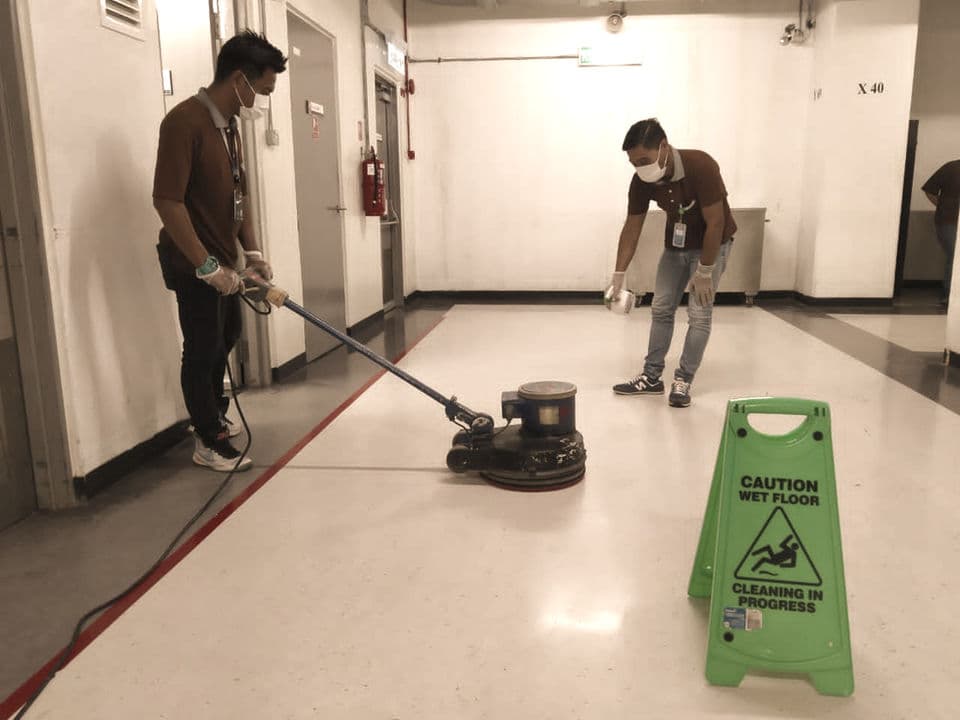
How Sinar Saredah Supports Shell Miri with High-Standard Commercial Site Cleaning
For an energy organisation like Shell Miri, a clean workplace is not simply about appearance. It is about safety, productivity, hygiene, operational discipline, and the confidence of everyone who enters the building.
Corporate offices, meeting rooms, shared work areas, pantry spaces, washrooms, high-touch points, post-construction areas, and technical support rooms all require different cleaning methods. A normal cleaning routine is not enough for a high-standard commercial environment where people move between departments, visitors attend meetings, staff spend long hours indoors, and certain areas may require more controlled cleaning practices.
This is where Sinar Saredah Sdn Bhd plays its role.
Sinar Saredah supports Shell Miri with commercial site cleaning services designed for professional office environments, energy-sector facilities, and high-traffic corporate spaces. The work covers daily and periodic cleaning for office spaces, meeting rooms, shared areas, post-construction cleaning, deep cleaning, disinfection routines, floor care, carpet maintenance, and careful cleaning for selected controlled areas where extra hygiene discipline is required.
The objective is simple: help Shell Miri maintain a clean, safe, presentable, and reliable working environment without disrupting day-to-day operations.
The Client’s Need: A Workplace That Reflects Professional Standards
For Shell Miri, the workplace has to support many types of activity at the same time. Staff need clean desks, sanitised shared spaces, safe walkways, well-maintained washrooms, and comfortable meeting areas. Visitors need to walk into a professional environment that feels organised and well cared for. Facility managers need cleaning work to be done properly, consistently, and safely.
The main challenge is not only to clean the building. The bigger challenge is to maintain standards across different zones with different levels of usage.
An executive meeting room does not have the same cleaning requirement as a pantry. A reception area does not have the same foot traffic as a staff corridor. A post-construction area requires a different method from a normal office floor. A carpeted meeting room requires a different approach from tiled common areas. A technical room or controlled workspace may require careful dust management and restricted cleaning procedures.
Shell Miri needed a cleaning partner that could understand these differences and respond with the right method, machinery, manpower, and supervision.
Sinar Saredah’s role was to provide that structure.
Our Role: The Cleaning Partner Behind the Workplace
Sinar Saredah did not approach the site as a simple “sweep, mop, and wipe” job. The site required a more systematic commercial cleaning programme.
The work was planned around four priorities:
First, maintain hygiene in daily-use spaces such as workstations, meeting rooms, pantries, washrooms, corridors, and common areas.
Second, protect the quality and appearance of building materials, including carpets, hard floors, glass, stainless steel surfaces, office furniture, fabric panels, and fixtures.
Third, reduce disruption to Shell Miri’s operations by scheduling noisy, wet, or heavy-duty cleaning work outside peak working hours where possible.
Fourth, support safety and environmental responsibility by using controlled chemical dilution, proper cleaning equipment, low-odour cleaning agents, colour-coded tools, and waste-handling procedures.
This is the standard expected from a professional commercial cleaning partner. For businesses that need the same structured approach, Sinar Saredah also provides commercial office and site cleaning in Kuching and Sarawak.
Understanding the Site Before Cleaning
Before cleaning began, the team carried out a site assessment. This step was important because commercial cleaning is never one-size-fits-all.
The inspection covered:
Area Assessed
| What We Checked
| Why It Mattered
|
|---|
Office spaces
| Desk layout, floor type, dust levels, waste points
| To plan daily cleaning flow
|
Meeting rooms
| Carpet, chairs, glass panels, screens, table surfaces
| To protect presentation standards
|
Shared areas
| Foot traffic, touchpoints, pantry usage
| To set hygiene frequency
|
Washrooms
| Fixtures, odour control, consumable needs
| To maintain comfort and hygiene
|
Post-construction zones
| Fine dust, adhesive marks, debris, floor condition
| To select heavy-duty cleaning method
|
Controlled areas
| Access limits, dust sensitivity, cleaning restrictions
| To prevent contamination
|
Floors and carpets
| Stains, wear patterns, moisture sensitivity
| To choose correct machinery
|
Waste points
| Segregation needs, volume, schedule
| To avoid overflow and odour
|
The team then prepared a cleaning plan. The plan identified what needed to be cleaned daily, weekly, monthly, and after specific events or renovation activity.
This allowed the cleaning team to work with discipline instead of reacting randomly.
The Main Cleaning Challenges
1. High Foot Traffic in Shared Areas
The shared areas at a commercial energy office can become dirty quickly because staff, contractors, visitors, and vendors may move through the building throughout the day.
The main issue was not heavy dirt, but continuous light soiling. Dust, shoe marks, fingerprints, food crumbs, drink spills, and smudges can build up fast when many people use the same space.
To solve this, Sinar Saredah used a zone-based cleaning system. High-traffic areas were given more frequent attention. Lower-traffic spaces were cleaned according to scheduled routines.
This helped maintain a consistent appearance throughout the day.
2. Meeting Rooms That Must Always Look Ready
Meeting rooms are important because they influence first impressions. A meeting room may be used for internal planning in the morning, a vendor discussion at noon, and a management session in the afternoon.
The cleaning challenge was to keep the rooms ready without disturbing ongoing meetings.
The team focused on table surfaces, chair alignment, carpet vacuuming, glass cleaning, whiteboard cleaning, odour control, bin clearing, and touchpoint disinfection. After major meetings, rooms were checked again to ensure they returned to presentation-ready condition.
3. Post-Construction Dust
Post-construction cleaning was one of the more technical parts of the work.
After renovation, repair, or installation works, fine dust can settle on floors, ledges, glass, electrical trunking, air-conditioning vents, furniture, ceiling corners, and hidden edges. This dust is different from normal office dust. It can be powdery, persistent, and easily spread if cleaned incorrectly.
Using a normal broom can make the problem worse because it pushes dust back into the air.
Sinar Saredah used vacuum-assisted dust removal, damp wiping, microfiber tools, and staged cleaning. The team cleaned from high to low areas, starting with ledges, walls, vents, and upper surfaces before moving to furniture and floors.
This method helped prevent dust from resettling after the first round of cleaning.
4. Carpet Stains and Indoor Comfort
Carpeted areas required special attention because carpets trap dust, sand, moisture, odour, and fine particles. In meeting rooms and office spaces, carpet condition affects both appearance and indoor comfort.
The team used commercial vacuuming for routine maintenance and hot-water extraction or low-moisture encapsulation for deeper periodic cleaning, depending on the carpet condition and drying-time requirement.
Where stains appeared, spot treatment was carried out before full extraction. For more specialised carpet care, Sinar Saredah provides commercial carpet cleaning support for offices, hotels, institutions, and business premises.
5. Cleaning Without Disrupting Operations
A major challenge in commercial cleaning is timing.
Heavy cleaning cannot be done when staff are walking through wet floors. Carpet extraction cannot be done just before a meeting. Floor scrubbing cannot block access during office hours. Disinfection routines cannot disturb people working at their desks.
The team planned the work in phases. General office cleaning was done during agreed service windows. Noisy or wet work was scheduled after office hours or during lower-traffic periods. Areas were sectioned off when needed, with proper caution signage.
This helped Shell Miri continue operations while cleaning work progressed in the background.
6. Controlled Cleaning for Sensitive Areas
Some office environments may include rooms or zones that require more careful cleaning due to equipment, controlled access, document sensitivity, or dust concerns.
Where required, Sinar Saredah applied careful controlled-area cleaning practices. This included limited personnel access, clean cloth rotation, low-lint wiping materials, controlled chemical use, and careful movement of cleaning tools.
For sensitive surfaces, the team avoided over-wetting and used appropriate wiping methods instead of aggressive scrubbing. Equipment was not moved unless permission was given. Cleaning was carried out according to the access instructions provided by the site representative.
Machinery Used for the Cleaning Work
A high-standard site requires the right machinery. Manual cleaning alone would not be efficient or consistent enough for a commercial facility of this size.
Sinar Saredah used a combination of commercial-grade cleaning equipment, including:
1. HEPA Filter Vacuum Cleaners
HEPA filter vacuum cleaners were used for carpeted rooms, office corners, ledges, and areas where fine dust needed to be removed carefully.
These machines were especially useful during post-construction cleaning because fine dust can become airborne if handled roughly. HEPA filtration helped capture smaller dust particles more effectively than basic vacuum systems.
2. Wet and Dry Vacuum Machines
Wet and dry vacuums were used for areas with moisture, floor washing residue, and post-cleaning extraction. These machines helped remove dirty water after scrubbing, especially in utility spaces or hard-floor areas.
They were also useful for controlled clean-up after spills or wet cleaning activities.
3. Walk-Behind Scrubber Dryer
For larger hard-floor areas, a walk-behind scrubber dryer was used to wash, scrub, and dry the floor in a more efficient way.
This machine allowed the team to clean larger floor areas with consistent pressure and water control. It also helped reduce drying time, which is important in a working office environment.
4. Rotary Floor Machine
A rotary floor machine was used for deeper floor scrubbing, buffing, and surface restoration. This was suitable for areas with stubborn marks, dull floor finishes, or accumulated grime.
Different pads were used depending on the floor condition. Softer pads were used for lighter cleaning and polishing, while stronger pads were used for heavier scrubbing where appropriate.
5. Carpet Extraction Machine
For carpets, the team used a commercial carpet extractor. This machine injects cleaning solution into the carpet and extracts dirt, moisture, and residue.
Before extraction, stains were treated manually. After extraction, carpets were groomed and left to dry with ventilation support.
6. Low-Moisture Carpet Cleaning System
Where drying time was limited, a low-moisture encapsulation method was used. This method applies a cleaning compound that captures soil particles, which are then removed by vacuuming after drying.
This was useful for meeting rooms or office spaces that needed to return to use quickly.
7. Steam Cleaning Equipment
Steam cleaning was used selectively on suitable hard surfaces, corners, and selected hygiene-sensitive areas. It was not used on surfaces that could be damaged by heat or moisture.
Steam helped loosen dirt and support hygiene cleaning without relying too heavily on strong chemicals.
8. Air Blowers
Air blowers were used after carpet cleaning or wet floor cleaning to speed up drying. This helped reduce downtime and minimise the risk of slips.
9. Telescopic Dusters and High-Reach Tools
High-reach tools were used to clean ceiling corners, vents, upper ledges, signage, and hard-to-reach dust collection points.
This was especially important after construction or maintenance work, where dust can settle above normal eye level.
10. Microfiber Cleaning Systems
Microfiber cloths, flat mops, and dusting tools were used throughout the project. Microfiber is important because it captures dust more effectively than ordinary cloth.
The team used colour-coded microfiber systems to avoid cross-contamination between different areas such as washrooms, pantry spaces, general office areas, and glass surfaces.
Cleaning Materials and Chemicals Used
The cleaning materials were selected based on surface type, hygiene needs, odour control, and environmental responsibility.
The materials included:
Material / Chemical Type
| Use
|
|---|
Neutral pH floor cleaner
| Routine cleaning of hard floors
|
Low-foam detergent
| Scrubber dryer use
|
Carpet shampoo / extraction solution
| Carpet deep cleaning
|
Encapsulation carpet cleaner
| Low-moisture carpet maintenance
|
Spot remover
| Localised stain treatment
|
Quaternary ammonium disinfectant
| High-touch point disinfection
|
70% alcohol wipes
| Selected controlled surfaces where suitable
|
Glass cleaner
| Glass partitions, doors, panels
|
Stainless steel polish
| Lift buttons, railings, pantry fixtures
|
Mild degreaser
| Pantry and utility areas
|
Enzyme deodoriser
| Odour control in selected areas
|
Lint-free wipes
| Sensitive or controlled-area wiping
|
Microfiber cloths
| Dusting and surface cleaning
|
Non-scratch pads
| Gentle surface scrubbing
|
Disposable gloves
| Hygiene and worker protection
|
Caution signage
| Safety during wet cleaning
|
The team avoided overuse of harsh chemicals. Where possible, low-odour and controlled-dilution products were used to ensure comfort for office users.
The Cleaning Plan: How the Work Was Carried Out
The project was organised into stages.
Stage 1: Site Walkthrough and Risk Review
Before cleaning started, the supervisor walked through the site with the facility representative. The purpose was to identify priorities, restricted areas, access times, waste points, floor types, surface conditions, and any special instructions.
This step helped prevent misunderstanding. It also allowed the cleaning team to assign the right equipment and manpower.
Stage 2: Area Zoning
The site was divided into cleaning zones:
- Reception and entrance areas
- General office spaces
- Meeting rooms
- Pantry and shared areas
- Washrooms
- Corridors and walkways
- Carpeted areas
- Post-construction areas
- Controlled or sensitive rooms
- Waste collection points
Each zone had its own cleaning checklist.
Stage 3: Dry Cleaning and Dust Removal
The first active cleaning stage focused on dry dust removal. This included vacuuming, high dusting, wiping ledges, clearing cobwebs, removing construction dust, and cleaning furniture surfaces.
The team used HEPA vacuums and microfiber cloths to prevent dust from spreading.
Stage 4: Surface Cleaning and Disinfection
After dust removal, the team cleaned surfaces using appropriate detergents and disinfectants.
High-touch points were given special attention, including:
- Door handles
- Light switches
- Meeting room tables
- Chair arms
- Pantry counters
- Lift buttons
- Railings
- Reception counters
- Shared equipment surfaces
- Washroom fixtures
This was important because shared office environments need routine hygiene control, not just visible cleaning.
Stage 5: Floor Cleaning
Hard floors were cleaned using neutral floor cleaner, mop systems, scrubber dryers, and rotary machines where required.
The cleaning team placed caution signs before wet cleaning and ensured floors were dry before allowing normal movement through the area.
Stage 6: Carpet Maintenance
Carpets were vacuumed first to remove loose soil. Stains were then pre-treated. Depending on the room schedule, either carpet extraction or low-moisture encapsulation was used.
Drying was supported using air blowers and ventilation. The team avoided over-wetting because too much moisture can create odour, slow drying, or affect carpet backing.
Stage 7: Glass, Fixtures, and Finishing
The finishing stage included glass cleaning, stainless steel polishing, final dust checks, bin replacement, chair alignment, pantry checks, and washroom inspection.
This stage is important because the last 10% of cleaning affects how the entire job is perceived.
A floor may be clean, but if the glass has streaks or the meeting chairs are messy, the room still feels unfinished. Sinar Saredah’s finishing checklist helped ensure the site looked professional before handover.
How Long the Work Took
For this case study, the cleaning programme was carried out over several phases.
The initial deep cleaning and post-construction cleaning took approximately 5 working days. This included dust removal, floor cleaning, carpet care, surface disinfection, glass cleaning, washroom deep cleaning, and final inspection.
The work was scheduled in phases to reduce disruption:
Phase
| Duration
| Work Completed
|
|---|
Site assessment and planning
| 0.5 day
| Walkthrough, checklist, manpower planning
|
Post-construction dust removal
| 1.5 days
| High dusting, HEPA vacuuming, ledges, surfaces
|
Office and meeting room deep cleaning
| 1 day
| Furniture, carpets, glass, touchpoints
|
Floor scrubbing and carpet extraction
| 1 day
| Hard floors, carpeted rooms, drying
|
Washroom, pantry, and shared area deep cleaning
| 0.5 day
| Hygiene cleaning, odour control, fixtures
|
Final detailing and inspection
| 0.5 day
| Quality check, finishing, handover
|
After the initial project, Sinar Saredah continued with periodic cleaning support based on the site’s operational needs.
Daily cleaning focused on general upkeep and hygiene. Weekly cleaning focused on more detailed areas such as corners, glass, pantry deep cleaning, and selected floor care. Monthly or quarterly cleaning focused on carpets, high dusting, floor restoration, and deeper disinfection routines.
Manpower Deployment
The project used a structured team arrangement.
A typical deployment included:
- 1 site supervisor
- 1 quality control lead
- 4 to 6 cleaning technicians
- 1 floor-care machine operator
- 1 carpet-cleaning technician
- 1 support worker for waste handling and equipment movement
The supervisor coordinated access, timing, safety, and quality checks. The floor-care and carpet specialists handled machinery. General cleaning technicians managed wiping, vacuuming, washrooms, pantries, meeting rooms, and finishing details.
This division of responsibility helped the team work faster without losing quality.
Safety Measures During Cleaning
Safety was a key part of the cleaning process.
The team used caution signage during wet work, ensured cables from machines were managed safely, wore gloves where required, and avoided blocking walkways unnecessarily. Cleaning chemicals were diluted according to instructions and stored properly.
For areas with office equipment, the team avoided spraying liquid directly onto surfaces. Instead, cloths were dampened first, then used to wipe surfaces carefully.
For post-construction areas, dust masks and gloves were used where needed. Debris was removed carefully to avoid scratching floors or damaging fixtures.
The goal was to clean the site without creating new risks.
Environmental and Responsible Cleaning Practices
Modern commercial cleaning should not rely only on strong chemicals. It should use the right method, the right dilution, and the right equipment.
Sinar Saredah applied environmentally mindful cleaning practices by:
- Using controlled chemical dilution
- Avoiding unnecessary chemical overuse
- Choosing low-odour products where possible
- Using microfiber tools to reduce water and chemical demand
- Separating waste where required
- Reducing rework through proper cleaning sequence
- Using machine cleaning for efficiency and consistency
- Preventing over-wetting of carpets and floors
This approach supports cleaner indoor spaces while reducing wasteful cleaning habits.
Special Attention to Curtains, Fabrics, and Soft Furnishings
Commercial sites often focus heavily on floors and tables, but soft furnishings also matter. Curtains, blinds, fabric panels, upholstered chairs, and soft seating can trap dust and odour.
For Shell Miri’s office environment, fabric surfaces were inspected during the cleaning process. Where needed, they were vacuumed using upholstery tools. Stains were treated carefully based on fabric type. For heavier cleaning, items could be scheduled for deeper fabric care without affecting daily office operations.
Sinar Saredah also provides professional curtain and fabric cleaning for offices, hotels, homes, and institutional facilities.
Quality Control and Handover
A cleaning job is only complete when the result has been checked.
At Shell Miri, the Sinar Saredah team used a final inspection checklist before handover. The checklist covered:
- Floors free from visible dirt and marks
- Carpets vacuumed and treated
- Meeting rooms reset and presentable
- Glass panels clean and streak-controlled
- Pantry counters cleaned
- Washrooms checked
- High-touch points disinfected
- Bins cleared and liners replaced
- Furniture aligned
- Post-construction dust removed
- No cleaning tools left behind
- No wet-floor hazards remaining
The supervisor reviewed the site and corrected any remaining issues before completion.
The Result: A Cleaner, Safer, More Professional Workplace
The result was a workplace that felt cleaner, more organised, and more suitable for a high-standard corporate environment.
For Shell Miri, the benefit was not just a polished office. The deeper value was operational confidence.
Staff could return to clean work areas. Meeting rooms were ready for use. Shared spaces felt more hygienic. Post-construction dust was removed properly. Floors and carpets were maintained. Facility managers had a cleaning partner that understood timing, safety, surfaces, and presentation.
This is what professional cleaning should do. It should remove the burden from the client so their team can focus on their own work.
Sinar Saredah’s role was to guide the process, provide trained manpower, bring the right machinery, choose the right materials, and deliver cleaning work with discipline.
Why This Project Matters
Cleaning a commercial energy office is different from cleaning a normal space. It requires structure, supervision, and attention to detail.
The Shell Miri project demonstrates Sinar Saredah’s ability to support high-standard clients with complex cleaning needs. It shows the company’s experience in handling corporate workspaces, post-construction conditions, sensitive areas, shared spaces, carpets, fabrics, floors, and hygiene routines.
It also reflects the type of cleaning partner modern businesses need.
Companies do not want to keep reminding cleaners what to do. They want a partner who can see the problem, prepare a plan, bring the right tools, and deliver the result.
That is where Sinar Saredah stands out.
Our Commercial Cleaning Method
Sinar Saredah’s commercial cleaning method can be summarised in five steps.
1. Inspect the Site
We begin by understanding the site layout, surface types, cleaning risks, access hours, and client priorities.
2. Identify the Cleaning Zones
We separate the site into zones so each area receives the correct cleaning method.
3. Match the Right Tools and Materials
We choose the right machines, chemicals, cloths, pads, vacuums, and safety tools based on the surface and cleaning objective.
4. Clean in the Right Sequence
We clean from high to low, dry to wet, and general to detailed. This prevents rework and improves final quality.
5. Inspect Before Handover
We check the work before completion so the client receives a site that is clean, safe, and ready for use.
What Businesses Can Learn from This
The Shell Miri project highlights an important lesson for commercial property owners and facility managers.
Cleaning should not be treated as an afterthought.
When cleaning is poorly planned, the result is visible. Dust returns quickly. Carpets smell damp. Floors become slippery. Meeting rooms look unprepared. Staff complain about washrooms. Visitors notice smudges and stains. Facility managers spend too much time chasing small issues.
But when cleaning is properly planned, the building feels different. People may not always notice every detail, but they feel the result. The workplace becomes more comfortable, more professional, and easier to manage.
That is the value of working with an experienced cleaning company.
About Sinar Saredah Sdn Bhd
Sinar Saredah Sdn Bhd is a Sarawak-based cleaning and laundry service provider with experience supporting homes, businesses, hotels, offices, institutions, and commercial clients.
From office cleaning and carpet cleaning to curtain cleaning, specialist laundry, dry cleaning, post-construction cleaning, and periodic deep cleaning, Sinar Saredah helps clients maintain cleaner and more presentable spaces.
The company is located at:
Sinar Saredah Sdn Bhd Ground Floor Lot 1905, Block 10, Jalan Tun Ahmad Zaidi Adruce, 93150 Kuching, Sarawak.
For commercial cleaning support, businesses can request a site assessment with Sinar Saredah.
Final Summary
Sinar Saredah’s support for Shell Miri demonstrates the company’s capability in high-standard commercial site cleaning.
The project involved office cleaning, meeting room care, shared area cleaning, post-construction dust removal, carpet maintenance, floor scrubbing, disinfection routines, controlled-area cleaning, fabric care, and final detailing.
The team used commercial-grade machinery such as HEPA vacuums, wet and dry vacuums, scrubber dryers, rotary floor machines, carpet extractors, steam equipment, air blowers, high-reach tools, and microfiber cleaning systems.
The work was delivered through proper planning, zone-based cleaning, surface-specific methods, safety controls, and quality inspection.
For Shell Miri, the outcome was a cleaner, safer, more professional working environment. For Sinar Saredah, the project reflects the company’s ability to serve demanding commercial clients with experience, discipline, and care.