Sinar Saredah Est. 1987
Back to insights
Cleaning Guide

How to Care for Granite Countertops in Malaysia

Discover essential tips for caring for granite countertops in Malaysia, including cleaning, sealing and stain removal.

How to Care for Granite Countertops

Granite cleaning, kitchen care, stain prevention, sealing, countertop maintenance, Malaysian humidity and home hygiene

Granite countertops add a natural, premium feel to kitchens, pantry areas, islands and bathroom vanities. They are strong and beautiful, but they still need the right care. Many people assume granite can handle any cleaner because it is stone. In reality, the surface can become dull, stained or damaged when exposed to acidic products, harsh chemicals, abrasive scrubbing or neglected sealing.

In Malaysian homes, granite faces daily challenges: cooking oil, curry, sambal, coffee, tea, water marks, soap residue, humidity, ants, food prep and busy family use. Caring for granite is not difficult, but it must be consistent. The safest routine is simple: wipe spills quickly, clean with mild soap and water, dry the surface, avoid acidic cleaners, use trivets and check whether the stone needs sealing.

This guide explains how to care for granite countertops using clear steps, tables, charts and long-term maintenance habits. You are the hero who wants your kitchen to stay beautiful and hygienic. Stains, dullness and poor habits are the villains. Sinar Saredah is the guide for wider home cleaning support when kitchens, curtains, carpets or living spaces need professional freshness.

What Makes Granite Special?

Granite is a natural stone formed under intense heat and pressure. It is durable, heat-resistant and unique in appearance because every slab has its own pattern. However, granite is not completely maintenance-free. Some granite is more porous than others, which means spills can seep in if the surface is not properly sealed.

Granite care depends on three habits: gentle cleaning, fast spill response and proper sealing. If you keep the surface clean and dry, avoid harsh products and maintain the sealer, granite can look beautiful for many years.

Core idea: Granite is strong, but the finish and sealer need protection. Use gentle cleaners and avoid acidic or abrasive products.

The Granite Care Loop

1Wipe spills quickly before they soak or stain
2Clean daily with mild soap and soft cloth
3Dry the surface to prevent water marks
4Protect from heat, acids, oils and scratches
5Test sealing and reseal when needed

Common Granite Countertop Problems

ProblemCauseWhy It MattersBest First Action
Water marksStanding water or air dryingLeaves dull patches or mineral residueWipe dry with microfiber cloth
Oil stainsCooking oil, sambal oil, butterCan darken porous stoneBlot quickly and use stone-safe poultice if needed
Dull surfaceHarsh cleaners or residue buildupReduces natural shineUse pH-neutral stone-safe cleaner
Etching-like marksAcidic foods or wrong cleanerMay affect polish or sealerAvoid vinegar, lemon and acidic cleaners
ScratchesAbrasive pads or dragging objectsCan mark the finishUse cutting boards and soft cloths
Staining near sinkWater, soap, oil and poor dryingMay indicate worn sealerDo a water-drop test and reseal if needed

Pie Chart: What Usually Damages Granite Countertops?

  • Wrong cleaners and acidic products: 30%
  • Oil, food and drink spills: 24%
  • Worn or missing sealer: 18%
  • Water marks and poor drying: 15%
  • Abrasive tools and heat habits: 13%

Step-by-Step: Daily Granite Cleaning

Step 1: Remove crumbs and debris

Use a soft cloth or dry microfiber cloth to remove crumbs before wiping. This prevents gritty particles from scratching the surface.

Step 2: Use mild soap and warm water

Mix a few drops of mild dish soap with warm water. Wipe the surface with a soft cloth. Avoid using too much soap because residue can leave streaks.

Step 3: Rinse with a damp cloth

Wipe again with a clean damp cloth to remove soap residue. This keeps the surface from feeling sticky or cloudy.

Step 4: Dry completely

Buff dry with a microfiber cloth. Air drying can leave water spots, especially around sinks.

Step 5: Clean spills quickly

Blot oil, coffee, tea, curry or acidic spills immediately. Do not let spills sit, especially if the sealer may be worn.

Bar Graph: Best Granite Care Habits

Wipe spills quickly
96/100
Use pH-neutral cleaner
92/100
Dry after cleaning
88/100
Use cutting boards/trivets
84/100
Test sealer regularly
82/100
Avoid vinegar/lemon cleaners
90/100

The Water-Drop Test

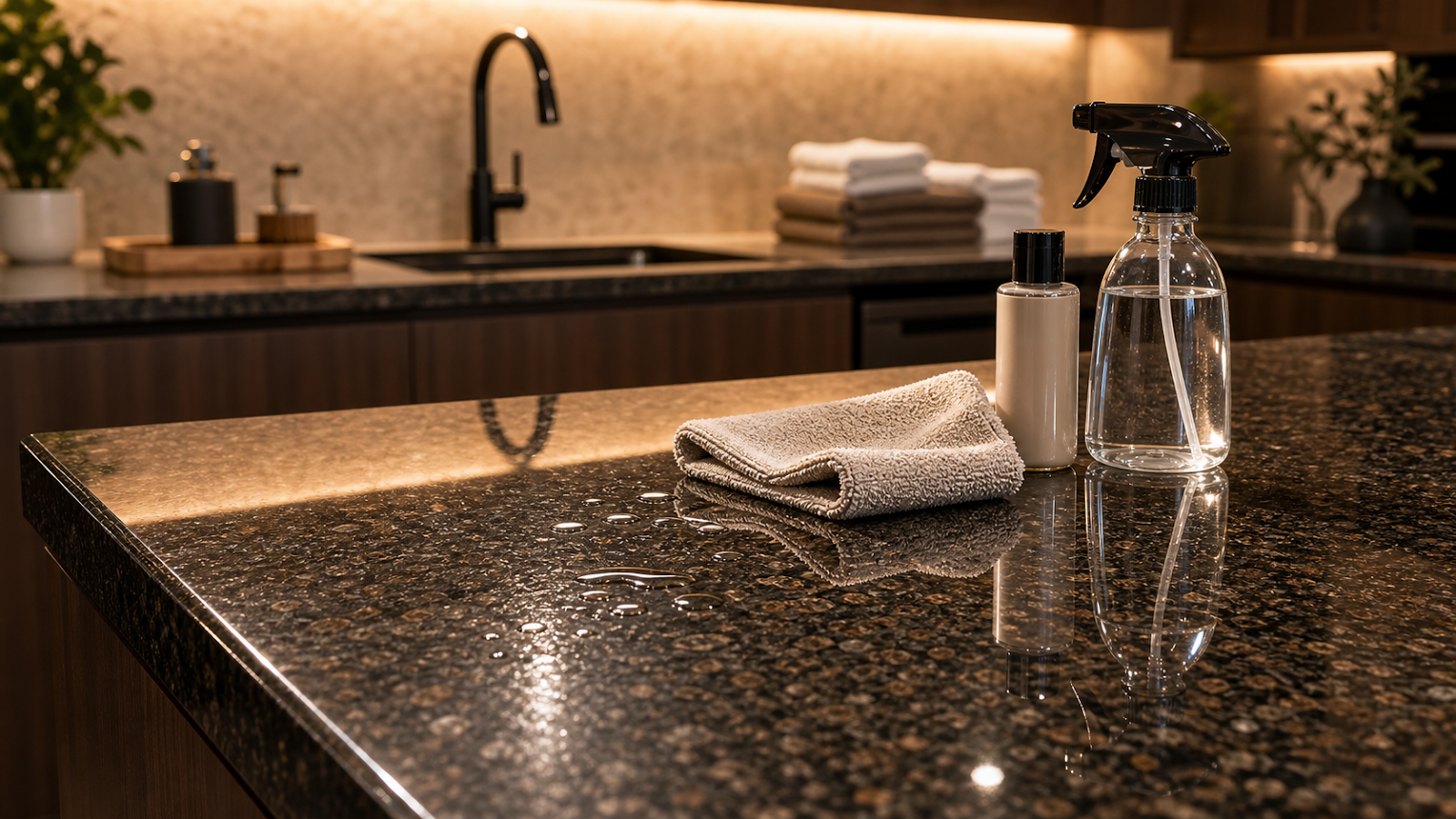
To check whether granite needs sealing, place a few drops of water on the surface and wait. If the water beads up, the sealer may still be working. If the stone darkens or absorbs the water quickly, it may be time to reseal. Test high-use areas near the sink, stove and food prep zone.

Stain-Specific Granite Guide

StainSuggested ResponseAvoidExtra Tip
Cooking oilBlot quickly; use stone-safe poultice if dark mark remainsSpreading with wet clothDo not let oil sit overnight
Coffee or teaBlot and wipe with mild soap solutionAcidic DIY cleanersDry after cleaning
Water ringsDry and buff with microfiberAbrasive padsUse coasters near sink and drinks
Soap residueUse damp cloth and dry polishToo much detergentRinse cleaner residue
Rust marksUse stone-safe rust removerRandom acid cleanersTest product first

Pros and Cons of DIY Granite Care

Pros

  • Simple daily cleaning is easy.
  • Mild soap and microfiber are affordable.
  • Fast spill response prevents many stains.
  • Good habits preserve shine.
  • Regular sealing checks prevent deeper issues.

Cons

  • Wrong cleaners can dull the finish.
  • Oil stains may need poultice treatment.
  • Sealer maintenance can be overlooked.
  • Deep stains may need stone-care specialists.
  • Granite near sinks can develop water marks if neglected.

SVG Line Graph: Granite Condition Over Time

New6 months1 year2 years Harsh cleaners + no sealing checksGentle cleaning + sealing maintenance

Malaysian Kitchen Challenges

Malaysian kitchens often handle oil, spices, sauces, coffee, tea and frequent cooking. Granite near the stove can collect oil residue, while granite near the sink may collect water marks. Humidity can make residue feel sticky if surfaces are not dried properly.

Keep a microfiber cloth near the kitchen, wipe spills quickly and avoid leaving wet bottles, metal cans or oily containers on the surface. Use trays under cooking oils and sauces to reduce rings.

When Granite Care Connects to Wider Home Cleaning

A clean kitchen countertop supports a cleaner home, but surrounding surfaces also matter. Grease, food residue and dust can move to curtains, carpets and living areas. For deeper home freshness, Sinar Saredah offers home and office cleaning support, curtain cleaning services and carpet cleaning solutions. For specific cleaning enquiries, you can reach the team through the contact page.

Granite Countertop Care Checklist

[ ] Wipe spills immediately.

[ ] Use mild soap and warm water.

[ ] Avoid vinegar, lemon and acidic cleaners.

[ ] Avoid abrasive pads.

[ ] Dry after cleaning.

[ ] Use cutting boards.

[ ] Use trivets under hot cookware.

[ ] Test sealer with water drops.

[ ] Reseal when water absorbs quickly.

[ ] Call a stone-care professional for deep stains or damage.

Final Thoughts

Caring for granite countertops is simple when you stay gentle and consistent. Clean daily with mild soap and water, dry the surface, avoid acidic cleaners, protect from oil and heat, and check the sealer regularly. Good habits keep granite beautiful for years.

External Sources

  1. Better Homes & Gardens: How to Clean Granite Countertops
  2. The Spruce: Cleaning Granite Countertops
  3. Good Housekeeping: Granite Countertop Cleaning
  4. Natural Stone Institute: Stone Care Information