Remove Blood From Clothes With Cold Water and Care
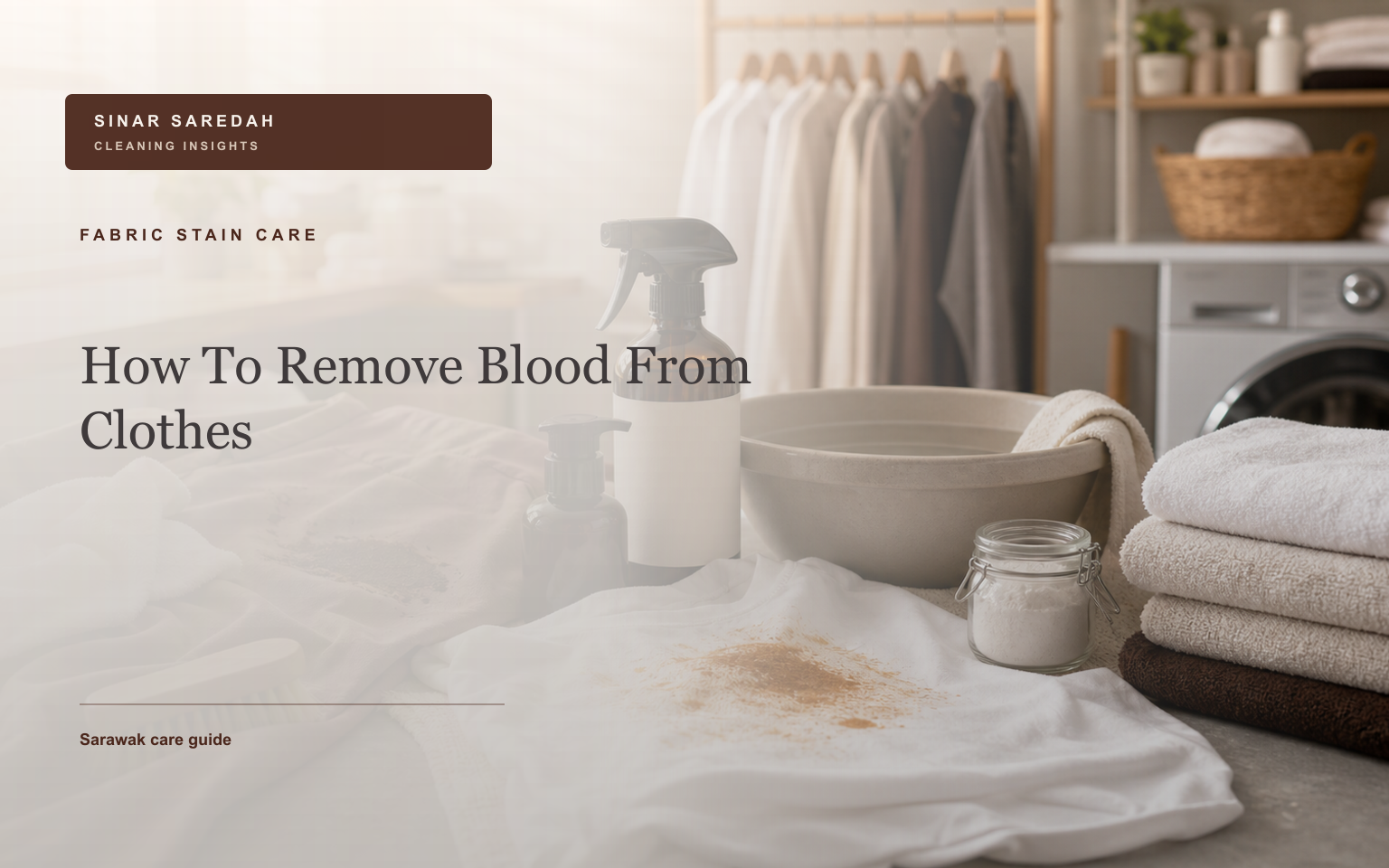
Removing blood from clothes starts with cold water, because heat sets a protein stain into the fabric.
Blood is a protein stain, and heat is what makes it permanent. Hot water, a tumble dryer, or a hot iron can bond the stain to the fibre, which is why a mark that looked faint after washing can return as a dark brown patch after drying.
That single fact shapes the whole method. It also explains why the first few minutes matter more than the product chosen, and why a dried stain needs a slower, more patient approach than a fresh one.
How to Remove Blood From Clothes
Work on the stain while it is still wet if possible. Blot rather than rub, keep the water cold, and check the fabric care label before applying anything. Rubbing spreads the stain into the surrounding fibres and can pill the surface of the cloth, which is a permanent change.
The routine below covers a fresh stain. Each item is a short action, not a paragraph, because the sequence matters more than the wording.
- Blot the excess with a clean cloth or paper towel. Press down, do not wipe.
- Hold the stained area under cold running water, working from the back of the fabric so the water pushes the stain out rather than through.
- Check colourfastness on a hidden seam or inner hem before applying any detergent or solution.
- Apply a small amount of liquid laundry detergent directly to the stain and work it in gently with the fingers.
- Soak the garment in cold water for a short period, then rinse and check the stain under good light.
- Repeat the detergent and cold rinse if the mark is still visible. Do not move to heat.
- Air dry the garment and inspect it again before it goes anywhere near a dryer or an iron.
Air drying is the safety net. If a trace of the stain remains and the garment is dried with heat, that trace becomes far harder to shift. If the garment is air dried and the mark is still there, the routine can simply be repeated.
Why Cold Water Matters More Than Detergent
Detergent helps, but it is not the deciding factor. Cold water is. Heat is what fixes a protein stain in place, so the temperature of the water is the first decision and the choice of detergent is the second.
A mild liquid detergent, applied directly and worked in gently, is enough for most fresh stains. The detergent lifts and suspends what the cold water has already loosened.
Two practical constraints are worth knowing. First, some delicate fabrics and some dyed fabrics release colour in water, which is why the colourfastness check comes before the detergent, not after. Second, a long soak is not automatically better, and on a delicate or loosely woven fabric it carries its own risk.
A Numbered Routine for Fresh Blood Stains
The list above is the fresh-stain sequence for removing blood from clothes. The order is deliberate. blot, rinse from the back, test, treat, soak, check, air dry. Skipping the colourfastness test risks a colour loss that no amount of stain removal can fix, and skipping the air-dry check risks setting a faint mark permanently.
If the garment is dry-clean only, or if the fabric is silk, wool, or a structured piece such as a jacket or a gown, home treatment carries more risk than reward. Water alone can distort some of these fabrics, and the stain may be the smaller problem.
Dried and Set-In Stains Need a Slower Approach
A dried stain is not a lost cause, but it will not respond to a quick rinse. The stain has had time to bind, so the method shifts from rinsing to rehydrating and then lifting.
- Soak the stained area in cold water to soften the dried material.
- Apply liquid detergent directly and leave it to work on the softened stain.
- Work the fabric gently between the fingers rather than scrubbing with a brush.
- Rinse in cold water and inspect under good light.
- Repeat the soak and detergent cycle if the mark has faded but not gone.
- Air dry and check again before applying any heat.
Set-in stains that have already been through a dryer are the hardest case. The heat has done its work, and repeated gentle cycles may only lighten the mark rather than remove it. At that point the realistic options are a specialist cleaning service or accepting the garment as it is.
Fabric, Colour, and Heat Risks to Check First
Three checks prevent most damage. The care label tells whether the garment can be washed at all. The colourfastness test tells whether the dye will hold. The fabric type tells whether water is safe in the first place.
Silk, wool, and some rayons are the usual problem fabrics. They can water-spot, shrink, or lose shape, and a stain treatment that works perfectly on cotton can ruin them. Structured garments with lining, padding, or interfacing are also poor candidates for home soaking because the inner layers dry at different rates and can distort the outer shape.
Heat is the common thread across every risk. Hot water, a tumble dryer, and a hot iron all push a protein stain deeper into the fibre. Keeping the whole process cold until the stain is confirmed gone is the single most useful habit in blood stain removal.
When a Stain Still Will Not Lift
Some stains resist home treatment. A large stain, a stain on a delicate or structured garment, or a stain that has already been heated is a reasonable point to stop and hand the item to a professional laundry or dry cleaning service.
Sinar Saredah Sdn Bhd is a laundry and dry cleaning provider in Kuching and Miri, Sarawak, with more than 38 years serving Sarawak. The service covers laundry, dry cleaning, and specialist cleaning, including wedding gowns, curtains, carpets, shoes, and soft toys. Garments are accepted under the company's customer terms and conditions, which apply alongside quotations, invoices, and branch notices.
Pricing is published per item and per kilogram. Wash and dry is RM 15 per kilogram, wash and iron is RM 20 per kilogram, and dry only is RM 10 per kilogram. Per-piece wash, dry and fold starts at RM 8 for a T-shirt, jean, short, or pair of trousers, and RM 10 for a dress. Dry cleaning is priced per garment, from RM 10 for a T-shirt or short up to RM 70 to RM 150 for a wedding gown. Prices exclude 8% SST.
For a stain that has already set, professional treatment is a judgement call rather than a guarantee. The outcome depends on the fibre, the dye, how long the stain has been there, and whether heat has already been applied. A garment that has been through a dryer may not return to its original condition, and no service can promise that in advance.
Call us at 0176325699.