Lifting Cooking Oil and Motor Oil Marks From Washable Garments
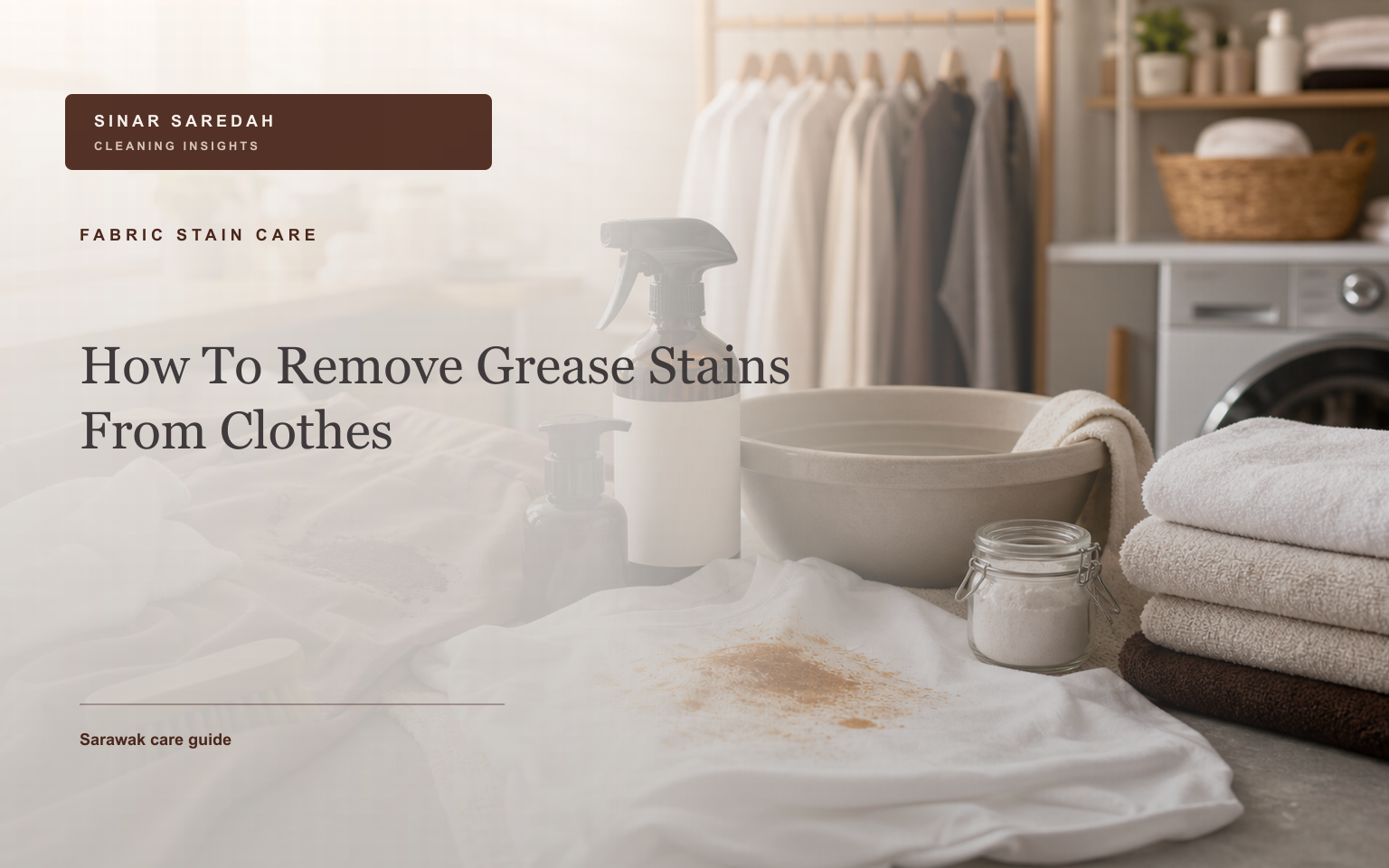
Removing grease stains from clothes starts with blotting excess oil, working dishwashing liquid or laundry detergent into the mark, and rinsing in warm water before the garment is washed and line dried.
The exact-match query how to remove grease stains from clothes describes a sequence rather than a single product. Grease is oil-based, so it repels water and clings to fibre until a surfactant lifts it. That is why the order of operations matters more than the brand on the bottle.
How to Remove Grease Stains From Clothes Before the Mark Sets
Fresh grease sits on the surface of the fabric. Once it oxidises and binds to the fibre, the same method needs more repetition and more time. The window between spill and wash is the single biggest variable in the outcome.
- Blot the excess with a paper towel or a clean cloth. Press rather than rub, so the oil does not spread into a wider ring.
- Lay the garment flat and work a small amount of dishwashing liquid or laundry detergent into the mark with a fingertip or a soft brush.
- Let the detergent sit for several minutes so it can break the oil down.
- Rinse the treated area with warm water and check the fabric under good light.
- Repeat the treatment if a shadow remains, then wash the garment as the care label allows.
- Line dry the garment instead of tumble drying it, because heat can fix any residue that is left.
Cornstarch or baking soda can be dusted onto a fresh spill to absorb surface oil before any liquid is applied. Both are absorbents, not cleaners, so they reduce the amount of grease the detergent has to handle rather than replacing it.
Why Grease Stains From Clothes Behave Differently From Water-Based Marks
Water-based marks such as fruit juice or coffee dissolve in water and rinse away once the fibre is wet. Grease does the opposite. It is non-polar, so plain water beads on top of it and carries the oil deeper into the weave instead of lifting it out.
A surfactant bridges that gap. Dishwashing liquid and laundry detergent contain molecules with one end that attaches to oil and another that attaches to water, which allows the grease to be suspended and rinsed away. This is the mechanism behind every home method on this page, including the ones that use baking soda or cornstarch as a first step.
Two practical consequences follow. First, hot water is not automatically better, because some fibres and dyes release colour or shrink when heated. Second, rubbing aggressively pushes oil sideways and can distort the weave, which is why blotting and gentle working are preferred over scrubbing.
What to Check on the Care Label Before Any Treatment
The care label governs everything that follows. It states whether the garment can be washed, what temperature is safe, whether bleach is permitted, and whether tumble drying is allowed. A treatment that ignores the label can ruin a garment that the stain alone would not have damaged.
Three label instructions change the approach:
- A dry-clean-only instruction means the garment should not be soaked or machine washed at home.
- A cold-wash instruction limits the rinse temperature, so warm water is not an option.
- A do-not-tumble-dry or do-not-wring symbol reinforces line drying, which is already the safer finish for a treated grease mark.
Test any detergent on an inside seam or hem before applying it to the visible stain. Some dyes transfer colour onto a cloth during treatment, and an inconspicuous test area shows that before the front of the garment is involved.
A Numbered Sequence for Fresh Grease Marks
The sequence above covers the standard case. Two variations are worth knowing because they change the timing rather than the method.
- For cooking oil splashes on cotton or polyester, treat immediately and wash the same day if possible.
- For motor oil on workwear, blot first, then work in detergent and allow a longer dwell time before rinsing, because motor oil is heavier and carries more pigment.
- For a mark that has already been through one wash without treatment, treat it again and inspect before the next wash rather than assuming the first attempt failed permanently.
Detergent choice matters less than dwell time and rinsing. A liquid detergent applied directly to the mark is easier to control than a powder, which needs to dissolve before it can act.
Working on Older or Already-Washed Grease Stains From Clothes
A set-in stain has had time to bond with the fibre and may have been heated in a dryer. The method is the same, but the expectation changes: several rounds of treatment are normal, and the mark may lighten rather than disappear completely.
Work in this order for an older mark:
- Apply detergent to the dry fabric and let it sit for longer than a fresh stain would need.
- Rinse with warm water within the limits of the care label.
- Repeat the treatment and rinse cycle, checking the fabric between rounds.
- Wash as normal and line dry, then inspect before deciding whether another round is worthwhile.
Repeated heating is the main risk at this stage. Every tumble-dry cycle that follows an incomplete treatment makes the remaining residue harder to shift, so line drying between attempts keeps the options open.
When a Garment Should Go to a Professional Cleaner
Some garments should not be treated at home at all. A dry-clean-only label, a structured jacket, a lined dress, a beaded or embellished piece, and any fabric that has already changed colour or texture during home treatment are all cases where further attempts risk more damage than the stain itself.
Sinar Saredah Sdn Bhd is a laundry and dry cleaning provider in Kuching and Miri, Sarawak, with more than 38 years serving Sarawak. Dry cleaning is priced per piece, with a plain dress at RM 20, a blouse at RM 12, a two-piece suit at RM 25, and a wedding gown from RM 70 to RM 150, all excluding 8% SST. Wash, dry and fold is priced at RM 15 per kilogram, and wash and iron at RM 20 per kilogram. The business is open every day including public holidays, and the contact number is 0176325699.
For anyone weighing whether a grease mark is worth another home attempt, the deciding factor is usually the care label and the value of the garment. A cotton work shirt can take several rounds. A lined blazer or a gown generally should not.